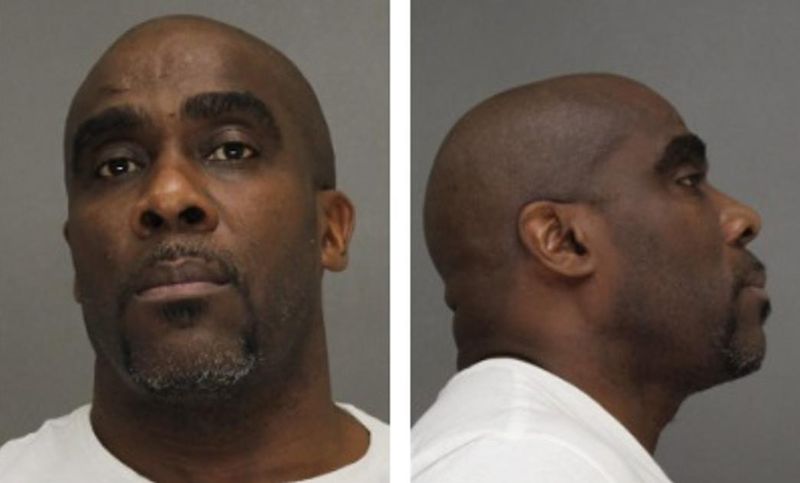
A Detroit assassin who killed at least 13 people, including a child and a leader of the infamous Best Friends gang during the early 1990s crack cocaine epidemic, is back in trouble, facing a federal drug charge.
Stacey “The Machine” Culbert, who owns a Grosse Pointe Park trucking company, is accused of distributing cocaine during an alleged conspiracy, according to court records that chronicle a manhunt, incriminating DNA and a killer with a double-digit body count.

Culbert, 56, was indicted in October after investigators found the Detroit man’s DNA on two drug packages seized during a traffic stop in Wisconsin, according to a federal search warrant affidavit obtained by The Detroit News. But investigators could not find the fugitive until after they obtained a search warrant for his cell phone in late November.
The case against one of Detroit’s most prolific killers brings a renewed focus to the ex-con’s exploits, documents a potential blown second chance and illustrates how a decades-old crime wave gained new relevance in federal court in Detroit. The case also illustrates diverging paths for some of Detroit’s most legendary crime figures in recent decades that have led to rebirths, freedom and, in Culbert’s case, being back behind bars.
In an email to The News, Culbert’s lawyer in Wisconsin, Thomas Erickson, called the criminal case “just allegations for now and he has not been convicted of anything.”
A federal prosecutor last month chronicled the 13 homicides — including the killing of Best Friends leader Terrance Brown — while convincing a federal magistrate judge to jail Culbert indefinitely.
“My general rule is that things that happened in the last century tend not to be relevant. In exceptional circumstances, they are. And this is an exceptional case,” U.S. Magistrate Judge Elizabeth Stafford said in jailing Culbert. “Mr. Culbert made the decision over and over to kill people. It was one after the other after the other after the other.”
Culbert pleaded guilty to murdering two people but killed 13, according to an appeals court filing.
“And part of the plea agreement was that he admitted his guilt to these … killings,” Assistant U.S. Attorney Craig Welkener said.
How Culbert got his reputation as a ‘killing machine’
The Culbert case marks a troubled development for Detroit crime legends who have had mixed outcomes within the federal legal system in recent years.
Convicted Black Mafia Family cocaine kingpin Demetrius “Big Meech” Flenory, whose life helped to inspire the popular Starz crime series “BMF,” was released from a federal prison sentence in January. He served 20 years for running one of the largest drug trafficking and money laundering rings in Detroit history.
Larry Chambers headed a violent cocaine trafficking operation that included his brothers, hundreds of workers and 200 crack houses in Metro Detroit in the 1980s, an era of criminality that inspired the movie “New Jack City.” Chambers was granted compassionate release in January 2025 due to advanced dementia after serving more than 37 years.
In the Culbert case, Best Friends was a network of violent crack traffickers on the east side of Detroit who were prosecuted in the 1990s for dealing narcotics and murder. Best Friends started as a murder-for-hire gang before expanding to about 40 people, said local author and mob historian Scott Burnstein, who publishes the underworld website Gangster Report.
Culbert was the gang’s enforcer and a drug dealer.
“Stacey was their No. 1 enforcer,” Burnstein said. “He was a killing machine. His demeanor on the street was machine-like.”
The group worked for drug lords, including the late kingpins Richard “Maserati Rick” Carter and Demetrius Holloway.
Carter was shot dead in 1988 in a Detroit hospital bed where he was recovering from wounds from an earlier attempt on his life. He was buried in a $16,000 casket sporting a Mercedes-Benz grille, ornament, wheels and tires.
“(Best Friends) were very, very ferocious, abrasive and were disrupters,” Burnstein said. “By the end of ’86 or early ’87, they were saying to themselves, ‘Why let all the other guys make all the money in this? Why don’t we kill the bosses and become drug kingpins?’”
How Best Friends gang leader got killed
Best Friends was headed by Terrance “Boogaloo” Brown. Brown was the lead defendant in the federal criminal case in the early 1990s against more than three dozen people, including Culbert.
But while the case was pending in 1993, Brown was found dead in Atlanta “wrapped in a Ralph Lauren bedsheet bound with masking tape in the back of a stolen truck in the parking lot of the College Park Ramada Renaissance hotel,” according to the Atlanta Journal-Constitution.
Brown had been shot in the head.
After killing Brown, Culbert formed his own gang to distribute drugs, said Welkener, the prosecutor.
Culbert originally was sentenced to life in prison, but cooperated with the government, and the punishment was reduced to 27 years. He was freed in 2018.
Culbert’s attorney objects to list of defendant’s victims, calling it a ‘hearing by ambush’
The mention of Culbert’s victims sparked a protest from his court-appointed attorney in Detroit, David Tholen, during a detention hearing in the drug case in federal court in December. Tholen argued about the relevance of decade-old murders.
“This is like a hearing by ambush,” the lawyer told Stafford, the magistrate judge.
“Mr. Tholen,” she said, “you need to cool down the heat.”
Tholen argued his client was not a flight risk or a danger to the community and deserved to be released on bond while the drug case was pending in Wisconsin. Culbert was not driving the truck during the traffic stop in Wisconsin and did not possess any drugs or firearms, his lawyer added.
Culbert does not deny killing people decades ago, Tholen said.
“He accepts that. He did his time for that,” Tholen said. “He pled guilty to that. Now he’s in an incredibly unfortunate situation where he has a federal drug case against him in Wisconsin.”
The magistrate judge ordered Culbert held without bond while the drug case is pending in federal court.
“Mr. Culbert made the decision, over and over, to kill people for the benefit of the Best Friends. Often at the behest of Mr. Brown,” Stafford said. “But then Mr. Culbert admitted to being involved in killing Mr. Brown.”
How the latest investigation into Stacey Culbert got started
The roots of the latest Culbert investigation are in September 2024, when drug investigators in Wisconsin were trying to identify the source of a local cocaine distributor.
An informant identified Culbert as a potential source, U.S. Marshals Service Task Force Officer Brandon Radke wrote in the search warrant affidavit.
Days later, on Sept. 29, Culbert and a second man, Oscar Rodriguez, were riding in a black van that left a home in West Allis, Wisconsin, near Milwaukee.
Inside that van was a red cooler.
“Inside the red cooler are a number of bags. Two bags, in particular, are of interest to the court,” Welkener said during the detention hearing. “Essentially, there’s over 600 grams of suspected cocaine.”
That is about 1.3 pounds.
Investigators with the Wisconsin Department of Justice analyzed the drugs and packaging and discovered Culbert’s DNA on two drug items, the officer wrote.
“Culbert’s DNA being present on the drug packaging substantiated his involvement with possessing cocaine,” Radke wrote.
The investigation continued until Culbert was indicted on Oct. 21, 2025, for his involvement with Rodriguez in distributing cocaine. If convicted, he faces 10 years to life in federal prison.
How investigators found Stacey ‘The Machine’ Culbert
Investigators were armed with an arrest warrant but could not find Culbert.
But they knew his phone number and license plate. Both would be Culbert’s undoing.
Investigators knew Culbert was the owner of a trucking company, Next Move Transport LLC, in Grosse Pointe Park. And they knew he had a tractor-trailer with the license plate RC15434.
So they searched a database of Flock license plate readers and discovered the tractor-trailer was traveling through Ohio on the day of the indictment and the following week.
In early November, the vehicle was back in Michigan and traveling along the Interstate 75 corridor. But the investigators learned it was difficult to find the vehicle’s exact location based solely on the information from license plate readers.
The task force officer analyzed Culbert’s phone and learned it had called one number 49 times during a roughly one-month period in fall 2025. That led investigators to discover the phone number belonged to Culbert’s girlfriend, so the Marshals Service personnel started surveilling her home in Metro Detroit.
But they never saw Culbert during the stakeouts. Investigators concluded Culbert was a fugitive, so they obtained a search warrant to find him and his phone.
He was caught within days and brought to federal court in Detroit, where Stafford, the magistrate judge, marveled at the scale of Culbert’s crimes.
“Those aren’t descriptions of someone who made a rash decision at a young age,” she said before ordering Culbert held without bond. “It’s the description of someone who has the capacity to first kill on behalf of his leader — and then kill the leader. I have not seen a case with a defendant admitting to that many murders.”
rsnell@detroitnews.com
This article originally appeared on The Detroit News: Grosse Pointe trucking owner linked to 13 murders tied to drug charge
Reporting by Robert Snell, The Detroit News / The Detroit News
USA TODAY Network via Reuters Connect