In the wake of a man being bitten by an eastern massasauga rattlesnake at a state-managed park in Oakland County last month, the Michigan Department of Natural Resources is urging the public not to harm, harass or attempt to capture the threatened species.
On July 21, a 41-year-old Michigan man was bitten by an eastern massasauga while attempting to photograph the snake at a boat launch in the Proud Lake Recreation Area in Commerce Township. The man was hospitalized and was expected to recover.

Officials at state parks are reporting damage to wetlands areas as people veer off established trails and trample vulnerable vegetation looking for the venomous snakes, DNR officials said. Some people are threatening to kill the snakes if they encounter them.
The eastern massasauga rattlesnake is listed as both a state and federally threatened species. It is illegal to pursue, harass, wound, kill or capture the snake. A person found liable of violating the Endangered Species Act could be sentenced up to a year in prison with a fine of $50,000.
The eastern massasauga rattlesnake is Michigan’s only venomous native snake. The snake’s bite is painful but very unlikely to be fatal. Between 25% and 50% of strikes by the snake are “dry bites,” meaning the snake did not deliver a dose of venom.
There have been no confirmed human deaths from an eastern massasauga bite for over 100 years, said Amy Bleisch, DNR endangered species biologist.
“The best way to avoid massasaugas and damaging their habitats is to stay on the trails,” she said. “These snakes are shy and prefer to avoid people. If they don’t feel threatened, they will hide and wait for people to walk by.”
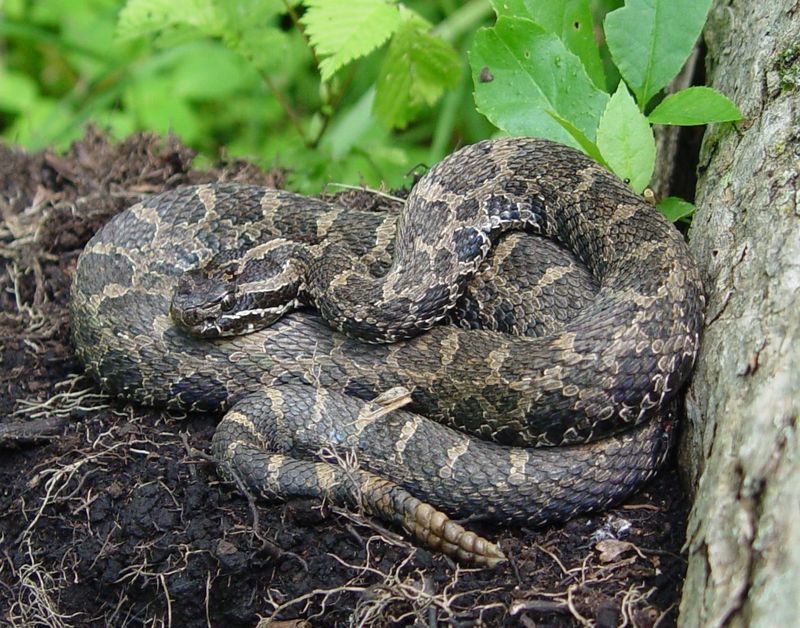
The eastern massasauga rattlesnake is generally tan with large brown splotches on its back that resemble a video game controller or bowtie. Its tail ends with a tan-colored, segmented rattle that produces a high-pitch sound like an insect buzzing. The thick-bodied snake grows to be between 18 and 30 inches long.
There are a few harmless lookalike snakes in Michigan with similar patterns.
Eastern massasaugas are declining globally due to habitat loss and illegal collection and killing. Michigan contains a core population of eastern massasaugas in specific Lower Peninsula wetlands as well as on Bois Blanc and Mackinac islands in Lake Huron. The DNR actively manages habitat for the conservation and recovery of the snake.
Because populations have dwindled and the snake is so good at hiding, seeing an eastern massasauga is a once-in-a-lifetime experience for most, Bleis said. Those spotting one should give the snake space, staying at least three feet away, out of its strike zone.
If bitten by an eastern massasauga, stay calm and seek medical attention. Call 911 for help, sit down and wait for emergency responders. Remove rings, watches and bracelets that can cause problems due to swelling. Do not apply ice or tourniquets, and do not cut the wound or apply suction.
Contact Keith Matheny: kmatheny@freepress.com.
This article originally appeared on Detroit Free Press: Despite bite incident, don’t harm Michigan’s protected rattlesnake, state says
Reporting by Keith Matheny, Detroit Free Press / Detroit Free Press
USA TODAY Network via Reuters Connect
By Keith Matheny, Detroit Free Press | USA TODAY Network