If everything had gone according to Dr. David Snead’s original plan, after graduating with honors from Tuskegee University in 1968, the Detroit native would have returned to his alma mater following graduate school to serve as a professor and football coach at the historically Black university for the “rest of his life.”
Instead, Snead would go on to become an educational leader in his hometown, which included being the principal at two Detroit high schools — Redford and Cass Tech — before holding the position of Detroit Public Schools general superintendent from 1993 to 1997. Afterward, Snead had an 11-year stint as superintendent of the Waterbury Public Schools in Connecticut, which ended with his retirement in 2011.

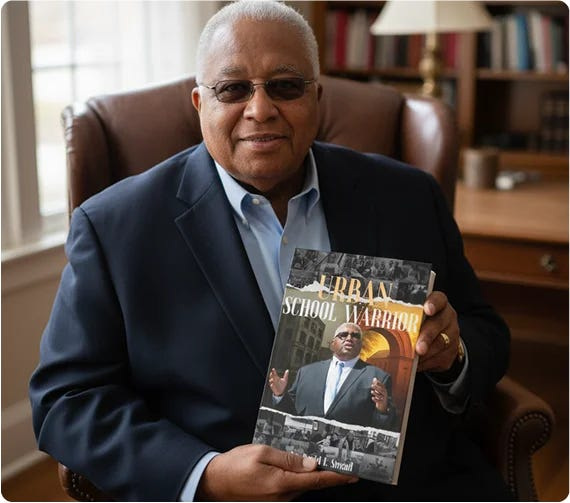
And those chapters of Snead’s life and more are covered in his memoir: “Urban School Warrior,” which became available at barnesandnoble.com and amazon.com the week of October 13.
“I want and need my (10) grandchildren to know more about me because I don’t have regular face-to-face contact with them,” said the 82-year-old Snead, while speaking on consecutive days beginning Oct. 14 from The Villages, Florida. “But my second reason for writing the book is to try to help anyone coming up through the ranks — not just in education, but in any industry — to understand some of the things that are needed to be successful and how to steer the ship through the storms.
“And to everyone in Detroit, which will always be my home, my message is to keep pushing because we’ve been through more challenging times than this and we have always come through. Never give up, never quit — stay in the fight.”
Snead reveals in his memoir that he literally learned how to “fight” on many levels in 1950 when he, along with his parents and two brothers, became one of the first Black families to move into the Krainz Woods neighborhood in northeast Detroit, where Snead says his family was greeted “not with hospitality, but with racial slurs and an unspoken, yet palpable, hostility.” Snead attended Atkinson Elementary School (4900 E. Hildale St.), the same Atkinson Elementary that invited Snead for a special visit shortly after he became the school district’s general superintendent in 1993.
But Snead says during his days as an Atkinson student, there were some staff members that tried their best not to acknowledge his efforts and ambition, including a physical education teacher who gave the future college athlete and high school coach a “C” in her gym class.
“I could run, jump and climb the rope better than most at the school. And I set the school record in sit-ups,” Snead, the proud son of the late Herman and Edyth Snead, recalled. “So, I asked the teacher why she gave me a “C” and she said: ‘You’re getting too big for your britches.’
“I didn’t fully understand the phrase, but I understood what she meant. And that ignited a competitive spirit in me. I wanted to be the best in the classroom and out on the fields during outdoor sports activities, and I felt like no one was better than me.”
However, Snead admitted that his desire to achieve at the highest level did not always produce the outcome he was seeking once he entered Cass Tech. Once there, Snead says “everything became more intense,” including the six semesters of chemistry he took — from organic to quantitative analysis — at the famous downtown high school that was then housed within an eight-story building at 2421 Second Ave. It was a trip that required Snead to catch two city buses each morning after completing his Detroit Free Press paper route.
“I was thrown for a loop and knocked down,” bemoaned Snead on the morning of Oct. 14 as he told the story of how he received a failing grade for the first report card marking in his first math class at Cass. “I was devastated, and I sat in the tub for hours that evening. Everything was a whole new ballgame at Cass.”
In his memoir, Snead says that he did not begin to reach his full potential as a student until sometime after he graduated from Cass in 1961, when he discovered speed reading and developed his own method for speed reading and comprehension. Snead explains this method in a section of his book titled “Study Techniques That Will Turn C’s into A’s.” But Snead points out that an even greater transformative discovery occurred when he learned about the college then called Tuskegee Institute in Tuskegee, Alabama. This occurred during Snead’s military service in the U.S. Army, after he withdrew from Lawrence Technological University because he could no longer accept financial assistance from his mother when his family had greater needs.
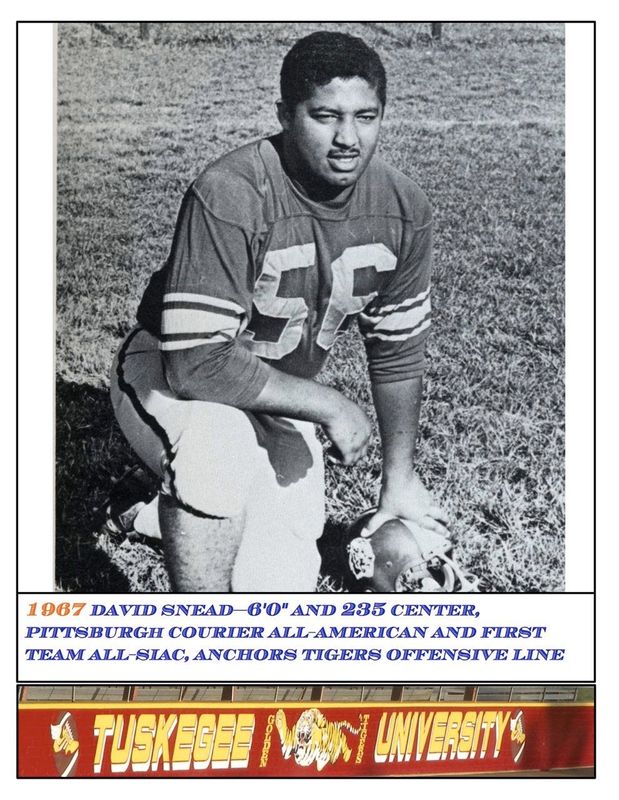
It would all work out for Snead’s benefit because, while stationed at Fort Riley, Kansas, he was able to take night and weekend courses at Kansas State University, and Snead also was able to play football — a sport he had to give up at Cass Tech because his father told him that between football and his paper route he had too much on his plate to maintain his grades. Snead was able to participate and earn letters in track and cross country in high school, but he never lost his love for football. And his stellar play on Army base football teams at multiple positions was noticed by many, including a soldier who was the nephew of Leroy Smith, who coached the Tuskegee football team from 1964 to 1969.
“The soldier who told me about Tuskegee said the college was founded by Booker T. Washington, and I said: ‘Who is that?’ Then the soldier told me that George Washington Carver had taught at Tuskegee, and I said: ‘Who is he?’ ” recalled Snead, who, upon his Army discharge, decided to accept a scholarship to Tuskegee from Coach Smith instead of returning closer to home and enrolling as a student at the University of Michigan, where he had been accepted.
Snead made that crucial life decision because his mother told him that he needed to learn about his history and culture.
“I had never been taught Black history in school, and I had only had three Black teachers in all my classes in Detroit schools (Atkinson Elementary, Cleveland Middle School and Cass Tech). But as soon as I stepped on the Tuskegee campus, I knew I was at a special place,” he said.
“Because of Tuskegee, I learned about the extraordinary accomplishments of African Americans throughout our history in this country, and how we overcame immense challenges and continued to rise. What I learned was immeasurable and it shaped my identity.”
After learning a boatload of life lessons as a Tuskegee student-athlete, Snead, a 1967 Pittsburgh Courier All American selection for his play as a center on Tuskegee’s football team, took the advice of one of his mentors, Will Robinson, and declined an offer to teach and coach in Stockton, California, after graduating from Tuskegee with a degree in physical education.
Instead, he came back home to Detroit to begin a career as an educator. Snead’s first assignment was at Post Middle School, where he taught health, physical education and coached indoor and outdoor sports, while also serving as the junior varsity football coach at Pershing High School.
Throughout Snead’s memoir, the layers of his journey as a Detroit educator sometimes bounce back and forth from milestones on a playing field, such as when Snead coached the 1972 Central High School football squad to its first Detroit Public School League title in 39 years, to some of Snead’s personal triumphs that took place inside school buildings.
This was the case in 1989 when the graduate of Tuskegee and the University of Michigan (master’s degree in urban and physical education and doctorate degree in administration and supervision) returned to Cass Tech as the principal and walked into the same building where he had once been a student — this time, “carrying the full weight of leadership.”
But, Snead says one thing that his memoir is not is an attempt to get back at anyone who may have posed problems for him during the years he was the general superintendent for Detroit Public Schools.
“I’ve had people ask me about writing a book and telling all the ‘dirty secrets,’ but I’ve never bought into that,” said Snead, who pointed to an increase in DPS enrollment from 163,000 to 183,000 — which he attributed to creating more choices for students and parents through an emphasis on “multicultural academic programs” — as one of his proudest accomplishments during his time as superintendent in Detroit.
“When I became superintendent, I already knew what the students, teachers and administrators needed because it was in my DNA going back to when I was a student in the system,” he said. “I knew we had to fight for extra funding to replace crumbling buildings, I knew we had to fight to get into technology, and I knew we had to fight to make our schools safe, and that also meant reducing violence in the neighborhoods surrounding our schools.
“We focused on all of those objectives, and the record will show that I made an appeal directly to Detroiters and we were able to pass a $1.5 billion bond measure to upgrade and rebuild the city’s aging schools. There were many storms that followed, but I love my city and I’m proud of what I was able to accomplish in my city.”
And for anyone who doubts whether the career educator still receives love connected to his years in Detroit, all Snead has to do is pull out his phone. A quick glance shows he took calls, texts and other forms of messages all day on Oct. 15 from students “all over the world” who remembered it was Snead’s birthday.
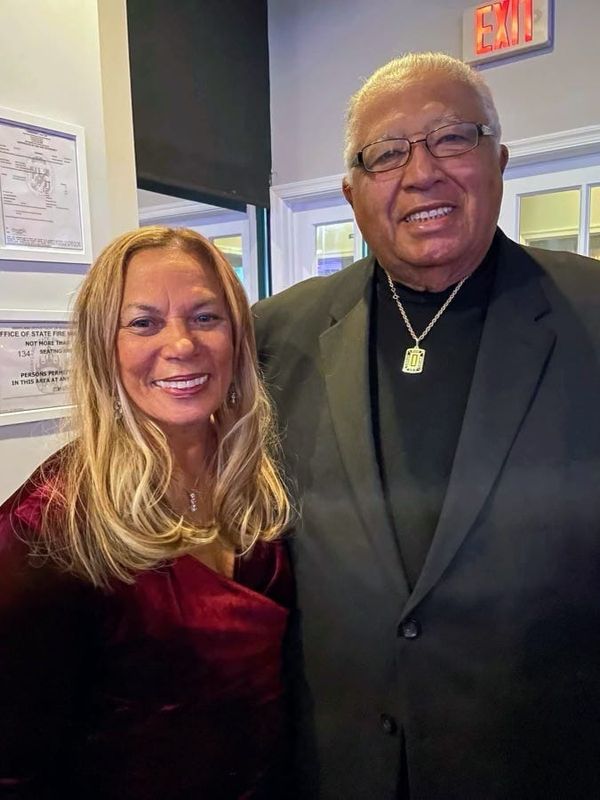
“I’ve been getting a ton of emails and text messages and calls wishing me a happy birthday, and it feels so good to have had a positive impact on so many lives,” says Snead, who is able to share stories about schools and education with someone who knows the subject well, his wife, Dr. Constance Clark-Snead, who also is a former school district superintendent. “It’s such rewarding work and that’s why our teachers and all educators today have to continue to have high expectations for all students.
“It doesn’t matter how the political winds are blowing, or the climate we’re living in today. It’s just like one of my old mentors, Marvin Evans (former principal of Osborn High School) used to say, ‘Do what’s in the best interest of the students — always.’ That’s what educators in Detroit must continue to do.”
Scott Talley is a native Detroiter, a proud product of Detroit Public Schools and a lifelong lover of Detroit culture in its diverse forms. In his second tour with the Free Press, which he grew up reading as a child, he is excited and humbled to cover the city’s neighborhoods and the many interesting people who define its various communities. Contact him at stalley@freepress.com or follow him on Twitter @STalleyfreep. Read more of Scott’s stories at www.freep.com/mosaic/detroit-is/. Please help us grow great community-focused journalism by becoming a subscriber.
This article originally appeared on Detroit Free Press: David Snead’s memoir charts a path that led to him leading Detroit’s schools and more
Reporting by Scott Talley, Detroit Free Press / Detroit Free Press
USA TODAY Network via Reuters Connect