

Charities and junkyards used to be among the few places to find a vehicle for less than $1,000. Now, some dealers are making a rare offer to a small number of low-income families who need a cheap car.
As part of a newly expanded program, the Maryland-based nonprofit Vehicles for Change will offer $950 used vehicles across the United States with help from the National Automobile Dealers Association.

The expansion of the program at participating dealers is aimed at addressing the growing need for affordable transportation as rising price tags push buyers out of both the new and used car markets, organizers said.
“Reliable transportation changes everything,” Vehicles for Change Chairman Andy Koblenz said. “Through this partnership, dealers across the country will have the tools and framework needed to help hardworking families access opportunity, maintain employment, and build a stronger future.”
Buyers on average paid close to $50,000 for new vehicles in April, according to Kelley Blue Book, and the average monthly car payment hit $773 in the first three months of the year, according to an Edmunds analysis.
On average, used cars in May averaged about $20,000 on Carfax.com, according to the site.
“Since COVID, you can’t even find a decent car for under $5,000-$6,000,” Vehicles for Change President Martin Schwartz said. “So if you’re living in poverty (and) you’re struggling, how are you going to get a car for $5,000 or $6,000? And then you have to be able to get credit. So that combination makes it even more difficult for a family to access a vehicle.”
Who can get a $950 car?
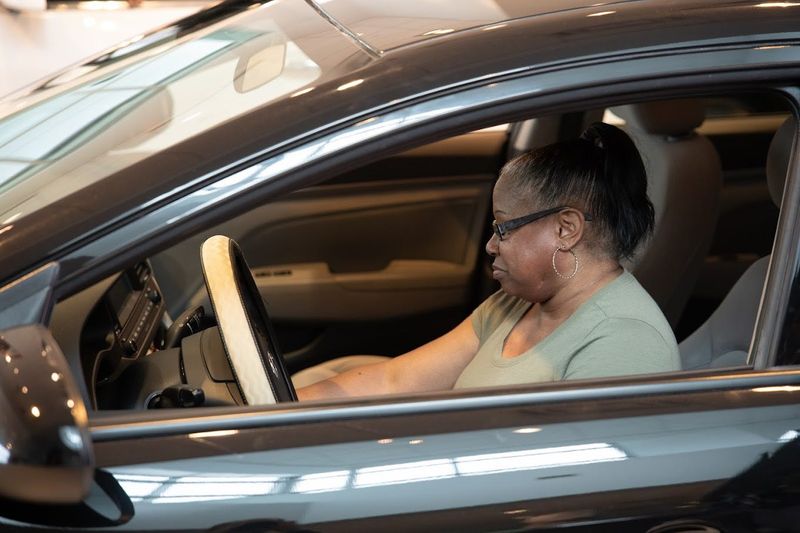
Pittsburgh resident Deborah Sheffey, 53, used to take two buses to get to work and spent close to $3,000 over the course of a year on rideshares when the buses stopped running Sunday nights. She wouldn’t get home to her 12-year-old son, who has special needs, until close to midnight.
With the 2017 Hyundai Elantra she bought for $950 from Rob Cochran, chairman of the National Automobile Dealers Association, she said she’ll be home nearly an hour earlier and can take her son to school and doctor appointments.
“We can just go hang out,” she said during an event at #1 Cochran Buick GMC of Monroeville, Pennsylvania. “We can go to the store. We can go on vacation. So this will definitely help me, and I am so grateful.”
Families who qualify for federal and state assistance and need a vehicle to get to work are eligible for discounted vehicles, Schwartz said. Vehicles for Change partners with social service agencies in Maryland to identify potential recipients, and Schwartz said the nonprofit prioritizes families with children.
Available vehicles typically are sedans with less than 175,000 miles valued between $5,000 and $7,000. Vehicles for Change sells the cars for $950 and works with national lenders to help buyers get loans if needed.
Building good credit “is a lot of times as important, if not more important, than the vehicle itself because it gives you opportunities down the road,” Schwartz said during the May event in Pennsylvania.
“This isn’t just a program that provides transportation,” Schwartz said. “It provides numerous opportunities for our families.”
Vehicles for Change is one of the few remaining charities that both accept donated vehicles and provide them to people in need.
Tax law changes and the prominence of other charities that sell donated vehicles for parts have reduced the number of usable autos donated to Vehicles for Change, Schwartz said, though there have been fluctuations.
Vehicles for Change now only helps Maryland residents, although it accepts donated vehicles from across the United States.
NADA and the nonprofit on July 1 will release a playbook to make it easier for dealerships to locate candidates in need and identify the right vehicles to donate. Schwartz said trainings are underway in Michigan, with the hope of launching the program here in the next several months.
Dwindling charity
Schwartz founded Vehicles for Change in 1999 with the goal of connecting low-income families with cheap cars as a means for financial growth. The charity accepts donated vehicles from across the United States and typically makes repairs of more than $1,000 per vehicle before selling the cars to families in need.
Since its founding, the charity has donated more than 8,000 cars.
Donations to Vehicles for Change dropped temporarily after Congress in 2005 reduced tax incentives for donating vehicles, Schwartz said. But as charities that previously raised money by selling vehicles for parts turned to higher-yield funding sources, Vehicles for Change saw a bump in auto donations, he said.
Schwartz said donations slowed again when Congress in 2017 raised the standard deduction, in effect giving some taxpayers less incentive to give away old cars since they no longer itemized deductions.
The biggest drop in donations came after the price of used vehicles rose during the COVID-19 pandemic, he said. More people are selling old cars rather than donating them.
“We’ve seen a 60-65% drop in donations since COVID,” Schwartz said. “We used to get 200 cars a month. Now we get 70.”
Fewer donated vehicles means Vehicles for Change helps fewer people, Schwartz said. Partnering with auto dealers could both expand the program nationally and mean more available vehicles, he said.
“This event demonstrates the powerful impact dealers can have,” said Cochran, CEO of #1 Cochran, in a statement. “And after the playbook launches, interested dealers can easily host similar events in their communities and help change lives.”
sballentine@detroitnews.com
This article originally appeared on The Detroit News: Charity partners with auto dealers to offer the impossible: $950 cars
Reporting by Summer Ballentine, The Detroit News / The Detroit News
USA TODAY Network via Reuters Connect

By Summer Ballentine, The Detroit News | USA TODAY Network
