In the Baghdad rooftop unit where he’d been confined for weeks, Sanan Atou sprang to his feet.
“Did you hear that?” he asked a Detroit Free Press reporter on a FaceTime call, rushing out onto the roof.

Atou’s eyes darted in the darkness. A series of loud cracks rang out. As he flipped his phone camera to show his view, his hand shook, blurring the Baghdad skyline.
It was another air strike, Atou feared.
The former Macomb Township resident was deported to Iraq on Feb. 22, just days before the United States opened war on neighboring Iran. At least five air strikes had rocked his building in the weeks since, he said, and hours before his call with the Free Press, President Donald Trump had warned “a whole civilization will die tonight.” Iran’s border was just over 100 miles from where Atou stood.
“It’s going to be a long night,” Atou said. “Yeah, this is what keeps me up now.”
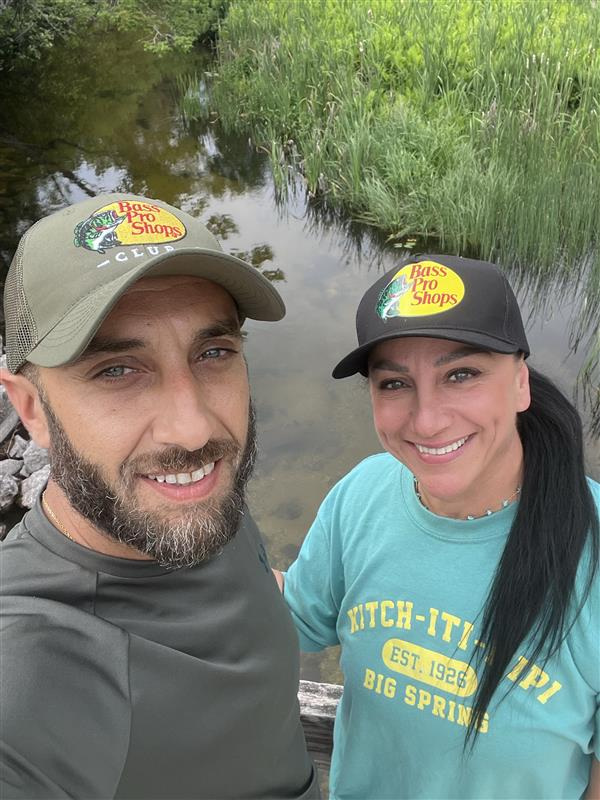
Atou, 43, had lived in metro Detroit since he was 11. He came from a big family and attended high school in Oak Park, where he was enrolled in JROTC. More recently, he worked as a roofer and loved to camp and fish with his girlfriend in northern Michigan.
Atou is now in a country he has not lived in or visited since he was 7. War is only part of the danger. Atou says he is not an Iraqi citizen and cannot obtain an ID, has no family or support system in Iraq, and does not speak Arabic — putting him at grave risk of detention, kidnapping or torture, attorneys involved with his case said. He is also Chaldean, part of a long‑persecuted Christian minority group in Iraq.
While most of his family won U.S. citizenship, Atou was ordered deported due to a drug crime he committed in 2006, kicking off a removal process that spanned presidential administrations from Barack Obama to Donald Trump.
He’s among more than 600,000 immigrants the Department of Homeland Security says have been removed from the United States since Trump returned to office, promising to launch the largest deportation program in the nation’s history. Many have been sent to countries racked by conflict, that do not recognize them as citizens, or that they left so long ago they have few remaining ties. Atou’s case is a window into the dangers such deportees can face.
With nowhere to go after his Feb. 23 arrival in Baghdad, Atou said he slept for several days in an airport mosque. Just before the war broke out and shut down the airport on Feb. 28, an English-speaking worker told Atou he could stay in a roughly 150-square-foot rooftop apartment with no windows or shower, in exchange for cleaning the office building below, Atou said.
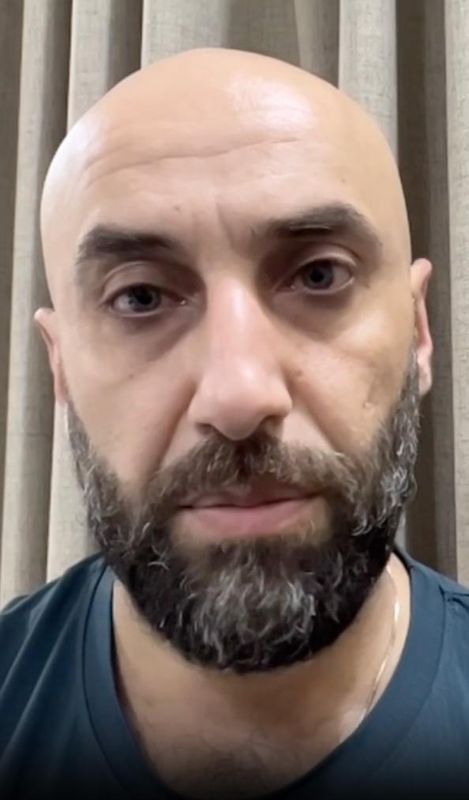
“I shouldn’t be living in this environment,” Atou, thin and bald with sunken green eyes, told the Free Press from inside the unit in late March. “This is like detention right here — no different than detention. … This is my cell.”
In late April, he fled to a hotel outside of Baghdad, saying he worried too many locals knew his whereabouts and that he might be kidnapped for appearing American.
U.S. State Department guidance warns Americans not to travel to Iraq “for any reason” and to “leave now if you are there,” citing terrorism, kidnapping, armed conflict and civil unrest. In March, an American journalist was kidnapped from a Baghdad street corner by an Iran-backed Shiite militia group before being returned in a prisoner swap. In 2019, a stateless Chaldean metro Detroiter deported to Iraq died in Baghdad after becoming homeless and struggling to obtain insulin for his diabetes.
“You’re basically sending somebody to death,” Atou’s brother, Sarmad Atou, 40, of Sterling Heights, said during a recent interview. “You can’t explain it no better than that.”
The White House referred a request for comment to ICE.
In response to Free Press questions about Atou’s case, ICE issued a statement saying it “carries out the order of the immigration judges when conducting removals from the United States.”
“Atou had full due process in his immigration proceedings with multiple appeals and motions to reopen his case,” the statement said. “When he refused to comply with the judge’s [removal] order, ICE officers stepped in to detain him and effect his lawful removal from the United States. ICE respects due process in these cases and ultimately for Mr. Atou the judge’s order of removal to Iraq was upheld.”
The spillover of the U.S. war on Iran to Iraq — where Iranian-backed militia groups are part of the country’s security forces — appears to have slowed deportations to Iraq, according to an American Civil Liberties Union of Michigan attorney involved in Atou’s case and the cases of Iraqi nationals initially detained in Trump’s first term.
“The timing of this could not be more tragic,” the attorney, Ewurama Appiagyei-Dankah, said of Atou’s deportation. “It’s really alarming that they’ve been removing people like him with no regard for their safety.”
With Atou’s return to the United States unlikely and legal options all but exhausted, he’s now plotting a risky mission to escape Iraq without detection — a journey similar to the one his parents undertook when he was a young boy.
From Oak Park to ICE limbo
Sanan Atou fled Iraq with his family during the Gulf War in 1990, he said. Through a several-year effort that involved smugglers and a trek through mountains, farm fields and knee-deep mud, the nine-member clan made it to Greece, and eventually to the United States, where they were granted asylum and given lawful permanent resident status.
They arrived in 1994, when Atou was 11, settling in Oak Park. Atou’s father worked as a tailor and his mother stayed home.
Atou and his brother, Sarmad, recalled assimilating easily, making American friends, playing street hockey and riding bikes to Ferndale and the Detroit Zoo. The boys loved the movie “Friday,” and Sanan took to calling Sarmad “Big Worm” — a nickname that endures today.
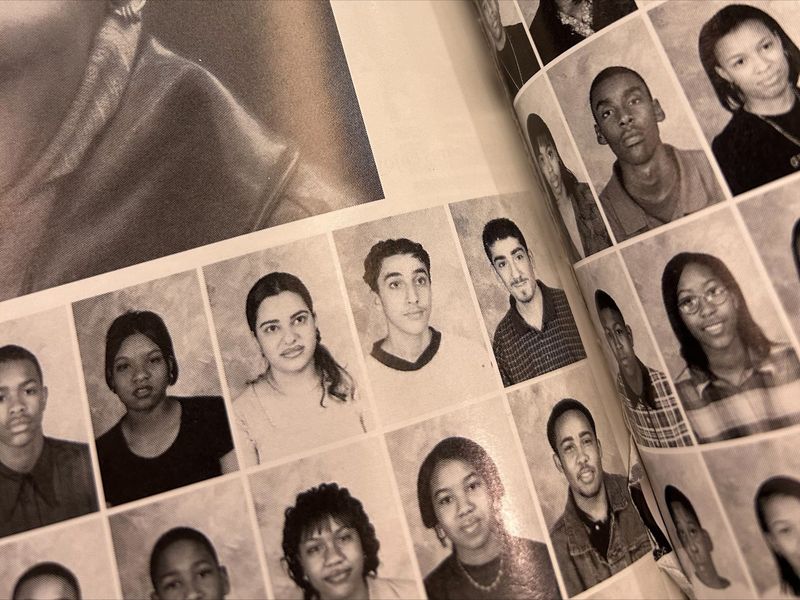
At Oak Park High School, Sanan joined JROTC, focusing on the Air Force, and wore a dark blue uniform to class. His brother said his photo was displayed in a school case, alongside a medallion.
“We’re Michiganders, we never thought of deportation,” said Sanan’s brother, Sarmad, who also went on to be threatened with removal from the United States.
Sanan Atou’s predicament stems from what he says was a mistake he made at age 23.
In 2006, he was caught with a friend trying to smuggle ecstasy pills across the Canadian border to Detroit. Atou pleaded guilty to one federal count of conspiracy to distribute MDMA and was sentenced to a day in prison with credit for time served.
Atou was not yet a U.S. citizen, and the felony conviction resulted in a 2010 order for his removal. But he was also not a citizen of Iraq. While his family is from there, Atou says he has no birth certificate and is not sure where he was born. His parents had been trying to flee the Iran-Iraq war at the time, and later told him his mother gave birth to him on the road in Turkey or Greece, he said. They returned to Iraq before fleeing for good during the country’s next war.
With no country to claim him, Atou has spent the 16 years since his deportation order in limbo — primarily under ICE supervision and at times in prolonged detention. When Trump first took office in 2017, Atou was detained with approximately 1,400 Iraqi nationals with prior deportation orders — many of them Chaldean — whom Iraq had previously refused to accept because their returns would have been involuntary. He was jailed for 18 months before a federal judge ruled the detentions unlawful in response to a lawsuit by the Michigan ACLU.
Some of the Iraqis — including Atou’s brother, Sarmad, who was convicted of a felony marijuana offense in Oakland County in his early 20s — were able to reopen their immigration cases and win pathways to citizenship.
Sanan was less fortunate. A judge issued a final deportation order in his case in 2018, and a subsequent appeal was rejected.
Atou remained in the United States under ICE supervision for six more years. Then, in June 2024, under then-president Joe Biden, something changed.
Atou was camping in the Upper Peninsula when his ICE case manager called. He was to return to Detroit to fill out an application for an Iraqi travel pass to facilitate his removal.
According to the requirements listed on the Iraqi Embassy’s website, Atou appeared ineligible to obtain the pass, known as a laissez-passer. He was not returning voluntarily; he had no certificate of Iraqi citizenship and he did not know where he was born. The Iraqi Embassy had previously refused to issue a pass for him on those grounds, according to 2016 and 2017 letters sent by the Embassy to ICE and shared by Atou with the Free Press.
Throughout the application form, Atou wrote “unknown.” At the bottom, he added: “I’m forced to fill and sign this document or be jailed for violation of supervision.”
In early 2025, the embassy issued the pass. It did not respond to a Free Press inquiry.
The document would not enable Atou to obtain citizenship or even identification once in Iraq. It was simply a one-way ticket to one of the most dangerous countries in the world for Americans.
Danger in Iraq ‘far worse’ for returnees
Atou readily rattles off the misfortunes of Americans who have entered Iraq in recent years. A Chaldean American abducted and fatally shot in the head in Baghdad while visiting family in 2023. An American aid worker gunned down in the city in an attack claimed by an Iran-backed militia in 2022. A man deported from the United States in 2018 who said he was shot at five times and struck once, and another beaten so badly by unknown men that his ribs were broken.
Then there was Jimmy Aldaoud, 41, of Hazel Park, who died in Baghdad after his 2019 deportation. Atou said he befriended Aldaoud when they were detained together after the roundup of 1,400 immigrants with Iraqi lineage. He and Aldaoud are among at least 54 from that group who have been deported to Iraq since 2017, according to an ACLU court filing. While Aldaoud died, the fate of many others is unknown, as their attorneys say they have lost touch with them.
“Iraq is ranked as one of the world’s least peaceful countries. But the danger is far worse for returnees,” Wayne State University anthropology and Near Eastern Studies professor Tareq Ramadan wrote in a country conditions report commissioned by the Michigan ACLU and used to support Atou’s case.
Deportees to Iraq are likely to be detained and even assaulted at the airport, repeatedly stopped inside the country because they lack state‑issued identification, and targeted for extortion or ransom because of their perceived ties to the United States and apparent wealth, Ramadan wrote.
Christians in Iraq are also at heightened risk. The long‑persecuted population has shrunk from an estimated 1.5 million in Iraq in 2003 to around 150,000, and is recognized by the United States as a victim of genocide by ISIS, which still operates as an insurgent group, Ramadan wrote. The Iran‑backed Popular Mobilization Forces (PMF) that formed to fight ISIS in 2014 and have since been folded into Iraq’s state security apparatus are also seen by Christians as a threat, he wrote; the group of mostly Shiite militias includes several U.S.-designated terrorist organizations.
Atou has been “sent to a very hostile area, a very anti-Christian area,” said Tahrir Kalasho, founder and CEO of the Hazel Park-based National Organization of Iraqi Christians. “There are Christians living in Iraq but they’re always on high alert … they don’t know when they’re going to be attacked. And sending a guy that doesn’t speak Arabic — that’s a huge, huge extra problem. … Now [he’s] a traitor, [he’s] a spy. That’s how they look at Christians, sometimes even if they do speak Arabic.”
Detained in Baldwin, deported after speaking out
In March 2025, with the travel pass issued, ICE notified Atou that it would begin finalizing his return to Iraq within 90 days, according to a letter from the agency that he shared with the Free Press. Atou said he was ordered to leave by July 8. When that day came, he said he woke up early, went fishing, and instead turned himself in for immigrant detention.
While lodged at North Lake Processing Center in northern Michigan, ICE agents tried to deport him twice, taking him to Detroit Metro Airport for flights in July and August, according to an ICE letter Atou shared with the Free Press. Both times, he refused to board — citing the danger in Iraq and saying he preferred to face criminal charges for defying a deportation order. Both times, agents canceled his removal and took him back to North Lake, citing in the letter his “continued statements and agitation” and “refusal to exit the vehicle.”
By February, Atou thought his fortunes were turning. He had a pending case before a federal court-appointed adjudicator requesting release from detention. He had also just received a verdict from an Iraqi federal court saying it had no record of someone with Atou’s name having been born or given civil status in the country and that he is “therefore … not considered as an Iraqi national by lineage or law and he is not entitled to acquire the Iraqi nationality.”
That same month, he spoke with two members of Congress about what he described as inhumane conditions at the northern Michigan ICE detention center.
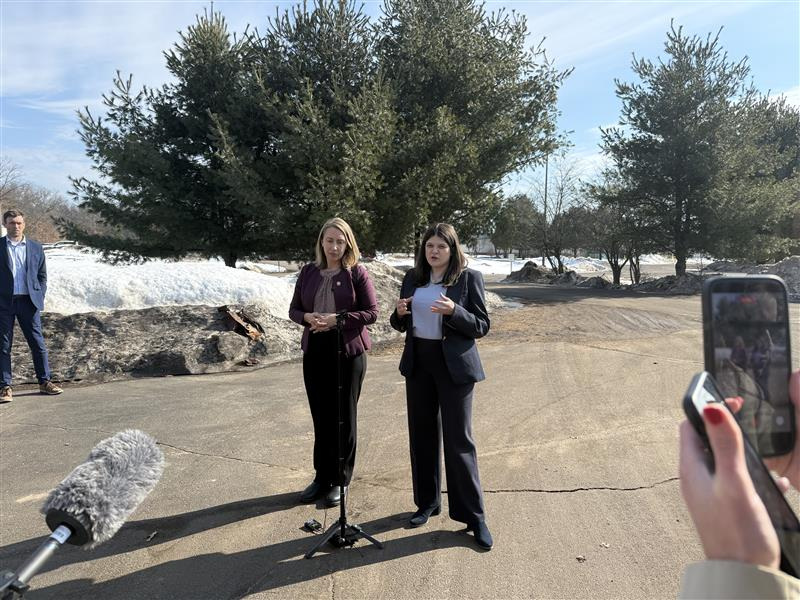
During their Feb. 17 tour of North Lake, U.S. Reps Haley Stevens, D-Birmingham, and Hillary Scholten, D-Grand Rapids, said a member of the Chaldean community living in Macomb — the only English-speaking male detainee they said they were permitted to meet with — reported being held in solitary confinement for weeks in a room so cold he could not feel his toes.
Detention center officials were present for the interview, and the man said he feared retribution if he spoke candidly, Scholten told reporters after the tour.
“We’re going to be following up to make sure that this gentleman who spoke so freely to us doesn’t experience the retribution he’s afraid of experiencing,” Scholten said.
Five days later, Atou said detention center guards shackled his hands and feet and took him to Detroit Metro Airport. This time, he said six ICE agents were waiting. They marched him to the gate of a Royal Jordanian Airlines flight to Baghdad and, when he began to protest his removal, picked him up and carried him onto the plane, Atou said.
Atou said he yelled and screamed, but the commotion did not prompt airline staff to intervene. He said two ICE agents took seats beside him, blocking the aisle, and the door shut and the plane took off.
Royal Jordanian Airlines did not respond to a request for comment.
ICE said Atou’s removal was not the result of his speaking out to lawmakers, saying it “was scheduled well in advance of any congressional visit or notification of a visit.”
A spokesperson for Scholten declined to answer Free Press questions about Atou’s case, citing “casework privacy,” but said, “This issue is extremely important to the congresswoman.”
A spokesperson for Stevens, who is running for U.S. Senate, said “Rep. Stevens’ office is here to help and assist with federal casework on behalf of constituents in her district. She and her team are working diligently to stand up for Michiganders against the outrageous abuses of power of the Trump administration.” Atou was not living in her district before he was last detained.
When Atou arrived in Jordan, he said an ICE agent handed him the cell phone and $60 he’d arrived with at North Lake eight months earlier, and pointed him to his connecting flight to Baghdad.
In Iraq, he said government agents briefly interrogated him about why he’d been deported without a passport or other documentation showing he was Iraqi, then told him, “‘You’re free to go.’”
“I said, ‘Wait, where am I going to go?’ ”
Isolated in his rooftop room a month later, hopelessness was setting in. Baghdad is dotted with security checkpoints, and he had left the unit just three times — always with a local acquaintance to serve as an escort, he said.
When he was in Michigan, Atou said he wrote every day, documenting detention center guards’ treatment of him and his fellow inmates, in hopes it could change something.
In Iraq, he says, he hasn’t picked up a pen.
“I don’t know, I’m just so down,” Atou said. “I’m very tired … I feel dead.”
Macomb girlfriend maintains hope
On a morning shortly after Atou arrived in Baghdad, his longtime girlfriend woke up in Macomb with her pillow soaked in tears.
Before Atou met Raida Shamo in 2019, his lengthy detention and looming deportation had left him prone to worst-case thinking. When Sarmad got engaged to his now-wife, he said Sanan warned him not to have kids, because he wouldn’t want “them growing up knowing their dad got deported and killed,” Sarmad said.
Sanan Atou tried to live his own life at a distance, too, telling Shamo after they met: “You cannot fall in love with me, we’ll never be close, we can only be friends because I have a problem.”
Shamo pushed back, telling him “when two people who’ve been through a lot get together, they become stronger,” he said.
Shamo’s own harrowing journey from Iraq to the United States involved her family selling her to a man who left her to raise three now-adult children alone, she said.
Not one to easily give in to gloom, when Shamo saw she’d been crying about Atou’s deportation even in her sleep, she decided to pray.
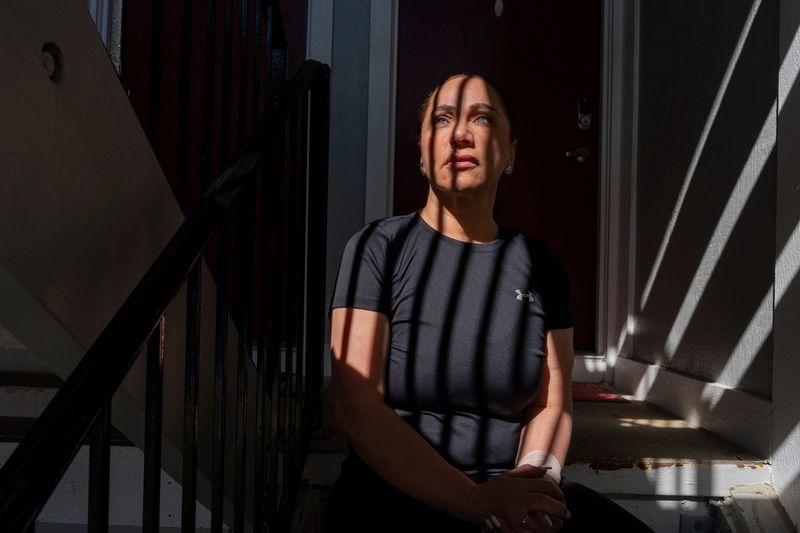
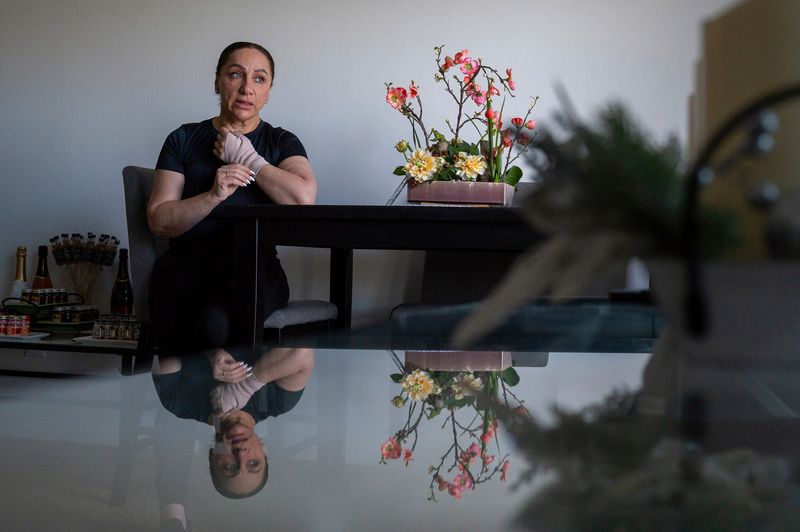
“I told God, ‘if you’re real, show me something,’ ” Shamo, who is also Chaldean, told the Free Press in her spotless apartment April 17, her dark hair pulled back into a tight bun. “It’s bad to say that, but I went to sleep again and I wake up and Sanan called me and he’s like … it just happened.”
The “it,” she said, was an answer to her prayer: Just before the airport closed, threatening to put Atou on the streets in the midst of a war, an airport worker offered him shelter at a relative’s building. Then, in another stroke of luck, Shamo said the building’s owner turned out to be one of her distant relatives. When Atou couldn’t understand the man in Arabic, Shamo offered to translate, and learned he shared her mother’s maiden name and was from the same village.
“I’m like, ‘OK, I guess you have somewhere to sleep,’ ” Shamo said.
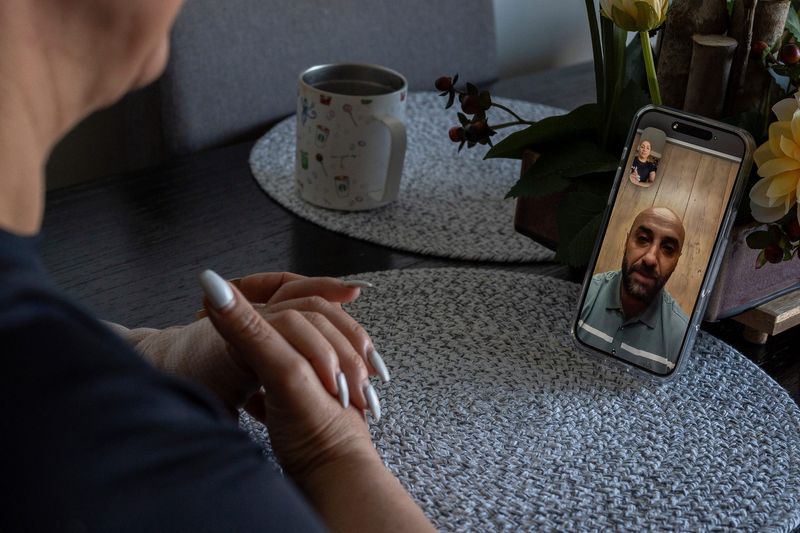
Shamo and Atou speak a handful of times each day, often staying up into the early-morning hours to bridge the seven-hour time difference. Shamo’s iPhone photo gallery is a scroll of screenshots of the calls; she prefers to snap the ones where Atou is smiling, after one of them has cracked a joke. Laughter, she says, helps keep the tears at bay.
On an April 17 call, Atou grinned as Shamo complained she was too camera-shy for the Free Press photos being taken of her.
“This guy here took 500 pictures,” Shamo said. “I look to the right, take 100 pictures. I look to the left, take more pictures.”
Risky plan to reach Kurdistan
The call turned serious as Atou shared an update on his options to escape Baghdad.
He was still awaiting word from the ACLU about whether there was an immigration attorney who could potentially reopen his case in the United States pro bono. Legal return after deportation is extremely rare; in a recent case out of Maryland, the Trump administration conceded it made an “administrative error” in deporting a man to El Salvador and still fought efforts to return him to the United States.
Six hours from Baghdad, in the village where he was baptized, Atou believed there may be a record of him, but there were checkpoints along the route and the village — torn apart by ISIS — “might not even have a computer,” he told Shamo. He had explored obtaining a fake ID that could get him across the border to Jordan, where he could try to seek refugee status through the United Nations, but getting caught with forged documents in a country Americans have been told to leave would only raise suspicions, he said. Another deportee he knows of — the one shot and wounded in 2018 — survived eight months in hiding before slipping into Turkey; he, however, had U.S. SWAT training.
It all sounds like the stuff of action movies.
Still, in her apartment in mid-April, Shamo remained optimistic. She said she envisioned reuniting with Atou at an airport in the United States or the Middle East. This time, she joked, she’d wear a dress to look more photo-appropriate.
“God wrote me a long journey,” Atou texted a Free Press reporter several days later. “I’m fighting isolation … but Raida and my family give me strength.”
As the Free Press reported Atou’s story, his situation worsened. By April 28, he was essentially on the run. Word had gotten out that an American was hiding in a Baghdad building and the risk of kidnapping had become too great to stay, he said.
During a FaceTime call from what he said was a hotel about 30 miles away, Atou told the Free Press he planned to pay smugglers to take him to Erbil, in Iraq’s Kurdistan Region, a semiautonomous federal region in the north considered safer for Americans and Christians. He said he expected to hide in the sleeper bed of a truck at checkpoints, and for the driver to bribe security officials to avoid searches.
In Erbil, however, Atou would still be stuck in limbo, without a passport or documentation to leave the country legally.
“I have to spend my life getting smuggled,” he said. “I’m never going to get settled.”
Asked whether he could handle that, Atou said, “There’s no telling. I’m trying right now. I’m trying my best.”
Same upbringing, different outcomes
Sarmad Atou says his brother should have gotten the same second chance he did.
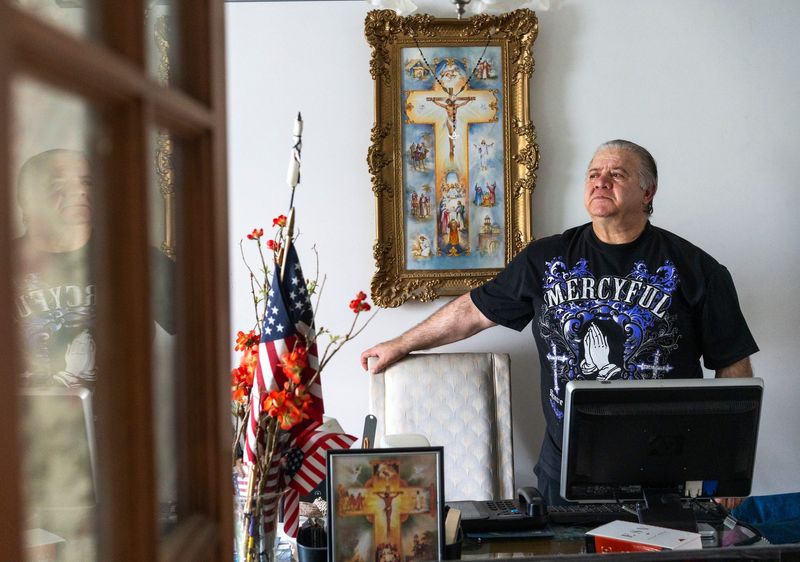
Sarmad, 40, is a lawful permanent resident of the United States and married with two kids. He owns his home in Sterling Heights, where he flies an American flag, and he crisscrosses the country as a delivery driver in a truck he has lined with U.S. flag and military logo souvenir pins.
Sarmad does not fault Trump for his brother’s situation, noting both he and Sanan first received removal orders under Obama and that the most recent push to deport Sanan began under Biden. Trump, Sarmad said, forced his own case to a conclusion, and he hopes to gain citizenship while the president is still in office.
“I really thank Trump … because I would have never had my papers this day,” Sarmad said.
But Sarmad says he can’t reconcile why his brother’s life is now at risk in a country he barely remembers and that won’t claim him.
“What is the difference between us and Americans?” Sarmad said. “We were both raised as Americans. We went to the same schools, we read the same books, we learned the same history.”
It comes down to, he said, “a piece of paper.”
“That’s what’s the difference. But in state of mind … (in) memories, I’ve had an American life, and Sanan as well. He’s had an American life.”
Violet Ikonomova is an investigative reporter at the Detroit Free Press focused on government and police accountability. Contact her at vikonomova@freepress.com.
This article originally appeared on Detroit Free Press: Chaldean metro Detroiter deported to Iraq fears war, kidnapping
Reporting by Violet Ikonomova, Detroit Free Press / Detroit Free Press
USA TODAY Network via Reuters Connect