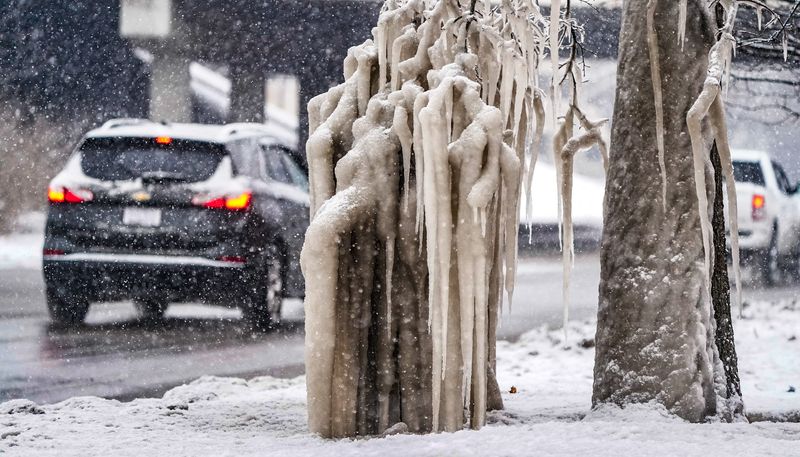
A blizzard warning is in effect for Michigan’s Upper Peninsula as a bomb cyclone — a rapidly intensifying winter storm — crosses the Great Lakes region.
The system is expected to bring heavy snow and strong winds across Michigan this weekend into Monday, Dec. 29, with impacts peaking as the storm moves northeast. Forecasters say cold air will follow the initial precipitation, with gusty winds across the state — especially in West Michigan and the Upper Peninsula. Blizzard and winter storm warnings are in place as the low strengthens over the lakes; the National Weather Service expects it to create near-zero visibility, dangerous travel conditions, and significant snow accumulations, particularly in the Upper Peninsula.

“A rapidly intensifying low pressure system will bring a plethora of impactful winter weather hazards through early next week over the Upper Midwest, Great Lakes, and Northeast. Heavy snow, blizzard conditions, treacherous icing, high winds, and bitterly cold wind chills are expected,” the National Weather Service Weather Prediction Center said on X on Dec. 28.
According to the NWS Probabilistic Precipitation Portal, snowfall totals through Wednesday morning could include 25 inches in Munising, 19 inches in Marquette, 13 inches in Sault Ste. Marie, and 12 inches in Traverse City and Gaylord, with lesser amounts expected farther south and east.
What’s a bomb cyclone?
A bomb cyclone is a rapidly intensifying storm that strengthens extremely quickly — defined as a drop in atmospheric pressure of at least 24 millibars in 24 hours, according to NOAA. This rapid deepening makes the storm unusually powerful, generating high winds, heavy precipitation, and dangerous travel conditions in a short period of time.
For Michigan, bomb cyclones are especially disruptive because the Great Lakes can amplify the storm’s effects. Winds whipping across the lakes can increase snowfall through lake-effect snow, near-zero visibility and blizzard conditions.
How does a bomb cyclone form?
A bomb cyclone forms when a low-pressure system intensifies very rapidly, creating a powerful winter storm.
It begins when cold, dense air from the north meets warmer, moist air from the south, producing a sharp temperature contrast that fuels the system. As the storm organizes, its central pressure drops quickly, strengthening winds and drawing in more moisture.
Strong upper-level winds in the jet stream help lift air away from the surface, allowing the pressure to fall even faster. When the storm passes over large bodies of water, like the Great Lakes, additional moisture can feed into the system, increasing snowfall and wind locally.
This combination of factors — sharp temperature contrasts, rapid pressure drop, jet stream support and sometimes lake enhancement — is what makes a bomb cyclone so intense, capable of producing blizzard conditions and heavy snow in a short period of time.
Current Michigan weather warnings, watches, advisories
Michigan Upper Peninsula Doppler radar
Stay informed. Get weather alerts via text
Brandi D. Addison covers weather across the United States as the Weather Connect Reporter for the USA TODAY Network. She can be reached at baddison@gannett.com. Find her on Facebook here.
This article originally appeared on Detroit Free Press: Bomb cyclone will create blizzard conditions in UP. What’s a ‘bomb cyclone’?
Reporting by Brandi D. Addison, USA TODAY NETWORK / Detroit Free Press
USA TODAY Network via Reuters Connect