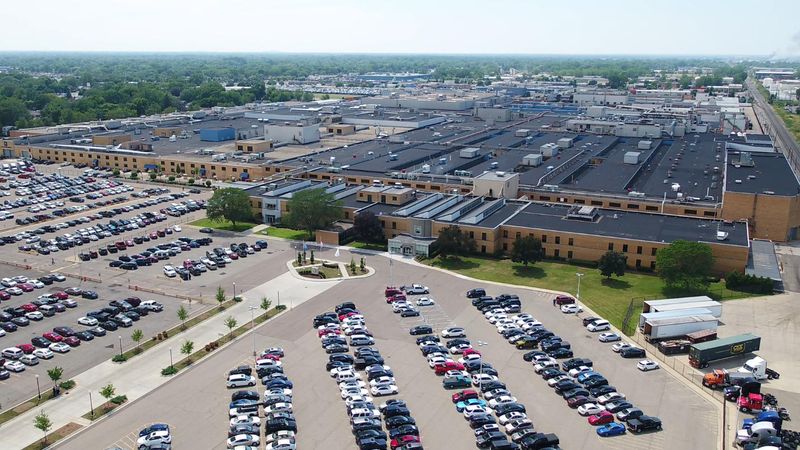
Leaders of the United Auto Workers, who have criticized President Donald Trump but firmly support his tariffs, are celebrating import duties as the cause for Detroit Diesel’s latest announcement that it will be adding a third shift, recalling laid-off workers and adding jobs to the facility.
The Daimler-owned Detroit Diesel, originally formed as a General Motors subsidiary in 1938, currently employs about 3,000 people at its manufacturing plant, which straddles Detroit and Redford Township.

Daimler, and, by extension, Detroit Diesel, has been navigating the impact of a 25% tariff imposed by Trump in October. The move was intended, Trump said at the time, to bring back jobs to U.S. soil that had been offshored over the last few decades.
The UAW was among those who lobbied for those tariffs, and celebrated the move when it was implemented.
“We have pushed for action like this for decades, and we congratulate President Trump for delivering for heavy truck workers everywhere. Let’s keep going and rewrite our broken trade rules,” UAW President Shawn Fain said in a news release at the time.
Now, the union is saying tariffs are actualizing job growth for its members, pointing to Detroit Diesel.
“The move (at Detroit Diesel) is the latest win for UAW members in the union’s fight for reshoring and reinvesting in good union jobs,” the UAW said in a news release on March 11.
“Strategic, targeted tariffs are an important tool in the toolbox to undo the damage of our free trade disaster and bring back good union jobs to the U.S.,” Fain said in the same release. “Companies like Detroit Diesel, and their parent company Daimler Truck North America, need to step up to reinvest in the workers who make the product and stop laying off American workers while making billions in profit. We applaud this first step in the right direction.”
Employees at Detroit Diesel make heavy duty engines, axels and transmissions for heavy truck and vehicle companies like Freightliner, Western Star and Thomas Built Buses.
Union-represented employees at Detroit Diesel overwhelmingly approved their last contract, voting by 99% to ratify it.
How are tariffs working?
For workers, the union says tariffs are a useful tool to inspire job growth in the United States.
Indeed, tariffs have secured commitments from automakers and suppliers to bring jobs onto U.S. soil, but the auto market is still struggling. Prices are high, leasing terms are longer and companies are paying massive prices to keep up with Trump’s about-faces on Biden-era federal incentives to electrify.
In an effort to mitigate tariff impacts, all Detroit Three automakers have made multibillion dollar investments to grow their manufacturing footprints in the country.
Stellantis dropped $13 billion into its Midwestern manufacturing operations in October, saying the move will create about 25,000 jobs between Stellantis facilities and surrounding suppliers. General Motors in June pledged a $4 billion investment into the United States without giving specific job growth estimates. Ford, too, has touted an investment of nearly $5 billion in the United States, though that investment is expected to result in 600 fewer jobs in Ford facilities. Those 600 employees will receive buyout offers, Ford has said.
Automotive tariffs, like those placed on heavy trucks in October, were not included in the slew of tariffs the U.S. Supreme Court overturned in February.
According to Edmunds, an automotive insights group, automakers seem to be absorbing the impacts of tariffs well, with vehicle prices stabilizing, even if they are going stagnant at historical highs.
According to data from February, the average transaction price on a new vehicle sale is at $48,776, and the average monthly payment on a new car purchase is now $775, more than 40% higher than it was in 2019.
Liam Rappleye covers Stellantis and the UAW for the Detroit Free Press. Contact him: LRappleye@freepress.com.
This article originally appeared on Detroit Free Press: As Detroit Diesel adds shift, more jobs, UAW says tariffs are working
Reporting by Liam Rappleye, Detroit Free Press / Detroit Free Press
USA TODAY Network via Reuters Connect