

Lyon Township — As data center proposals divide communities across Michigan, officials who have imposed moratoriums across Metro Detroit are racing to update their zoning ordinances, putting potential limits in place on everything from noise and light pollution to water consumption and electricity use.
A slew of communities across Metro Detroit are now in the midst of updating their zoning policies, including Detroit, Gibraltar, Rochester Hills, Sterling Heights and Washington Township. Some expect to be done in a matter of weeks to months. Zoning ordinances are detailed planning documents that specify which developments can go in specific areas in a community and what restrictions are in place.

Several cities are weighing regulations that would limit data center proposals to industrial areas. Others are considering bigger setbacks from “sensitive uses” such as schools and churches for data centers, which are sprawling facilities that hold computers, servers and other equipment that power the internet.
In Van Buren Township, where a massive data center project is moving forward on Haggerty Road and the township has approved approximately $125 million in tax abatements over a 12-year period, township officials said they could possibly revoke those abatements if the data center operator, Google, violates restrictions on issues such as sound.
“They have to operate the way they say they’re going to operate or they lose this,” said Van Buren Township Supervisor Kevin McNamara at a Board of Trustees meeting in late May.
Zoning is the main tool cities and townships have to regulate data centers, said John Jackson, the president of Northville-based urban planning consulting firm McKenna. Municipalities are asking Jackson’s company for help in drafting zoning changes to specifically cover data centers at an increasing clip, he said. Gibraltar is among McKenna’s existing clients that have hired them to draft a pending ordinance amendment.
“Since we’ve been involved in this, you get new technology, new types of land uses, and then communities have to scramble to try to develop fair regulations in terms of how to deal with those. So that’s what we’re seeing right now,” Jackson said.
Rochester Hills, which this week extended its moratorium on data center proposals until March of next year to give city officials more time to update their zoning ordinance, is looking at least six factors as it makes changes. Factors include noise, vibration, light pollution, water requirements, electricity demands, and their compatibility with residential and other zoning districts.
Sterling Heights, meanwhile, is in the midst of updating its entire zoning ordinance, which it hopes to have done by the end of the year.
Jake Parcell, the city planner and development manager, said Sterling Heights is researching what other communities locally and nationally are doing about data centers and other rapidly changing technologies, such as electric vehicle chargers and solar.
“Our goal is to be flexible to accommodate changes in tech without needing to amend an ordinance every year,” Parcell said.
Whatever communities do on data centers, they’re being closely watched.
Corinne Graper has been intently following the process in Washington Township to update the township’s zoning ordinance after a proposal to build a data center in the northern Macomb County community was withdrawn by a California-based firm. She said the township’s third-party planning consultant, Spalding DeDecker, is working with experts to develop the ordinance, and updated drafts of the ordinance have gone before the Washington Township Planning Commission every few months.
Graper and other residents opposed to data center developments in their community know what they’d like to see. They’d like “distance requirements” in which data centers would have to be 1,000 feet or more away from homes, schools, sports centers and senior citizens’ homes, she said.
The committee also wants noise ordinances in place that measure the different kinds of noise that data centers make.
“We want those measured not just at the data center, but at the level from the receiving party,” Graper said. “So there are lots of ways that data center developers can get around ordinances. So we feel like our town, and certainly our committee, has to stay on top of things, because these data center developers are smart, and they will manipulate words to get around ordinances, and we really have to make them airtight.”
Why data centers are controversial in some areas
Debate and public ire have intensified in recent months as tech tycoons race to build gargantuan data centers used to train AI tools, known as “hyperscale” data centers.
Residents in cities and townships where companies have sought to build data centers have shown up to public meetings in droves over everything from water and energy use to how these massive facilities will create noise and impact property values.
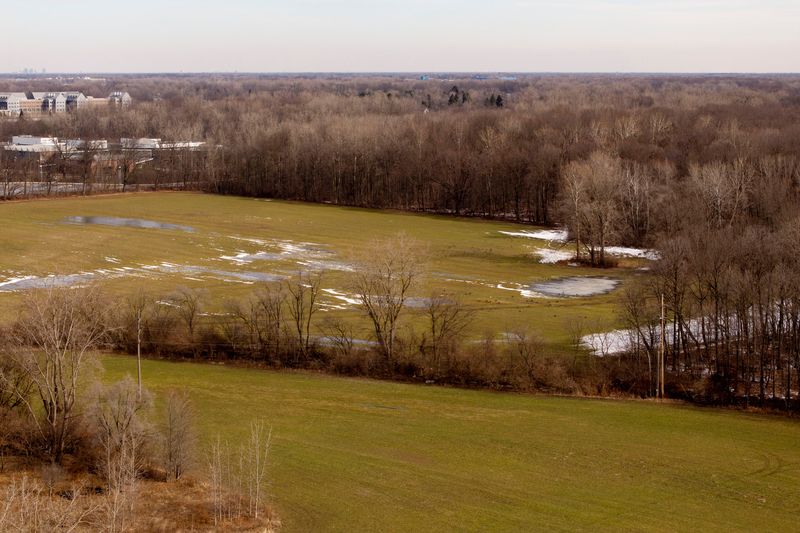
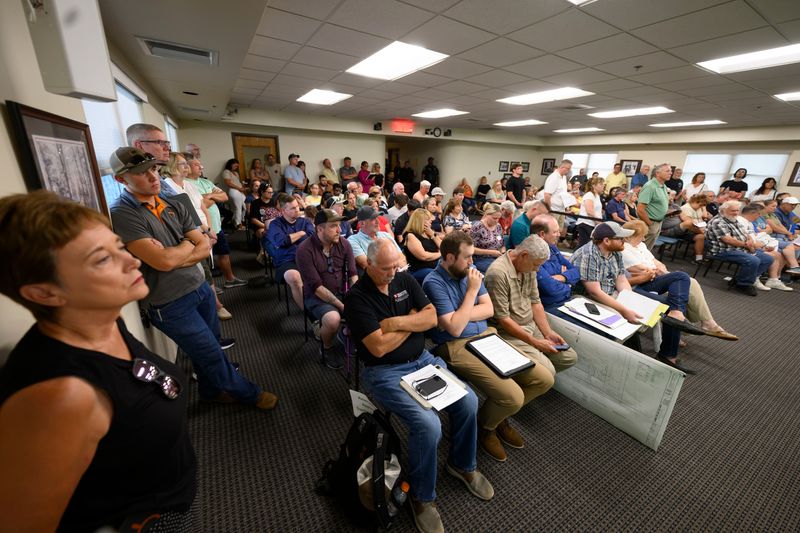
At a recent Lyon Township Planning Commission meeting, more than 50 people packed the auditorium, many opposed to a 1.8-million-square-foot data center project, Project Flex, that’s already moving forward on more than 170 acres east of Milford Road. A sign outside the meeting space read “No Data Center Lyon Township.”
The lack of approval from the township’s highest governing body has been a sticking point in this largely rural community in western Oakland County. The township’s planning commission approved the plan for Project Flex in September 2025 because variances or zoning changes weren’t needed.
“This proposal was so big, it should have been put before the public,” said resident Paul Lavoie, 77, at an Aug. 10 planning commission meeting.
While the majority of speakers at that Aug. 10 meeting opposed the data center, a handful supported it. Bethany Wheeler of Warren said she’s benefited from living next to two data centers because her electrical grid was updated.
Township officials are working to update Lyon’s ordinance. Township Planner Brian Keesey said he’s added a “trigger” to the proposed ordinance that would subject buildings that use more than five megawatts of power to the ordinance. He also said township officials have talked about adding a trigger for water consumption.
The ordinance would include setbacks from “sensitive uses” like schools and churches. He also said large land uses would require a 250-foot setback.
“Even if you were to be comfortable with the ordinance — which I don’t expect you to be — we would need to schedule a public hearing, and we’re a couple of months out before adoption,” Keesey said.
Outdated zoning ordinances that don’t handle data centers
Many local zoning ordinances haven’t kept pace with today’s evolving technology and reliance on artificial intelligence or AI, some city officials said.
“This type of intense land use is obviously evolving quickly over the last few years, and our existing zoning requirements weren’t as explicit and clear for this land use type,” said Pontiac Mayor Mike McGuinness, whose city is aiming to put an ordinance regulating data centers before the council.
In Sterling Heights, where the City Council passed a one-year moratorium in February on data center proposals, Parcell, the city’s planner, said the city is updating its entire zoning ordinance. All industrial standards and data center information will be updated in line with the overall ordinance, he said. The city plans to have “a full, or mostly full draft” by the end of the year, he said.
Since Sterling Heights is doing an entire rewrite of its zoning ordinance, it will have “ample public engagement opportunities” in which citizens can provide feedback, Parcell said. The city has already had two open houses and four supplemental Planning Commission meetings about the overall ordinance rewrite, and it plans to host more open houses, he said.
Parcell said the city has been reviewing an ordinance that the city of Rochester Hills has been working on. He said Sterling Heights is “looking at all options” on data center zoning changes.
“There are constantly research papers out, trainings we attend, and more,” he said. “The national planning conference this year had three sessions on data centers we have been engaged with since that conference.”
Why zoning matters
Municipalities’ regulation of data centers involves examining whether a proposed project is on an appropriately zoned piece of land and whether it meets site design requirements for the zoned land use, such as the building’s scale, landscaping, setbacks, lighting, and noise. Communities also have to look at data centers’ expected impact on other neighboring developments.
But other agencies also have a say in regulating data centers because of aspects like their water and energy use, said McKenna consulting firm’s Jackson.
“Whereas in the past, a lot of the impacts could be controlled strictly locally, so that’s made this process a little more complex as we figure out how to fairly regulate these facilities,” he said.
Gibraltar, which is working with McKenna’s firm, approved a data center moratorium amid a pending proposal to build one. California-based company Raeden is seeking to put a data center on a former McLouth Steel plant site on Jefferson Avenue.
Since the Gibraltar City Council put a year-long moratorium in place in March, the city hired McKenna to draft amendments to its zoning ordinance. The proposed changes would allow data centers only as a special land use (which requires a public hearing to approve) in medium industrial zones and could not be located within 1,000 feet of any residential parcel.
Data center developers would also have to submit various studies and plans for operations such as water use, noise control, landscaping, hazardous waste management and landscaping.
Rochester Hills is updating its ordinance to define data centers, determine where they can go and try to limit impacts on the community, said Planning and Economic Development Director Sara Roediger.
If passed as it currently is written, data centers would have to be placed in industrial districts in the city, Roediger said.
“Our concern is really the impact on our residents, neighboring properties and the environment,” she said.
Regulations moving forward in rural, urban Oakland County
The Pontiac City Council passed its six-month moratorium in January after Mayor McGuinness got inquiries about data centers following his election. It was renewed for an additional six months in June.
The ordinance has been reviewed by the city’s planning commission and will likely go before the City Council for an initial reading in late August or early September, McGuinness said.
“The impetus for us is the fast-changing landscape for this type of facility, and that the city of Pontiac has not had to contend with such a use, and our governing documents and land use requirements needed to be seen with fresh eyes,” the mayor said.
Like Rochester Hills, the Pontiac ordinance would require data centers only be built in industrial areas. It would also require the developers to show how it will affect the surrounding area in terms of noise, electrical use, backup power systems and hazardous materials.
“It also requires additional review by City Council, so rather than it just being the planning commission, it will ultimately have to also go before City Council,” McGuinness said.
‘$150 ordinance tickets are not going to slow anybody down’
Jackson, the consultant, said as a general principle, cities and townships in Michigan can’t exclude a whole type of land use, whether it is data centers, gas stations or multifamily housing. The stringency of review for a proposed development depends on whether the zoning for a piece of land is categorized as “use by right,” or a special land use.
Use by right assumes a type of development is allowed as long as the proposal meets the site standards for the zoned land use, Jackson said.
In contrast, special land use designations put the onus on developers to show during the review process their projects won’t harm other existing or future developments in the immediate area.
Special land uses require rezoning and higher review thresholds than use-by-right zoning, Jackson said, and cities and townships rely on their master plans that lay out where certain land uses are appropriate in the community.
What that all comes down to: Local governments can’t ban data centers just because they don’t like them, he said.
“The special land use process does provide the local municipality with discretion, but they have to also create a record that they analyzed all of the impacts objectively to show that the impacts would have a proportionately negative impact on the existing land uses,” Jackson said.
Van Buren Township and ‘Project Cannoli’
McNamara, the Van Buren Township supervisor, defended his community’s process for approving a planned hyperscale data center, known as “Project Cannoli,” in a presentation Tuesday to the Wayne County Commission’s Ways and Means Committee.
Van Buren Township has had language in its zoning specifically about data centers since 2018. McNamara said the Michigan law, known as Public Act 198, allows Van Buren Township to grant tax breaks to the data center and gives the township a powerful way of enforcing its ordinances. For the data center to receive the tax incentive, the township has negotiated requirements for noise reduction, landscaping and water use.
As part of the agreement, Google, which is behind the Project Cannoli, must pay any difference in water rates in the township if they increase as a result of the data center.
If the data center violates the terms of the tax incentive agreement, Van Buren Township can petition to end the tax abatement, McNamara said.
He told the Wayne County commissioners that he believes the ability to take away the benefit is worth tens of millions of dollars and has much sharper teeth than trying to enforce the township’s regulations by writing ordinance tickets. It also gives the government the chance to negotiate requirements for the data center on their own terms.
“$150 ordinance tickets are not going to slow anybody down,” McNamara said. “The data center will fix the problem for $150 million.”
asnabes@detroitnews.com
mbryan@detroitnews.com
This article originally appeared on The Detroit News: As data center issues persist, Detroit area towns look to strengthen rules
Reporting by Max Bryan, Julia Cardi and Anne Snabes, The Detroit News / The Detroit News
USA TODAY Network via Reuters Connect

By Max Bryan, Julia Cardi and Anne Snabes, The Detroit News | USA TODAY Network
