History is often hidden in plain sight, but in Northern Michigan, a collaborative effort is pulling the past back into the light for modern travelers.
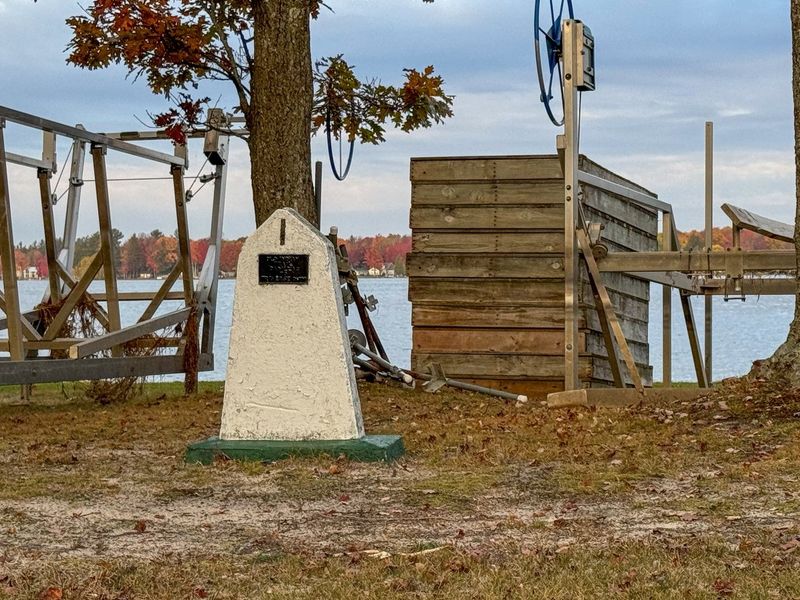
Led by the Cadillac Area Visitors Bureau and guided by the blessing of the Little Traverse Bay Bands of Odawa Indians, a project refurbishing more than a dozen 1940s-era trail markers is breathing new life into an ancient Native American pathway.

Stretching from Cadillac to Traverse City, this 55-mile-long route was used by the Anishnaabe people as early as the 1200s. These ancestors formed the Three Fires Confederacy, composed of the Ojibwe, Odawa and Potawatomi tribes.
By combining the craftsmanship of a local artist with modern GPS mapping, this project isn’t just preserving concrete markers — it’s strengthening the cultural and economic connection between Northern Michigan’s rural communities and their indigenous roots.
Known as the Historic Old Indian Trail, the pathway was used for centuries by the Odawa people who inhabited the lakes, woods, and hills of this northwestern corner of the lower peninsula.
The trail is one of many original tribal paths that criss-crossed Michigan, some of which survive as major highways today. For instance, part of the Saginaw Trail from Toledo through Saginaw to Mackinac now forms the Dixie Highway, according to a study by Michigan State University.
The journey along the Old Indian Trail begins on the northeastern shore of Lake Mitchell in Cadillac. The Anishinaabe visited the area to harvest the rich natural food and forest resources.
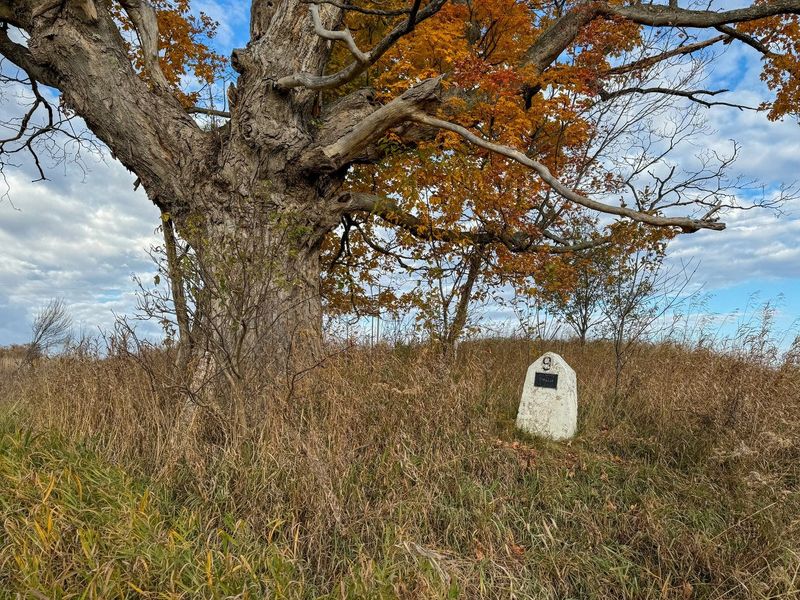
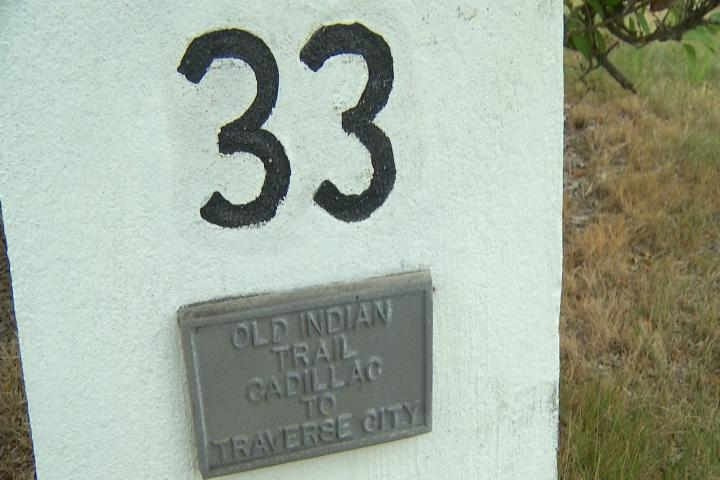
Thirty-three markers have been placed along the route through Wexford and Grand Traverse counties, most of them positioned along accessible rural roads. The final marker awaits at West End Beach in Traverse City.
The Cadillac Area Visitors Bureau, acting as stewards of the local environment and history, decided to invest in the Old Indian Trail last year. The bureau created a themed guide detailing GPS coordinates and a map to help modern explorers follow the markers.
“There has been an increased interest from visitors requesting information and brochures, as well as wanting to visit the trail markers in person,” says Marci Hensley, tourism engagement manager for the Cadillac bureau. “Because the materials had not been updated in quite some time, we felt it was important to refresh the information and photos. During this process, we also noticed many markers needed repair, aligning with our commitment to stewardship.”
The bureau commissioned Scott Buckmaster, a local artist and retired teacher, to restore the markers. Frank Ettawageshik, former tribal chairman of the Little Traverse Bay Bands of Odawa Indians, blessed the effort, while the Wexford County Historical Society also provided assistance.
Cadillac’s efforts focused specifically on the Wexford County portion of the journey.
“It’s been a real honor to walk that path, to know that I was walking where thousands of people walked over eons,” Buckmaster says. “It was an honor to set right what time has forgotten. You walk through places that must have been all trees at one time.”
Buckmaster spent long days over three weekends restoring the markers. It wasn’t an easy trek; three markers were so far “off the beaten path” they required a chainsaw to clear the brush. He couldn’t reach two others — one was guarded by a bull in a field near Meauwataka, and another sat in a swampy patch near the North Country Trail. “It would have required a boat or kayak to get to it,” he notes.
He found the markers in various states of disrepair, some damaged by vehicles or weather. He patched, cleaned, and painted them a bright, visible white, with numbers in black.
Historical records suggest the trail’s origins could be even older than the 13th century, possibly dating back to 700 BC, according to Cadillac officials.
The first markers in Wexford County were placed along the trail decades ago by Milo Petoskey Crosby, who moved to the region in the late 1800s and became fascinated by the pathway. Initially, he used historical documents to walk and map the trail himself. Later, in the 1940s, he placed 14 stone markers along the route, beginning at Lake Mitchell. His work was continued by historian James Comp and retired teacher Ed Babcock, who added five markers along the trail.
In 1987, after years of planning, researching and fundraising, Ettawageshik and the Grand Traverse Sesquicentennial group placed the final 14 markers, connecting to Traverse City’s West Bay.
Today, with 17 of the 19 Wexford County markers repaired, travelers can loosely follow the ancient path by car. While hiking the full length isn’t advised because it crosses private property, the driving route offers a unique window into the past.
“For several centuries, Odawa people have been on these shores and in the woods and hills of this land. We are living amid the places from which spring the stories of our world, ourselves, our families and our tribal nation. The original tribal trails throughout Michigan are a walk through history,” Ettawageshik wrote in a blog post on the Cadillac tourism website.
The restoration of these markers is a local reflection of a statewide movement. From landmark legislation to restorative naming, Michigan is actively reshaping its tourism and identity to give Native American culture the prominence it deserves.
“Native American history and culture are an integral part of our efforts to promote Michigan as a world-class travel destination,” says Kelly Wolgamott, vice president of Pure Michigan, part of the Michigan Economic Development Corporation. “From tribal museums and cultural centers to indigenous art galleries and historic sites, destinations throughout the state offer travelers the opportunity to discover and explore Michigan’s Native American heritage and traditions.”
Cadillac officials are now looking toward the future, talking to those involved in the Anishinaabe Cultural Marker Project about restoring markers along the northern leg in Grand Traverse County. Meanwhile, Buckmaster hopes to return this spring to finish the markers he couldn’t reach.
Travelers can see the transformation of these historic waypoints in a blog post on the Cadillac website. As Hensley puts it, these updates help “support and preserve an important tourism asset,” ensuring the Old Indian Trail remains a visible part of the Michigan landscape.
Historic Old Indian Trail
The Cadillac Area Visitors Bureau
201 N. Mitchell St.
Cadillac, MI 49601
231-775-0657
To download a map, go here.
This article originally appeared on The Detroit News: Ancient Michigan trail markers get new life
Reporting by Greg Tasker, Special to The Detroit News / The Detroit News
USA TODAY Network via Reuters Connect