Washington — A bipartisan duo of Michigan lawmakers is backing a push to ban Chinese vehicles from the United States, adding yet more force behind a widespread effort to keep President Donald Trump from opening the American marketplace to a major competitive threat.
Republican U.S. Rep. John Moolenaar of Caledonia and Democratic Rep. Debbie Dingell of Ann Arbor introduced a bill on Monday titled the Connected Vehicle Security Act, which seeks to solidify barriers to China building its U.S. automotive presence on both economic and national security grounds.

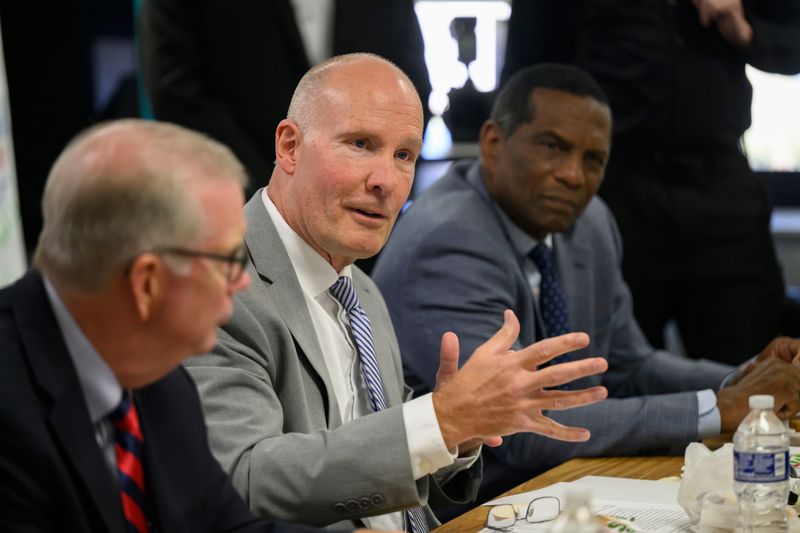
“This legislation that Debbie and I have introduced shows bipartisan support for doing what must be done to protect manufacturing sector jobs and the American people from China’s predatory trade practices and manipulative attacks on American industry,” Moolenaar said during a press conference on the new bill.
The move came a day before Trump flew to China for a summit with Chinese President Xi Jinping to discuss, among other topics, international trade between the United States and its chief geopolitical rival. It’s the latest in a flurry of public pleas to Trump that allowing Chinese companies to manufacture cars and trucks in the United States would be disastrous for a domestic auto industry that has fallen behind China globally in many key areas.
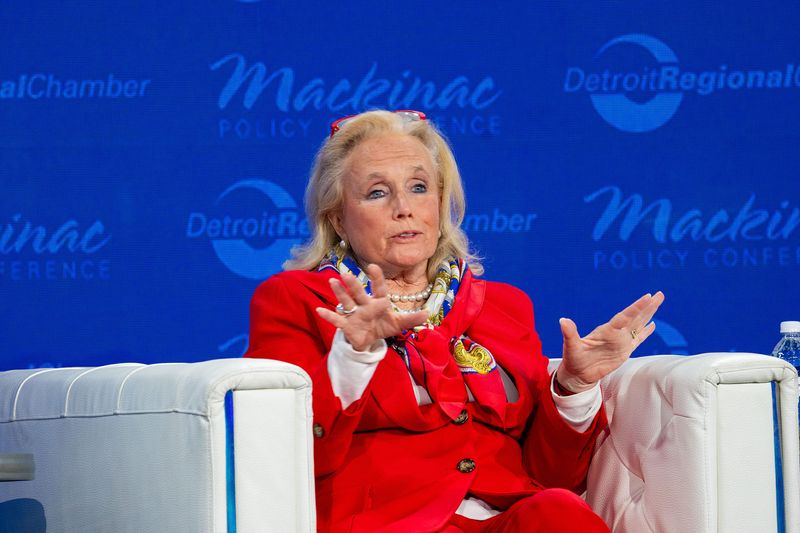
“Unfortunately, there are … too few, rare bipartisan moments these days in Congress,” Dingell said. “And we will fight this with all of our might in a very bipartisan way.”
Lawmakers and industry insiders have said they do not expect the auto sector to be a part of conversations between Trump and Xi this week, though they have noted that anything is possible when Trump is at the negotiating table.
“You never quite know what he’s going to do until he does it,” Dingell said. “So what we’re all trying to do is to send a message to him.”
The proposal from Dingell and Moolenaar is a House companion to a Senate bill introduced last month by the bipartisan duo of Michigan Democrat Elissa Slotkin and Ohio Republican Bernie Moreno. Both bills would ban the import, manufacture and sale of internet-connected vehicles, software and hardware linked to China or other adversaries.
Trump has repeatedly signaled openness to allowing Chinese automakers to manufacture in the United States, on the campaign trail in 2024 and notably during an appearance at the Detroit Economic Club earlier this year.
“If they want to come in, and build the plant, and hire you and hire your friends and your neighbors, that’s great,” Trump told the Detroit Economic Club in January. “I love that. Let China come in. Let Japan come in. They are, and they’ll be building plants, but they’re using our labor.”
Since that comment and in the weeks leading up to Trump’s visit to Beijing, lawmakers and business leaders have lobbied the president and cabinet officials to abandon that position.
Dingell led a group of Democratic U.S. House members in writing a letter to Trump. Moolenaar, who chairs the U.S. House Select Committee on China, joined Republican members on their own letter. On the Senate side, Slotkin and Moreno both signed onto separate partisan missives before teaming up on their bill.
On the industry side, leaders of five major automotive lobbying and trade groups representing automakers, parts suppliers, domestic brands, foreign brands and auto dealers penned a joint letter to four of Trump’s top officials on trade and international affairs ahead of the China summit.
They wrote to “underscore our serious concerns about China’s ongoing efforts to dominate global automotive manufacturing and to gain access to the U.S. market. These actions pose a direct threat to America’s global competitiveness, national security, and automotive industrial base.”
If Trump were to open the U.S. market to Chinese automakers, both Dingell and Moolenaar said they would oppose Michigan competing for their business.
“No,” Dingell said emphatically in response to a question from The Detroit News. “If something like that were to happen, I want to work with my colleague, Mr. Moolenaar, to get legislation passed that never lets that business get built or opened.”
Moolenaar said that he views Michigan’s auto industry as a “fundamental strength” of the state and of the country’s manufacturing and defense base. He cited Michigan’s role as part of the “Arsenal of Democracy” — a term used by President Franklin D. Roosevelt and many since to refer to private industrial players aiding the U.S. military effort during World War II.
“Having China in the midst of that does not serve anyone’s interest,” he added. “So I don’t see that happening, (and) I certainly would oppose that happening.”
gschwab@detroitnews.com
@GrantSchwab
This article originally appeared on The Detroit News: Amid Trump trip, Michigan duo latest to float Chinese car ban
Reporting by Grant Schwab, The Detroit News / The Detroit News
USA TODAY Network via Reuters Connect