For 43 years, the Ungers have lived in the same home in the eastern part of Dearborn. The couple said they like their neighbors, the sense of community and the growing diversity of an area that has one of the highest percentages of Arab Americans in Michigan.
But a couple of years ago in 2023, their peace was disturbed when they started hearing what they said is a loud call to prayer broadcast outdoors through a loudspeaker at a mosque on Schaefer Road, a few blocks west of their house. At least twice a day and during other times, Mike and Andrea Unger would hear the Islamic call to prayer in Arabic, known as the adhan, even when their windows were closed. The Ungers, who are Christian, stress that they like their Muslim neighbors and respect freedom of religion, but feel some in Dearborn are imposing their faith on them.

“This is the first time since we’ve lived here that this has happened,” Mike Unger wrote in a letter in August 2023 to Dearborn Mayor Abdullah Hammoud and City Council members, asking for help. “We live a quarter of a mile away and it can be heard clearly and loudly at our house. … My wife has called several departments in the City of Dearborn about this issue and has gotten various answers.”
Over the past two years, the Ungers and other residents said they have complained to city officials, police officers and mosque leaders about the the sound being overly loud, but said they are still hearing the religious recitation at a high volume. A petition signed by 40 Dearborn residents was sent to council members saying the call to prayer was affecting their “quality of life and tranquility.”
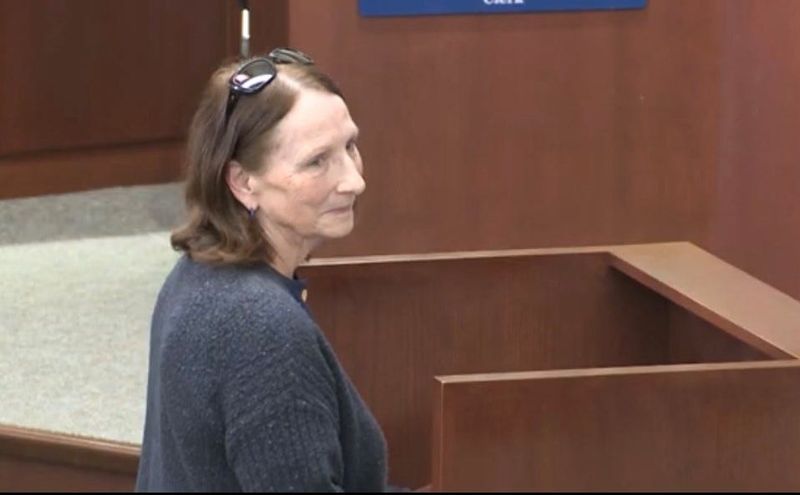
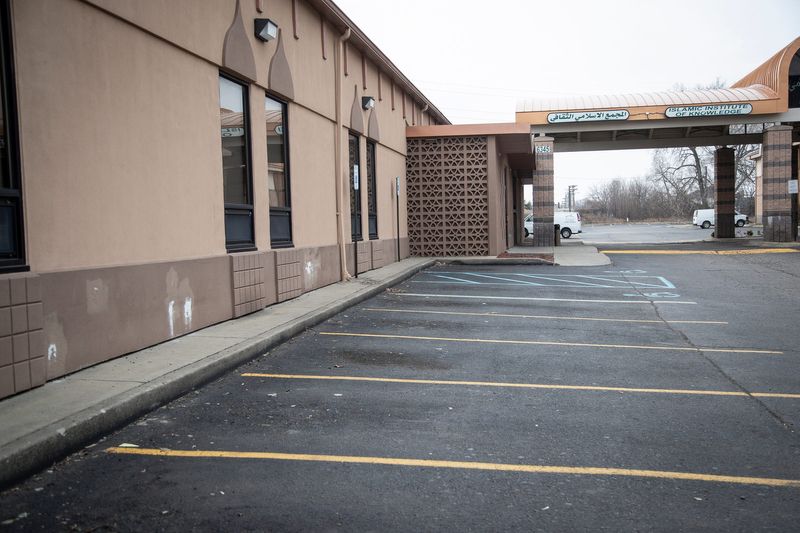
Andrea Unger spoke at the most recent council meeting on Oct. 7, telling council members the loud sounds are continuing from the Islamic Institute of Knowledge, a mosque on Schaefer Road. There are other mosques in the eastern part of Dearborn; it’s unclear whether some of the calls to prayer heard outside may be coming from them. The chair of the Islamic Institute of Knowledge, Akram Bazzi, told the Free Press their mosque is in compliance with the law and only broadcasts the adhan twice a day, but is willing to work with residents to make them happy.
“I’ve been working with the city of Dearborn for over two years now about the violation of the noise ordinance and the invasion of our privacy inside our yard and home,” Unger said at the Oct. 7 meeting. “My husband and I have lived in the same house in east Dearborn for over 40 years, and we’ve never experienced harassment from the mosque on Schaefer, until the last two years, when I spoke with the city council and the mayor. Our city ordinance does not permit unusual, annoying sounds of five minutes or longer, but the mosque continues to violate our privacy inside our home daily. … There is no atheist, Christian, Jewish, Catholic or other group that is allowed to use loudspeakers to blast a five-minute prayer into the homes of people. In the Dearborn community, we have a quiet, clean, cooperative neighborhood of diverse backgrounds, cultures, where neighbors look out for and we care for one another. This is an infringement on the privacy of my home and that of my neighbors.”
At another council meeting in April, Unger said “Muslims are loving people” and in an interview, Unger said she respects all groups, but added that there needs to be respect for others.
“Whether you’re atheist or Christian or Jewish or Muslim, I think we all want to live together, but then we have to know what our boundaries are. … If our rights are infringing on the rights of others, then that’s where the barriers should be,” she told the Free Press. “Play your call to prayer in your building (but not outside) because that’s your religion. We play our hymns in our building because that’s our religion. We don’t force that on anyone else.”
Dearborn City Council President Michael Sareini said the city has been working on the complaints, sending officers and officials to mosques to monitor the volume of the call to prayer. Dearborn Police Chief Issa Shahin said that one time, police removed the knob from the loud speaker of a Dearborn mosque so it wouldn’t increase its volume. At one point this year, Hammoud spoke about the complaints with the chair of the Islamic Institute of Knowledge, the chair said.
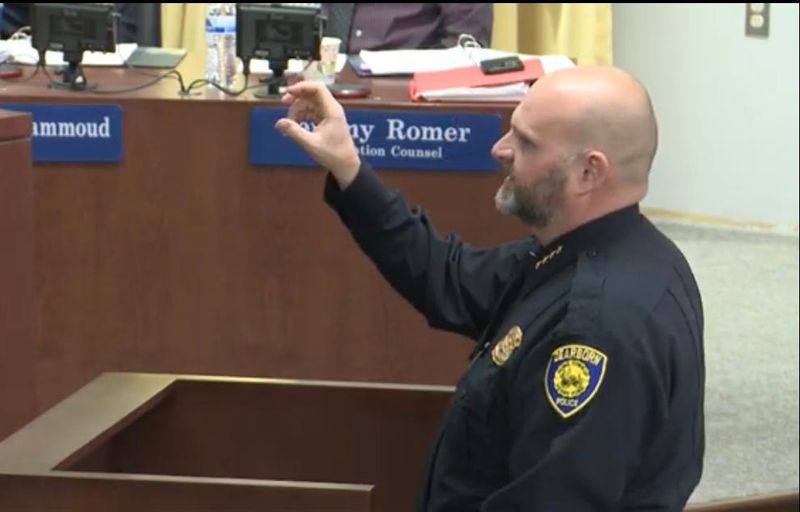
“This has been an issue for several years,” Shahin said in April at a council meeting at which Unger spoke. “We have taken dozens and dozens of readings, which the overwhelming majority of them are in compliance, Ms. Unger. Often times, the readings from the call to prayer from the mosque are no louder than the ambient noise of the trucks driving by, which is what our readings have discovered.”
The city’s noise ordinance says that noise can’t be above 60 decibels in residential areas outside downtown districts during the day. There are also some restrictions on noise from 10 p.m. to 7 a.m. Some residents have complained about hearing the morning call to prayer before 7 a.m. The council sometimes grants waivers to violate the noise ordinance, such as nighttime construction needed for utility repairs, and also for some religious observances. In June and July, the council approved waivers to the noise ordinance to hold an Ashura procession led by Muslims and the Eid-al-Adha celebration at the Al-Huda Islamic Association, a mosque in east Dearborn. In 2023, the council considered passing an amendment to the noise ordinance that would exempt houses of worship, but it was ultimately rejected.
Part of Dearborn’s noise ordinance reads: “It shall be unlawful for any person to create, assist in creating, permit, continue or permit the continuance of any unreasonably loud, disturbing, unusual or unnecessary noise which annoys, disturbs, injures, or endangers the comfort, repose, health, peace or safety of others within the limits of the city.”
Shahin admitted that at first, some mosques were playing the call to prayer at above 60 decibels, but says they are now complying after police asked them to turn it down.
“Initially, when we first were taking readings, when this started, they were above the legal limit,” Shahin said in April. “We’ve talked with people at the mosques, and they’ve lowered it. And nearly every other reading since then … dozens of them have been within compliance within the law.”
In one instance, officers “went into the mosque” to inspect a loudspeaker, “and they put it to the limit that was appropriate, and they stopped it and put a mark, and took the knob off of the player” in order to prevent raising the volume in the future, Shahin said.
During the Oct. 7 council meeting, Shahin said the Islamic call to prayer is no different from church bells.
“We haven’t had a violation of or anything in excess of the decibel reading since January of this year,” Shahin said. “The two or three violations that we have had in the last couple years have been met with compliance as soon as we’ve talked to the religious institutions. It’s no different than church bells that you might hear on Sunday.”
The Ungers and other residents dispute the city’s conclusions, adding that the problem with loud religious broadcasts occurs during other times, such as the Eid holiday. For two days in the spring around the end of Ramadan, they said the mosque near them was playing on loudspeakers a long prayer that “went on for an hour,” Andrea said. In another instance, they were jolted from their sleep early in the morning before 7 a.m., when loud noises are not allowed in the city.
“We had the windows open because it was nice and at six o’clock on Sunday morning, we both just jumped up in bed,” after hearing the call to prayer, Andrea Unger told the Free Press. “We’re like, ‘this had never happened,’ and it was blasting at 6 in the morning. So I went to that next council meeting, and they said, ‘No, this is not acceptable, because that’s it’s not within the hours.’ “
Sareini told the Free Press he sympathizes with Unger’s concerns.
“I felt that that was wrong,” Sareini said of the loud broadcasts from a mosque around Eid. “No faith … should be imposing, enjoining on someone else’s property and livelihood. And I made that clear.”
Sareini said the meaning of the call to prayer has changed over the centuries. The call to prayer starts with the voice of a man reciting in Arabic that God is the greatest, nothing is worthy of worship besides God and that Prophet Muhammad is the messenger of God.
“To me, a call to prayer is something that’s symbolic,” he said. “It’s no longer what it was in the Prophet’s ages, where it was to actually tell people, what time it was to come. It’s (now) more of a symbolic type … (tradition), like a church bell, like any other religious one.”
Sareini said he spoke with the board of the mosque and others about the concerns of residents.
Andrea Uger said that based on her research, outdoors broadcasts of the call to prayer is not required in Islam. She said local mosques have prayer times listed and there are apps that alert Muslims when it’s time to pray and so outdoors broadcasts are not needed now.
Debate over call to prayer in Dearborn in 1979
The debate in Dearborn over the call to prayer is not new. In September 1979, the Free Press published an article headlined “Mosque’s rite jars sleepers” that described complaints from residents over the call to prayer from the American Moslem Society, a historic Islamic center in the south end of Dearborn established in the 1930s known as the Dix mosque. After receiving 25 complaints from residents in 1979, the city then cited the American Moslem Society with violating the noise ordinance and three mosque officials appeared in court at an arraignment. The mosque later won the case and may be the first mosque in the United States to be granted the legal right to broadcast outdoors the Muslim call to prayer five times a day, according to Leila Tarakji, assistant professor of religious studies at Michigan State University. There have been similar debates over the call to prayer in other states over the years, including in New Jersey.
The demographics of Dearborn have changed since 1979, with about 55% of the residents now of Middle Eastern descent, according to 2020 census data. It’s unclear what percentage of those are Muslim since the census does not ask about religion; a high percentage of the city’s Arab Americans are believed to be Muslim. There are also some Arab American Christians who live in the city. About 50,000 residents of Dearborn are not Muslim. Hammoud, Shahin and Sareini are all Muslim.
In 2004, voters in Hamtramck approved allowing the outdoors broadcast of the call to prayer. At a Hamtramck, council meeting on April 22, 2025, the same day Unger raised her concerns at the council meeting in Dearborn, another woman complained about what she said was the high volume of the adhan that she described as “howling.”
Councilman Abu Musa said she respected her concerns, saying that “sometimes, we may make a mistake” in broadcasting the call to prayer too loudly. Max Garbarino, the city manager at the time, said they’ve addressed some complaints over the years.
“Anytime a (council) member asks, I reach out to to whichever mosque there’s a problem with, and they’re always more than happy to accommodate them,” Garbarino said.
Republican activist Hassan Aoun, of Dearborn, said at the Hamtramck meeting in response to the woman complaining: “You don’t like the prayer? Shut your windows.” In September, Aoun sent a letter to Hammoud and Dearborn city attorney Jeremy Romer warning them not to take action against restricting the adhan or else he would file for injunction, saying “the call to prayer is a matter of constitutional freedom.”
Islamic leader discourages outdoors call to prayer if it upsets neighbors
Imam Mohammad Ali Elahi, a prominent Muslim and interfaith advocate who leads the Islamic House of Wisdom in Dearborn Heights, urges other Muslims to refrain from outdoor broadcasts of the call to prayer if local residents are offended by it, but he also wondered whether bias against Muslims is motivating some of the opposition. His mosque does not broadcast it outdoors.
“We advise other Islamic centers to consider the sensitivities of their neighbors,” Elahi told the Free Press. “If there are individuals nearby who may be disturbed by amplified sound, particularly during the dawn prayer, we recommend refraining from outdoor broadcasts of the adhan. It is important to note that in Islam, if the sound of the adhan causes distress to others — such as disrupting the sleep of the sick — it is discouraged. In such cases, broadcasting the adhan is not considered a virtuous act; rather, it may be deemed even sinful. Respect for neighbors and the broader community is a core principle in our faith.”
Elahi added, though, he doesn’t hear people object to church bells.
“Why do some individuals remain silent about disruptive music or the loud, unsettling noise of motorcycles, but express concern over a peaceful, two-minute call to prayer that invites reflection and devotion?” Elahi said. “Such reactions may, to some extent, reflect underlying Islamophobic sentiments.”
Mosque chair offers to work with residents on volume
Bazzi, the chair of the Islamic Institute of Knowledge, which was established in 1981, said they started to broadcast outdoors the call to prayer in 2023. Bazzi said that six months ago, city officials and officers came to his mosque to record the volume, saying it was at 60 decibels, which is legally permissible.
“They told us, just leave it at that range, and we left it at that range since,” Bazzi said. “The mayor talked to me about it, and the (police) chief and the police … and they told us to leave it at this range. Nobody can change it up or down.”
Bazzi said they broadcast the call to prayer from a loudspeaker only two times a day, in the afternoon and early evening, currently at about 1:45 p.m. and 7:10 p.m. The exact time for prayer in Islam varies every day because it’s based on the position of the sun in the sky.
“We don’t do the five times (a day) like the other” mosques, he said.
Bazzi said the mosque invited Andrea Unger to the mosque and “we talked … nicely.”
“She was nice, and she agreed,” Bazzi said. “I don’t know why she changed her mind later on, and to start going to complain at the city.”
The chair added that “we have the approval by law,” but said he’s willing “to work with her.”
“I can lower a little bit more, like 5%,” Bazzi said. “We can make her happy. We love our neighbor. You know, she’s our neighbor, and we want her to be … happy in the city. The city is for everybody. But the only thing that we cannot stop, the call for prayer.”
The Patterson Press and earlier Free Press reporting contributed to this report.
Contact Niraj Warikoo: nwarikoo@freepress.com, X @nwarikoo or Facebook @nwarikoo
This article originally appeared on Detroit Free Press: 40 Dearborn residents ask city to lower volume on mosques’ outdoor call to prayer
Reporting by Niraj Warikoo, Detroit Free Press / Detroit Free Press
USA TODAY Network via Reuters Connect