

Estimated increase to users’ bills is $17 per month
By Barb Pert Templeton

A recent meeting of the Marine City Commission had officials listening to a detailed presentation about updating and improving things at the waster water treatment plant.
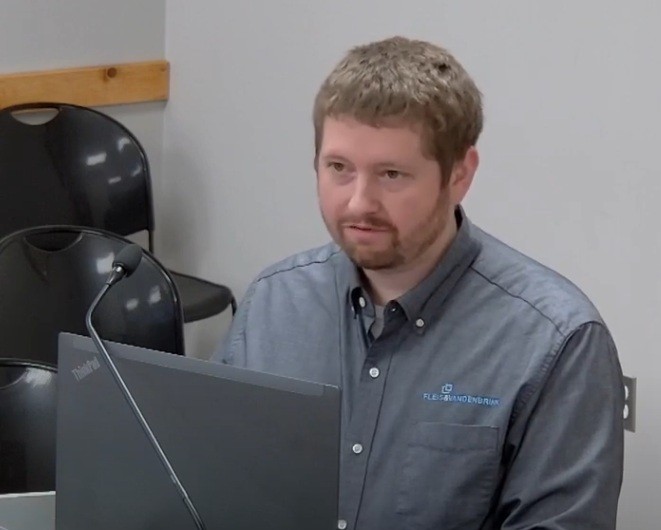
The 20-minute presentation was given by Fleis & Vandenbrink, a civil engineering architectural design firm in Grand Rapids. The plan addressed the Clean Water State Revolving Fund Project and how it will affect the waste water treatment plant in the city.

Principal Engineer Steve Walker said a small water treatment plant was opened in 1955 and the plant was further expanded in 1970 before a last big expansion in 1985.
A 2018 master plan estimated the population and it’s only expected to grow about .13% over the next 20 years. The flow at the plant is about a million gallons a day with a maximum peak flow of almost six million gallons a day. Those numbers are also not expected to increase very much due to the population not increasing so the 2045 design doesn’t reflect much flow change.

Improvements at the Waste Water Treatment Plant in Marine City will be an $8 million dollar project.
The need for the project is to:
· provide facilities capable of delivering consistent and reliable service,
· to be in compliance with the permit,
· to rehabilitate and repair high priority areas,
· improve the operation and maintenance and safety of the facilities,
· maximize treatment performance and minimize energy use
· consider the overall cost the city’s users
There were four options in addressing the plant situation.
1. One was to take no action,
2. Transfer waste water to East China but it was ruled out due to cost and regulatory agreements that would be needed,
3. Try to maximize performance of the existing system
4. Or upgrade the existing treatment system.
The fourth alternate is what will be focused on with the main focus being improvements to the various buildings throughout plus to the primary treatment areas. The raw waste water is screened and grit is removed and then a biological treatment is conducted to get the water in a clearer state.
Walker went into a very detailed descriptions of what the process is for cleaning the water and replacing various pieces of equipment at the plant including screens, monitoring system and gas venting systems. He also noted other work to be done including rehabilitating or replacing pumps and adding automation to the system. The automation will mean if there’s an incident workers don’t have to go into the plant to operate things in the middle of the night but instead can do it remotely.
There will also be chemical improvements because there’s been some issue with mercury spikes in one tank so it will be replaced and a second chlorine pipe will be added to keep things running smoothly.

A chart in the presentation packet on the Marine City Waste Water Treatment Plant lists the areas that will be update and improved.
The roof will be removed on the chlorine building to get the old tank out but they have also had roof leaks so the roof will be replaced. Other building improvements will be done on the doors at the administration building and that roof is leaking and will be replaced as well.
The total project cost is $8.3 million. The biggest cost is for the secondary treatment to the water.
Walker said the project will not have any environmental impact and will overall be a benefit to lakes and streams because the processes at the plant will be more reliable.
The projected impact on users is estimated based on a loan principal of $6.5 million, so there will be some grant money but not all, with an annual payout of about half a million dollars with the number of customers being 2,600 so the projected increase is about $17 a month for users.
“These are estimates we can’t guarantee it, more will be worked out once the loan closes and as the project moves forward,” Walker said.
Other steps for the project include an engineer designing it, the city will bid the project out and a general contractor will build it. There are two options of either fixed price designed build and progressive design build.
“Fleis and Vanderbrink like the progressive design build option as that one allows to the city to work with the engineer throughout the whole design and then we’re also working with contractors the whole time,” Walker said.
Members of the commission didn’t pose any questions at the competition of the presentation. Commissioner Jacob Bryson was absent from the April 17 meeting.
