
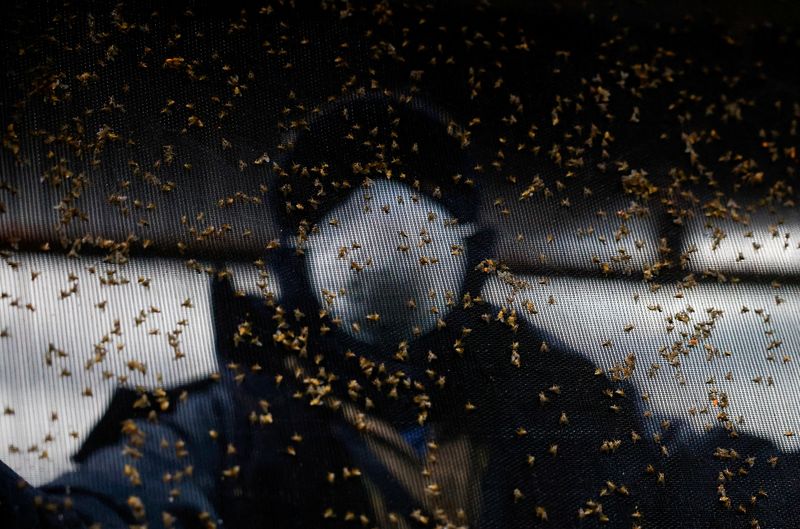
FILE PHOTO: A worker handles a tray with Mediterranean fruit flies inside a bio-factory as Mexico's government reconditions a plant to become the new sterile screwworm fly facility, part of the country's effort to eradicate the flesh-eating parasite that threatens its livestock industry and raises tensions with the United States, in Metapa de Dominguez, Mexico, October 17, 2025. REUTERS/Daniel Becerril/File Photo
Home » News » Business & Economy » USDA says fly production plant to open by end of 2027 to fight screwworm
Business & Economy

USDA says fly production plant to open by end of 2027 to fight screwworm

CHICAGO, Feb 9 (Reuters) – The U.S. Department of Agriculture will open a facility in Texas by the end of next year that produces sterile flies intended to fight the flesh-eating parasite New World screwworm, Secretary Brooke Rollins said on Monday.

Rollins gave an update on the $750 million plant after announcing last August that USDA planned to build it in response to northward spread of the pest in Mexico toward the U.S. border.

Video Thumbnail

Screwworms are parasitic flies whose females lay eggs in wounds on warm-blooded animals, often livestock. Once the eggs hatch, hundreds of screwworm larvae use their sharp mouths to burrow through living flesh, eventually killing their host if left untreated.

USDA produces 100 million sterile flies per week at a facility in Panama and disperses them in Mexico to prevent wild screwworm flies from reproducing.

The agency opened a dispersal facility for sterile flies in southern Texas on Monday, but experts have said USDA urgently needs to produce many more.

(Reporting by Tom Polansek, Editing by Franklin Paul and Nia Williams)
Image

Related posts

Leave a Comment