By Steve Nesius and Steve Gorman
STARBASE, Texas, May 22 (Reuters) – SpaceX launched its 12th Starship on an uncrewed test flight from Texas on Friday, in a high-stakes trial run of major upgrades to its next-generation spacecraft as Elon Musk’s rocket company nears a record-breaking public listing.

The debut flight of Starship V3 – designed to enable more frequent Starlink satellite launches and to send future NASA missions to the moon – represents a key milestone for the vehicle following months of testing delays. The outcome could also sway investor confidence ahead of SpaceX’s initial public offering next month, expected to be the largest in history.
Starship, which SpaceX has spent more than $15 billion developing as a fully reusable spacecraft, is critical to Musk’s goals of cutting launch costs, expanding his Starlink business and pursuing ambitions ranging from deep-space exploration to orbital data centers – all factored into his targeted $1.75 trillion IPO valuation.
A successful test flight reinforces SpaceX’s case that Starship, the world’s largest and most powerful rocket ever flown, is nearing commercial readiness after years of explosive setbacks and development delays.
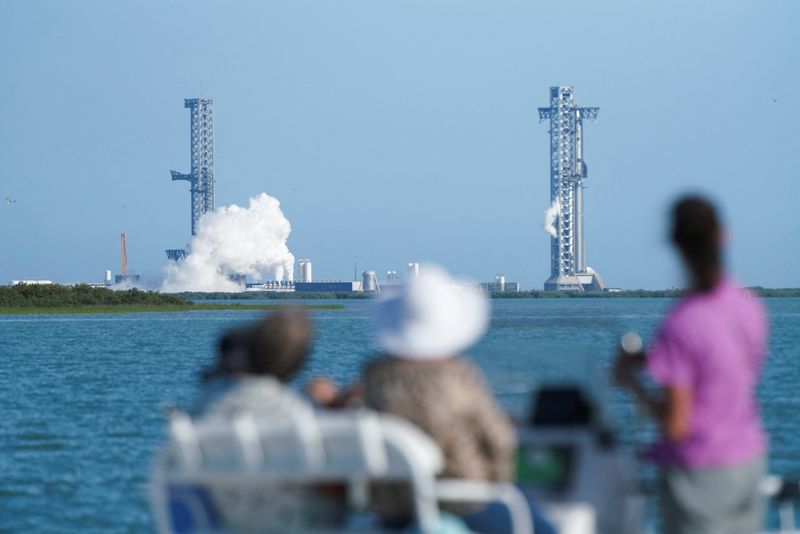
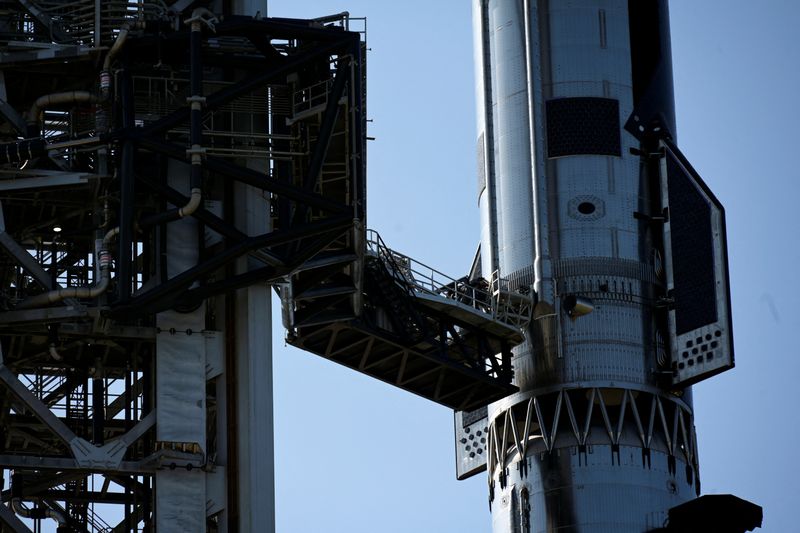
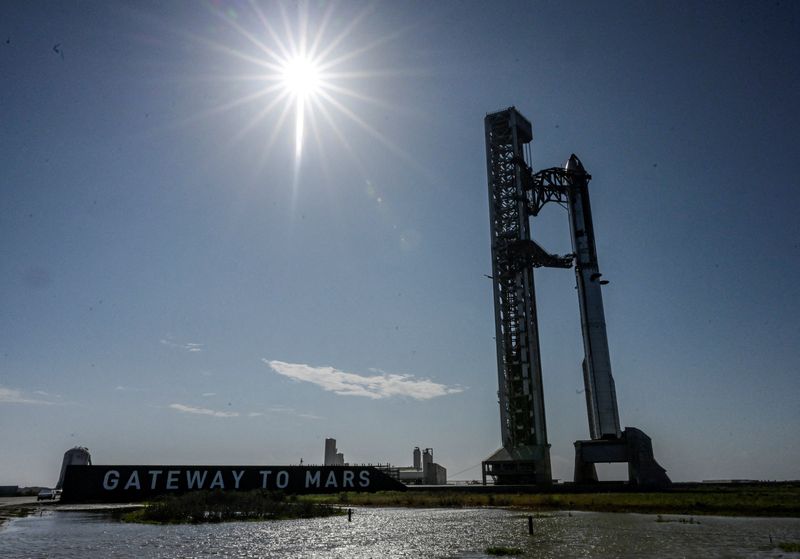
The towering vehicle, consisting of the upper-stage Starship astronaut vessel stacked atop a Super Heavy booster rocket, blasted off at about 5:30 p.m. CT on Friday (2230 GMT) from SpaceX facilities in Starbase, Texas, on the Gulf of Mexico near Brownsville.
A live SpaceX webcast of the liftoff showed the rocketship, more than 40 stories tall, climbing from the launch tower as the Super Heavy’s cluster of Raptor engines thundered to life in a ball of flames and billowing clouds of vapor and exhaust.
The launch marked SpaceX’s 12th Starship test flight since 2023 and the first ever for the V3 iteration of both the cruise vessel and its Super Heavy booster, as well as the first blast-off from a new launch pad designed for the more powerful rocket.
CONTROLLED DESCENT INTO OCEAN
SpaceX said before the launch it would not attempt a return landing or recovery of either the booster or the Starship upper stage on Friday, even if all else went as planned.
Test objectives included execution of several return-flight maneuvers by the lower-stage rocket and Starship itself, including controlled landing burns before each vehicle splashes down into the sea.
The Super Heavy came down in the Gulf of Mexico about six minutes after blast-off. Starship, meanwhile, reached the cruise phase of its suborbital spaceflight despite the loss of one of its six upper-stage engines as it headed for its own splashdown in the Indian Ocean about an hour later.
While in space, the vessel’s payload dispenser successfully released a clutch of 20 mock Starlink satellites one by one, plus two actual satellites deployed along Starship’s flight trajectory to scan the spacecraft’s heat shield and transmit data to operators on the ground during descent.
The heat shield represents one of SpaceX’s most difficult development challenges with Starship, as it tries to develop a super-durable protective surface that requires little or no refurbishment after each flight.
SpaceX mission controllers decided to skip a planned re-ignition test of Starship’s engines, due to the single-engine malfunction experienced during ascent. But plans remained intact for a pre-landing engine burn before splashdown.
INVESTOR SCRUTINY AHEAD OF IPO
Test flight 12 in the Starship campaign was being closely watched by investors three weeks ahead of an IPO that could become the first U.S. market debut above $1 trillion and immediately transform SpaceX into one of the world’s most valuable publicly traded companies.
The future of SpaceX’s most lucrative businesses, centered on its Starlink operation and plans for orbital data centers, hinges largely on Starship getting them to space.
While Musk has publicly taken previous test-flight setbacks in stride, it remains to be seen how investors reconcile the billionaire entrepreneur’s appetite for short-term risk-taking with his longer-term aspirations for lunar and interplanetary space travel.
SpaceX’s engineering culture, considered more risk-tolerant than many of the aerospace industry’s more established players, is built on a flight-testing strategy that pushes newly developed spacecraft to the point of failure, then fine-tunes improvements through frequent repetition.
Musk, who founded his California-based rocket company in 2002, said one year ago that he foresaw Starship making its first uncrewed voyage to Mars at the end of 2026, a goal now clearly beyond reach.
The V3 features a host of upgrades designed to perfect the vehicle’s functionality for missions beyond the low-Earth orbit realm of SpaceX’s current workhorse launch system, consisting of a Falcon 9 or Falcon Heavy rocket booster with a Dragon capsule.
One of the principal improvements to the Super Heavy booster is a revamping of its 33 Raptor engines to produce greater thrust from a design that weighs significantly less.
The propulsion system of the upper-stage Starship likewise has been refined for long-duration missions, with mechanisms to allow for ship-to-ship docking, refueling in space and increased maneuverability.
Multiple Starship tanker vessels would be required to conduct the in-orbit refueling operation – a risky and unproven procedure required under SpaceX’s strategy for its first lunar-landing mission, planned for 2028.
All of that was incorporated into the $3 billion-plus contract SpaceX won in 2021 under NASA’s Artemis program, the U.S. effort to return astronauts to the surface of the moon later this decade for the first time since 1972. Those plans put Starship at the center of a new space race with China, which aims for a crewed lunar landing of its own in 2030.
(Reporting by Steve Nesius in Starbase, Texas, and Steve Gorman in Los Angeles; Writing by Steve Gorman; additional reporting by Joey Roulette in London; editing by Matthew Lewis and Rosalba O’Brien)