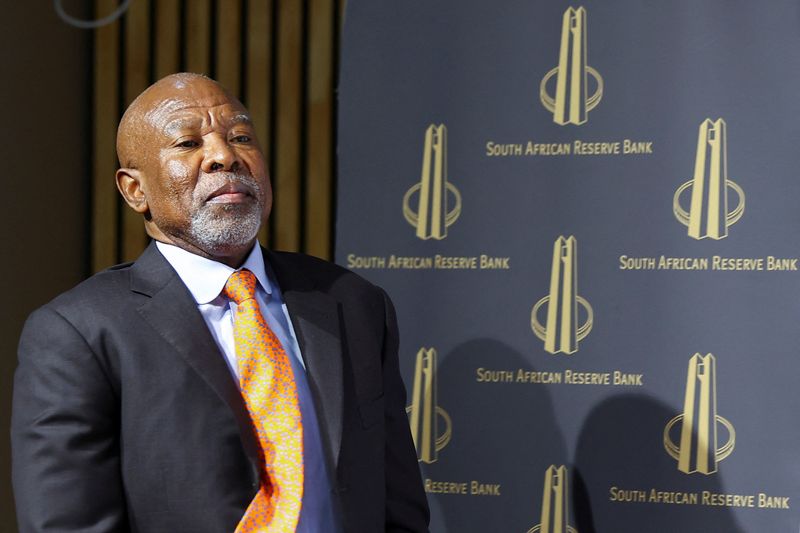
JOHANNESBURG, May 6 (Reuters) – South African Reserve Bank Governor Lesetja Kganyago said on Wednesday that policymakers needed to keep their options open on interest rates as geopolitical shocks clouded the outlook and inflation expectations remained above target.
Kganyago said while inflation was still not anchored at the central bank’s 3% target, it had continued to trend lower while debt appeared to be stabilising and growth had been a bit stronger.

South Africa’s headline inflation nudged higher to 3.1% in April from 3.0% in March, as the effects of the U.S.-Israeli war on Iran, which have pushed domestic oil prices higher, had just begun to filter into the economy.
Africa’s largest economy is a net importer of oil, leaving it highly vulnerable to swings in global prices. Many economists expect inflation to rise above 4% in the coming months.
Speaking at an investment conference in the North West province, Kganyago said supply shocks from the conflict could lift domestic inflation higher while hurting output and that bringing inflation back to target after such shocks may also entail timely moves in interest rates.
“It is not desirable to put the economy under more pressure, but we need to keep our options open,” he said.
Kganyago said geopolitical risk was now a more important factor than at any point in his career, with war-driven shocks raising food and fuel prices.
He said the policy rate could not affect global oil prices, but the central bank could manage inflation expectations through clear communication and, if needed, rate action.
“Success lies not in preventing higher inflation right now, but in getting back to target after the shock has passed,” said Kganyago.
He said the rand had held up well this year despite conflict in the Middle East, recovering quickly after an initial drop and trading mostly stronger than in 2025.
The South African Reserve Bank’s Monetary Policy Committee has held its main lending rate at 6.75% in its previous two meetings. The SARB will hold its next policy meeting on May 28.
(Reporting by Kopano Gumbi in Johannesburg; Editing by Nia Williams)