By Suzanne McGee
PROVIDENCE, Rhode Island, May 13 (Reuters) – Individual investors who can’t seem to get enough of the red-hot market for semiconductor stocks have made a five-week-old exchange-traded fund the most successful ETF launch in history, according to market data and analysts.

Since its launch on April 2, the Roundhill Memory ETF (DRAM) has accumulated more than $6 billion in assets, beating even the blockbuster 2024 debut of BlackRock’s iShares Bitcoin Trust each step of the way.
The trajectory reflects just how enamored Wall Street is with the prospect that booming data center demand is creating a long-term shortage of memory chips to support artificial intelligence.
“People are jumping in with both feet,” said Dave Nadig, chief investment officer at ETF Trends, noting that it took only 10 trading days for DRAM to pull in its first $1 billion.
Last Friday, on the heels of a banner day for global chipmakers, it received $1 billion in net inflows in a single trading session. “It’s crazy momentum,” he said.
SOUTH KOREAN EXPOSURE
Traders and market analysts said DRAM has emerged as a compelling way to participate in the semiconductor market boom in part because it is simpler than trying to pick out one or two stocks.
Thomas DiFazio, ETF strategist at Roundhill, said most of the ETF benchmarks in the semiconductor arena have only a single big memory chipmaker: U.S.-listed Micron.
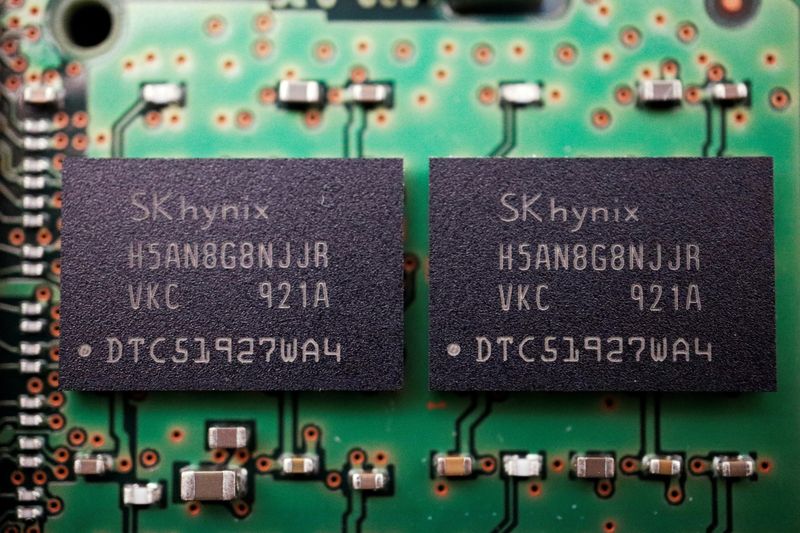
Many other semiconductor funds, such as BlackRock’s iShares Semiconductor ETF, do not offer exposure to Micron’s main rivals, South Korea’s SK Hynix and Samsung Electronics, which have been trading at record levels and are part of DRAM’s portfolio.
“A lot of investors view this as a proxy for alluring but otherwise hard-to-access Korean stocks,” said Steve Sosnick, market strategist at Interactive Brokers, noting that the fund also holds Japanese and Taiwanese players in the industry.
RETAIL INFLOWS
Vanda Research, which tracks retail trading activity, on Monday calculated retail investors bought $55 million of the ETF, the largest such daily inflow from self-directed individuals since its launch and more than the same cohort put into stocks like Nvidia as they sought broader exposure to the industry.
“DRAM is rapidly emerging as the poster child for the ongoing semiconductor frenzy,” Vanda said in a note to clients.
“I can’t find an ETF where retail investors have bought so much in such a short period of time,” Viraj Patel, global macro strategist at Vanda, told Reuters.
The downside of giant inflows and market gains is that it leaves the market volatile and vulnerable to spasmodic selloffs, such as Tuesday’s 7% slump in DRAM as chipmakers retreated from their recent highs, amid a smaller decline in the Philadelphia Stock Exchange Semiconductor Index.
Even investors who remain upbeat about the long-term outlook for memory chips are starting to worry the segment is overbought and the overheated trade will inevitably cool down.
But Interactive Brokers’ Sosnick noted Tuesday’s retreat still leaves DRAM trading at levels above recent moving averages.
“The uptrend remains intact,” he said.
(Reporting by Suzanne McGee in Providence, Rhode Island; Editing by Jamie Freed)