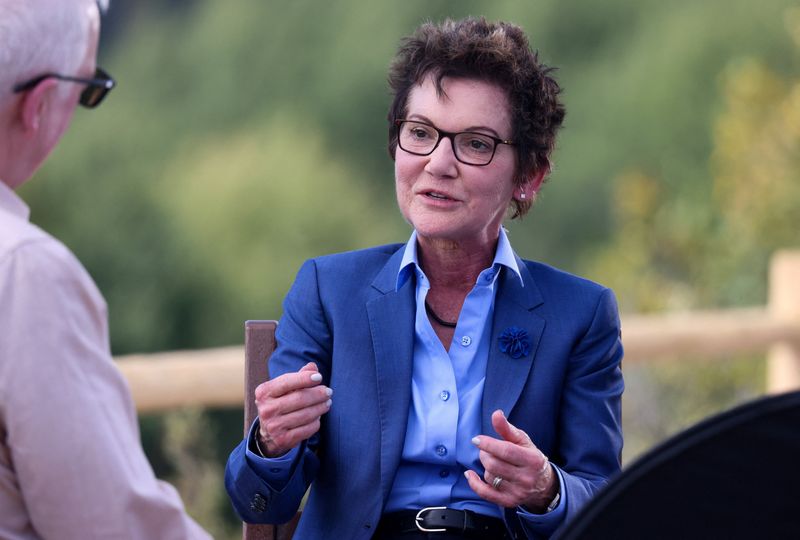
Jan 15 (Reuters) – San Francisco Federal Reserve President Mary Daly said on Thursday that incoming U.S. economic data looks promising despite uncertainties and continued risks to both the Fed’s inflation and employment mandates.
“We will need to be deliberate as we calibrate policy to achieve both price stability and full employment,” she said in a post on LinkedIn. “Fortunately, policy is in a good place to respond to however the economy evolves.”

The Fed next meets to set policy on January 27-28 and is widely expected to leave the policy rate on hold in the current range of 3.50%-3.75%, pausing a string of rate reductions last year. In the highly analyzed lexicon of Fed policymaker language, describing policy as in a “good place” typically signals comfort with leaving short-term borrowing costs unchanged.
Daly supported last year’s cuts, designed to keep the labor market from cooling too sharply, though she said previously that December’s reduction approved in a divided 9-3 vote was “not an easy choice.”
Projections for growth this year “are solid, the labor market is stabilizing, and inflation is expected to improve over the course of the year,” she said on Thursday. “As we determine our next steps, we will need to focus beyond any data print, looking further ahead and prioritizing listening – to businesses, households, and communities – to fully understand the economy.”
(Reporting by Ann Saphir; Editing by Andrea Ricci)