By Promit Mukherjee
OTTAWA, April 20 (Reuters) – Canada’s annual inflation rate rose to 2.4% in March, with prices jumping 0.9% on the month, as higher crude oil costs drove up gasoline prices, data showed on Monday.

The annual inflation rate was last at this level in December. The monthly inflation spike was the highest in 14 months, Statistics Canada said.
The war in Iran, which began at the end of February, has disrupted crude shipments through the Strait of Hormuz, removing nearly a fifth of global supply. The shock has pushed up pump prices and strained household budgets.
Analysts polled by Reuters had forecast annual inflation of 2.6% from 1.8% in the prior month, and monthly inflation at 1.1%, up from 0.5% in February.
Canada’s inflation has been benign for well over a year and has stayed around the mid-point of the Bank of Canada’s target range of 1-3%.
Bank of Canada (BoC) Governor Tiff Macklem said last week that the central bank was not concerned about a short-term spike in inflation expectations.
Gasoline prices were up by 5.9% on a yearly basis and drove a 21.2% surge on a monthly basis in March. The year-over-year figure was partly muted due to higher gasoline prices during the same period last year due to a carbon levy which was dropped in April 2025.
Higher fuel prices increased the cost of transportation, which is the second biggest contributor to the CPI basket, by 3.7% in March from a year ago.
Food prices were another major contributor to the increase in headline annual inflation, data from the statistics agency said.
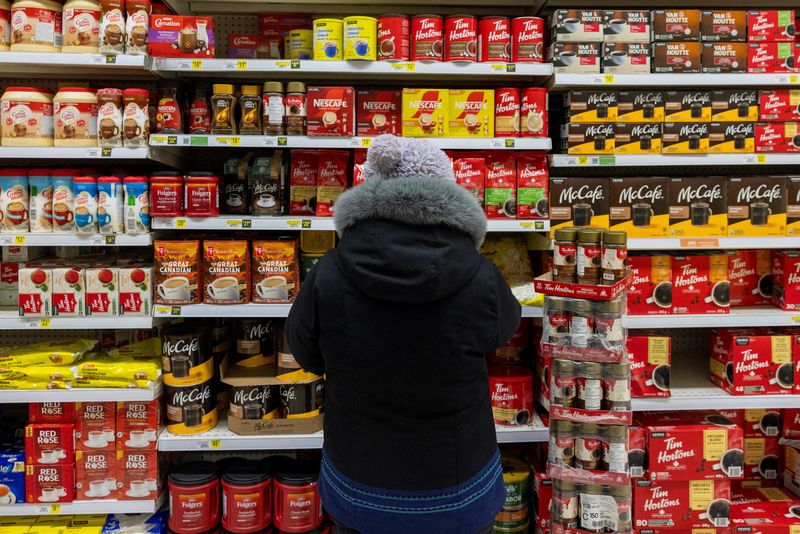
Prices for food purchased from stores rose 4.4% annually in March, after increasing 4.1% in February. Prices for fresh vegetables increased 7.8%, the largest increase since August 2023, StatsCan said.
Since headline inflation could be volatile, the BoC and economists also monitor core inflation metrics to gauge the underlying trend of inflation.
Its closely tracked measure, the CPI-median, the centermost component of the CPI basket, stayed unchanged from the prior month at 2.3%, while CPI-trim, which excludes the most extreme price changes, edged down to 2.2% in March.
“Pass-through from higher energy prices into core measures of inflation may become more evident closer to the summer months, particularly as higher air fares are picked up more fully,” said Andrew Grantham, senior economist at CIBC Capital Markets.
He, however, added that the slack within the Canadian economy should prevent those measures from re-accelerating too much.
The Canadian dollar was slightly firm and was trading up 0.04% to C$1.3687 to the U.S. dollar, or 73.06 U.S. cents. Yields on the two-year government bonds were down 1.6 basis points to 2.755%.
Money markets do not expect any change in interest rates by the BoC this month and are pricing in a 25 basis point hike in December.
(Reporting by Promit Mukherjee; Editing by Dale Smith, Keith Weir and Nick Zieminski)