

By Leika Kihara
TOKYO, June 4 (Reuters) – The Bank of Japan is expected to raise interest rates this month unless a sharp escalation in the Middle East conflict upends markets, three sources said, as rising fuel costs from the energy shock add to mounting inflationary pressure in the economy.

With hostilities flaring anew in the Iran war, central bank policymakers will scrutinise developments in the Middle East and their fallout on Japan’s economy until the last minute in reaching a final decision, said the sources, who declined to be identified as they are not authorised to speak publicly.
Markets are already pricing in roughly an 80% chance the BOJ will raise its short-term policy rate to 1% from 0.75% at the two-day policy meeting ending on June 16. A hike to 1% would bring the BOJ’s policy rate to levels unseen since 1995.
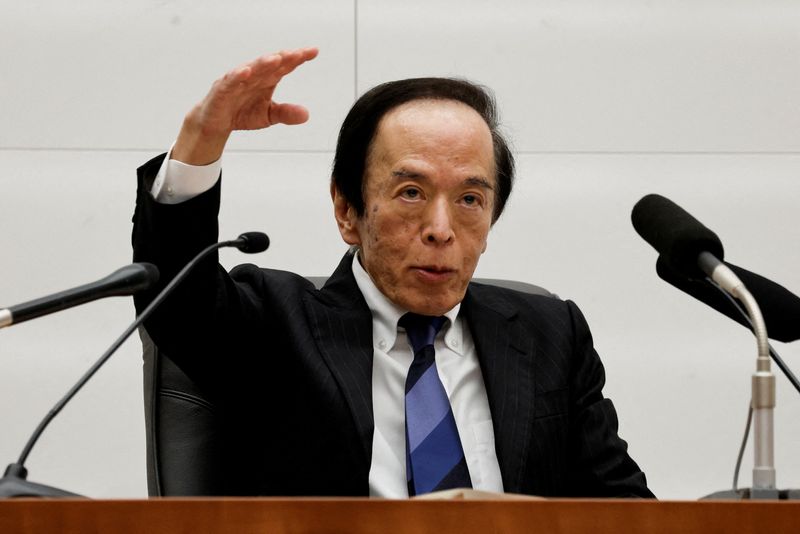
BOJ Governor Kazuo Ueda all but cemented a June rate hike in a speech on Wednesday, marking a clear narrative pivot toward inflation fighting and opening the door to more frequent increases in borrowing costs.
“Unless there’s a severe escalation in the conflict, the BOJ will probably hike rates in June,” said a source familiar with its thinking, a view echoed by two more sources.
The remarks added to a flurry of recent hawkish BOJ signals that heightened the chance of a June rate hike, as concern over inflationary risks from the Iran war pushed bond yields to a near 30-year high last month.
Since then, BOJ board members Kazuyuki Masu and Junko Koeda have warned of mounting price pressures in a sign they could join three other hawks in calling for a rate hike as soon as June.
A spike in wholesale inflation has alarmed policymakers over the fast pace at which companies are passing on costs, which is seen pushing up consumer inflation above the BOJ’s 2% target.
The BOJ exited a decade-long massive stimulus programme in 2024 and has raised its policy rate several times, including in December, on the view that Japan was on the cusp of durably achieving its inflation target.
Soaring energy costs from the Middle East conflict have complicated the BOJ’s rate decisions, pushing up prices, but also hurting an economy heavily reliant on fuel imports.
(Reporting by Leika Kihara; Additional reporting by Takahiko Wada, Takaya Yamaguchi, Makiko Yamazaki and Kentaro Sugiyama; Editing by Jacqueline Wong)
By Leika Kihara | Reuters | © Copyright Thomson Reuters 2026.
