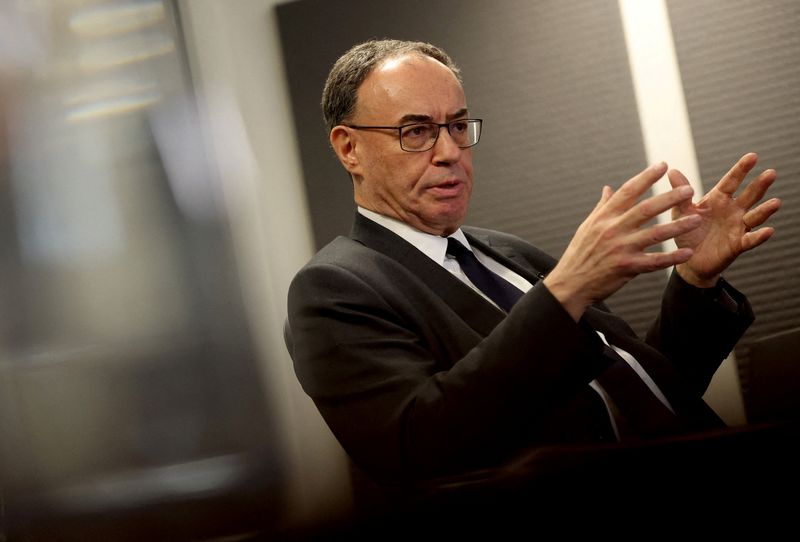
LONDON, May 20 (Reuters) – A rise in interest rates in financial markets since the start of the Iran war has given the Bank of England some time to work out its best response to the economic impact of the conflict, BoE Governor Andrew Bailey said on Wednesday.
A rise in mortgage borrowing costs were an example of how investors had shifted their stance since the conflict began, Bailey told lawmakers on parliament’s Treasury Committee.

“That tightening, I think also gives us … some time to assess,” he said.
Bailey was part of the majority on the BoE’s Monetary Policy Committee which voted 8-1 to leave the central bank’s benchmark interest rate on hold in April.
At that meeting, the MPC said its response to the energy shock caused by the war would depend on its scale and duration and how it spreads through the economy.
Bailey told the lawmakers that the outlook for economic growth and labour market had become softer with wage settlements reducing gradually.
But he also said market pricing for energy prices seemed “fairly benign” compared to the damage done to gas infrastructure in the Middle East.
(Reporting by David MillikenWriting by William Schomberg; editing by Sarah Young)