

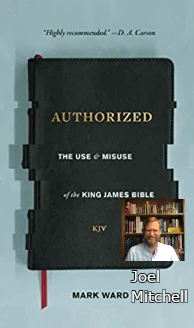
By Joel Mitchell

The KJV & Vernacular Translations
“If the King James Version was good enough for the Apostle Paul, then it’s good enough for me!” Obviously, this statement is (mostly) a caricature of the KJV-Only or KJV-Superiority positions. However, it demonstrates that when it comes to discussing the merits of various English Bible translations, reasonableness and graciousness far too often take a backseat to emotional appeals and exaggerated claims from all sides.
Authorized: The Use and Misuse of the King James Bible by Mark Ward is probably the most gracious, even-handed discussion of the King James Version that I have read. It starts with a thoughtful chapter on “what we lose as the church stops using the KJV” – mostly a sense of historical value, continuity, uniformity, and grandeur when it comes to the language.

The author then goes on to talk about what we gain by having the Bible translated into modern vernacular (“Vernacular is common language spoken by average citizens of a particular place” – yourdictionary.com). He discusses the biblical and historical rationale behind having vernacular translations. For example:
- The New Testament was originally written in vernacular Koine Greek, the language of the “common people,” rather than the grand, archaic Classical Greek favored by educated, respected authors of the time
- The Apostle Paul repeatedly speaks of the necessity of communicating God’s truth in easily understandable language
- The KJV itself was intended to be a vernacular translation back in 1611
- By its nature, language continuously changes over time in terms of vocabulary, syntax, etc.
Ward also answers common objections and shows the reliability and spiritual value of many modern language translations (e.g. the English Standard Version & New International Version) without disparaging the historic value or scholarship of the KJV.
He does not go into detailed scholarly arguments about manuscripts and textual families since this is a popular level book (and those arguments are often tremendously overblown). However, he does provide this website as a resource to show the slight differences between the different editions of the Greek New Testament that underlie the KJV and more modern translations.
If you are curious about Bible translation or think that the KJV is the only “definitive” English Bible translation fit for mature Christians, I urge you to read this book. If you are interested in a slightly more scholarly approach that does go into manuscript/textual issues I would also highly recommend The King James Version Debate: A Plea for Realism by D. A. Carson. It is quite a bit older (1978), but the general principles discussed in it still hold true.
I would like to close with this quote from the book:
I want to change the paradigm we’ve all been assuming. Stop looking for the “best” English Bible. It doesn’t exist. God never said it would. Take up the embarrassment of riches we now have. Make the best use of our multi-translation situation, because it’s truly a great problem to have. (p. 137)
Originally published June 11, 2026
