Have I been Flocked?
More of us are asking that question as AI-enhanced license plate cameras − now linked in networks capable of tracking our movements across town, across the state and even across the country − raise concerns about privacy and access to the data they collect.

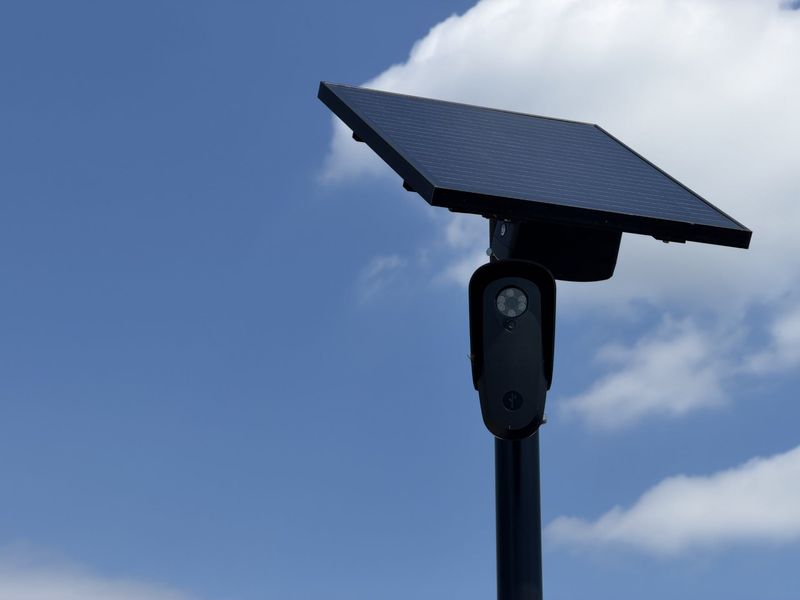
Traffic cameras, also known as automated license plate readers, or ALPRs, have been around for decades. But advances in technology have touched off a debate over whether they violate the Fourth Amendment’s protection against unreasonable searches. The company at the eye (pun intended) of the storm is Flock Safety, which boasts a network of 120,000 cameras spanning 49 states. Using AI and infrared technology, Flock cameras can capture a vehicle’s license plate number, make, model and color. Flock stores that information in a nationwide database used by a growing number of police departments, including dozens in Greater Cincinnati.
As if the privacy concerns weren’t enough, Flock cameras and other enhanced surveillance systems have opened a new front in the battle for public records and government transparency. But before I get into that, let’s take a step back.
The Enquirer and other local news outlets have reported on several interesting situations involving Flock cameras. The city of Newport last month ended a pilot program with Flock after residents voiced privacy concerns at a town hall meeting. Meanwhile, in Kenton County, police are seeking approval to install Flock cameras at parks and around the jail.
Across the river in Clermont County, a man was arrested after he unbolted and destroyed a Flock camera leased by the Union Township Police Department. How did he get caught? A nearby surveillance camera recorded him in the act, police said.
Up the road in Columbus, a hearing on the use of Flock cameras drew protestors in front of city hall this week. Some who spoke out against the cameras pointed to recent cases of misuse, including a Columbus police officer accused of using camera footage to investigate a traffic crash he was involved in.
All this fuss about Flock cameras led us to investigate how widely they are being used across Greater Cincinnati and what protections are in place to prevent overreach and misuse of the technology. Our special report, scheduled to be published online and in print on Aug. 23, did not come easy.
As I noted earlier, members of the press – in this case, your friendly neighborhood journalists at The Enquirer – work from the premise that government records about the use of Flock and other surveillance technology should be public. Those records include contracts, the number and locations of cameras, and audit reports showing who uses the data and why. In my opinion, the audit information is the most critical.
One facet of the Columbus controversy was concern that U.S. Immigration and Customs Enforcement agents had tapped into the city’s Flock system. Audit records showed that ICE did not directly access the data. However, Homeland Security Investigations, an arm of the agency, conducted nearly 200 searches during a 2025 pilot program that could have included information from Columbus.
Let me be clear: I cite this example not to say traffic cameras should or should not be used for immigration enforcement. The point of this column is to suggest that audit records showing how Flock technology is used are a matter of public interest and should not be kept secret. So how successful were we in obtaining the records for our investigation?
The Enquirer made formal records requests to nearly every police agency in our readership area, a list numbering 110. We asked for ALPR contracts, policies, locations and audit logs.
We received 106 responses containing varying amounts of information from departments in Hamilton, Butler, Warren and Clermont counties in Ohio and Boone, Kenton and Campbell counties in Kentucky.
Only 13 departments provided audit logs.
The city of Cincinnati did not respond at all.
We did confirm – spoiler alert – that more than 1,100 license plate readers are in use across Greater Cincinnati, nearly all of them Flock cameras.
Police officials, as you might expect, are fans of Flock and similar plate-reading systems. The data-tracking capabilities have proved to be a powerful crime-fighting tool. But advances in law enforcement technology also raise important questions about privacy and accountability, making government transparency essential. Public safety and government transparency are not mutually exclusive aspirations.
Know that The Enquirer will fight the good fight as our communities – and our nation – wrestle with these important questions of privacy and government transparency.
Enquirer Executive Editor Beryl Love writes a biweekly column that takes you behind the scenes at The Enquirer. Occasionally, he shares his thoughts on local issues, particularly as they pertain to a free press and open government. Email him at blove@enquirer.com. He can’t respond personally to every email, but he reads them all.
This article originally appeared on Cincinnati Enquirer: Flock camera use requires transparency; we don’t have it | From the editor
Reporting by Beryl Love, Cincinnati Enquirer / Cincinnati Enquirer
USA TODAY Network via Reuters Connect

By Beryl Love, Cincinnati Enquirer | USA TODAY Network