As the Fox Cities continue to pick up the pieces after the July 27 tornado, residents are wondering when cleanup will finish and what comes next for their communities.
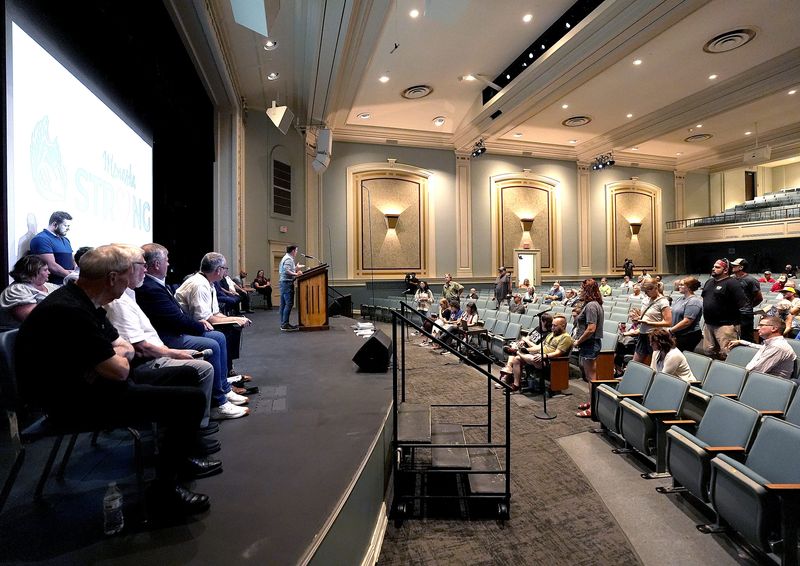
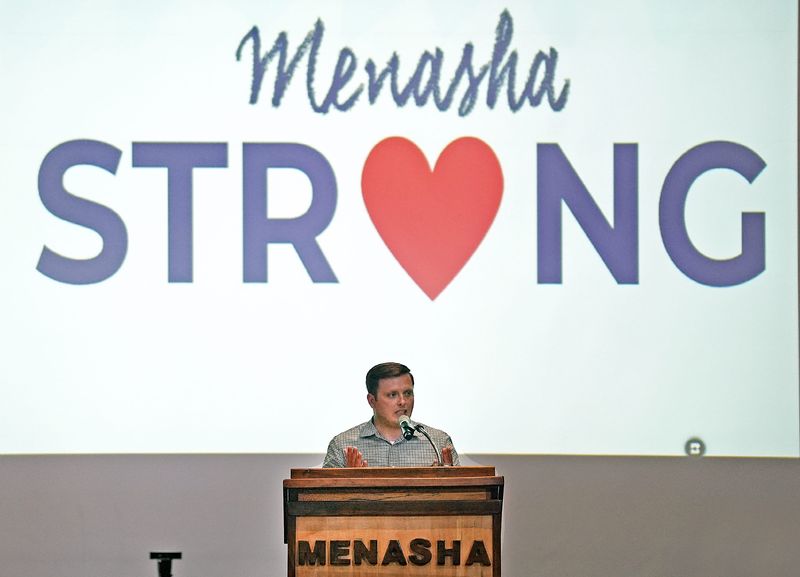
On Aug. 6, officials from Winnebago County, Neenah, Town of Neenah, Fox Crossing, and Menasha held a town hall meeting at Menasha High School to discuss ongoing recovery.

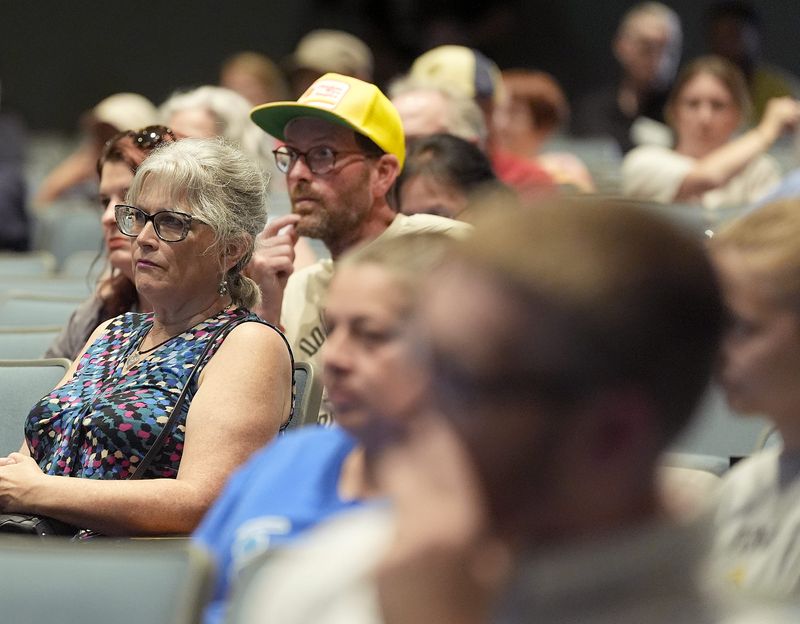
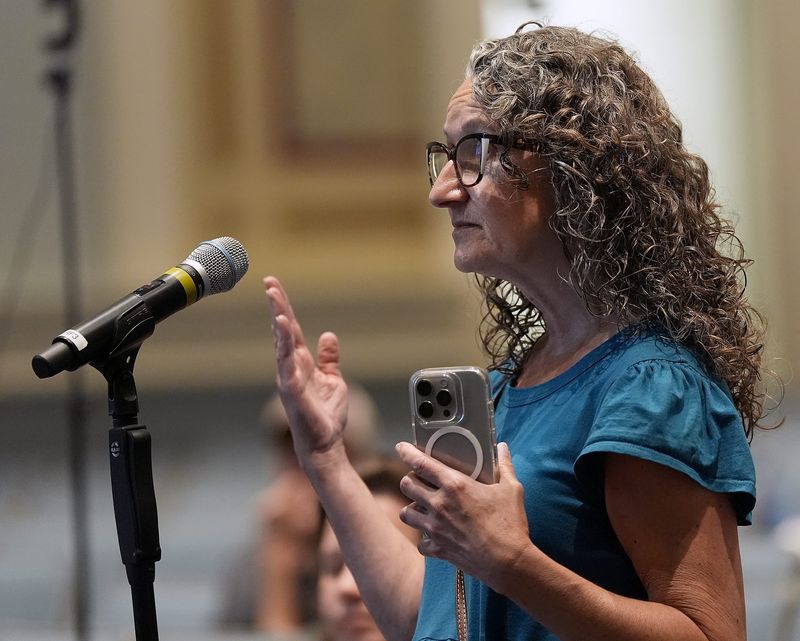
For most of the meeting, residents asked questions to the panel. Many asked about debris collection near their homes, while others asked about the area’s long-term plans for recovery. In general, officials urged patience and encouraged people to call 211 to report damage and address unmet needs. They also said that people should continue to look for updates on social media and on city and county webpages.
Here are some other key takeaways from that meeting:
Lack of access roads, debris make Doty Island cleanup slower
Several Doty Island residents wondered when they would have power restored to their homes and have debris cleaned up. Menasha Common Council member Chris Rand, who lives on the island and represents one of the most damaged areas, wondered whether officials fully realized the extent of the destruction. He also questioned why the city and the National Guard couldn’t go onto private property to help clean up.
“Everybody’s house is just destroyed, smells like mold,” Rand said. “I have a pile of debris in my front yard that’s almost as tall as my house.”
In response, public works director James Merten said that access to Doty Island was “a huge problem” because only two roads go into and out of the island. The island’s streets, already narrow to begin with, are also filled with storm debris, contractors and traffic, Merten said, so that also makes it difficult for utility trucks to get in and out to restore power. And while the city has allocated $615,000 for storm cleanup, they can only potentially receive reimbursement for what they pick up from the curb.
The National Guard also has strict parameters for their mission to the area that includes staying in public spaces, Menasha mayor Austin Hammond said to another resident. The National Guard has been making it easier for volunteers and contractors to get around by directing traffic, he said, adding “It really helped a great deal.”
“You’re not forgotten, your area is not forgotten, and we’re going to do some pretty significant debris collection. And we’ll be back in your neighborhood for sure,” Merten said to Rand.
Public works: Please keep branches and building materials separate
One of the issues preventing faster pickup? Mixing building debris, like fences and shingles, and organic debris, like tree trunks and branches. Merten said he understood why people mixed everything together, especially in the days immediately after the tornado: “There’s no space, so people are going to do their best.”
But in order to make curbside pickup easier, residents should keep brush and branches separate from housing debris and that they would be picked up in separate collections, Merten said. For example, if fencing is mixed in with tree branches, that makes processing both at the waste management site more difficult.
Merten said the City of Menasha has just started the process of removing building debris and that contractors would continue to do pickup rounds throughout the city. But, after they’ve gone through the whole city, they’ll need to establish a date to end curbside pickup due to the cost of these services.
Contractors will not go onto private property or work around hazards like broken branches, Merten said. He encouraged people to call 211 to get help moving debris closer to the curb or to contact the city to report hazards on the property.
City of Menasha isn’t condemning buildings, but marking home safety using cards
Several Menasha residents also asked about a green, yellow and red card system being used to mark houses. One said her neighbor had received two red cards on the door.
According to an FAQ document handed out at the meeting, the cards are meant to mark whether a building is safe to inhabit after the city’s inspection. A green card means the house has no identified conditions preventing someone from living there; yellow means access or occupancy is limited and comes with specific instructions; red means the building isn’t safe to live in. Residents should follow the instructions on the card and keep it on the home until the city authorizes removing it.
The city isn’t ordering any residents to raze buildings, said Menasha community development director Andrew Dane. Instead, the cards are meant to be a “triage” system, he said, to “get a handle on the extent of the damage and follow up.”
If a resident wants to raze a building, they’ll need to contact their city for a raze permit, according to the Winnebago County storm recovery website. Menasha, Neenah and Fox Crossing are waiving raze permit fees.
If FEMA assistance comes, it’ll take time
Several area residents asked when funds from the Federal Emergency Management Agency would arrive and what they could do to help the process.
Winnebago County Emergency Management Director Eric Rasmussen said that April flooding in northeastern Wisconsin received a major disaster declaration and became eligible for FEMA aid July 2 — three months after the initial disaster.
Currently, Rasmussen said, the state is analyzing data to help them determine if the July 27 tornado will also be eligible. While FEMA aid isn’t guaranteed, residents can help improve the odds by giving local officials damage data by calling 211, State Sen. Kristin Dassler-Alfheim said at the town hall. That data will help local officials make the case for FEMA aid to the state and federal government.
Dane and Merten encouraged people with damaged homes to file claims with insurance to cover costs of repairing, razing and rebuilding. While “a magic pot of money” isn’t available to help rebuild, Dane said that local nonprofits are looking at starting a rebuilding initiative to help cover any gaps.
Rebecca Loroff is a K-12 education reporter for the USA TODAY NETWORK-Wisconsin. She welcomes story tips and feedback. Contact her at rloroff@gannett.com.
This article originally appeared on Appleton Post-Crescent: Local officials share continued tornado recovery advice at town hall
Reporting by Rebecca Loroff, Appleton Post-Crescent / Appleton Post-Crescent
USA TODAY Network via Reuters Connect
By Rebecca Loroff, Appleton Post-Crescent | USA TODAY Network