Update: Most of the eight Great Dane puppies and an adult dog with parvovirus, taken in by the Susquehanna SPCA in Cooperstown after a rescue in Schoharie County on July 24 and 25, are improving, according to an update released by the SPCA on Aug. 3. But one puppy, named Lady, developed pneumonia from a secondary infection and needed more specialized care than the SPCA could provide, the update said. So she was taken to Upstate Veterinary Specialties in Latham.The SQSPCA, which was closed the week of Aug. 26, will resume regular business hours and open its cat areas to the public on Tuesday, Aug. 10, according to the update. Dog areas will remain closed to reduce foot traffic, the update added.
Most of the shelter’s dogs are in temporary foster homes. Anyone who sees a dog online and is interested in adoption can call the SQSPCA at 607-547-8111 to set up a time to meet the dog.

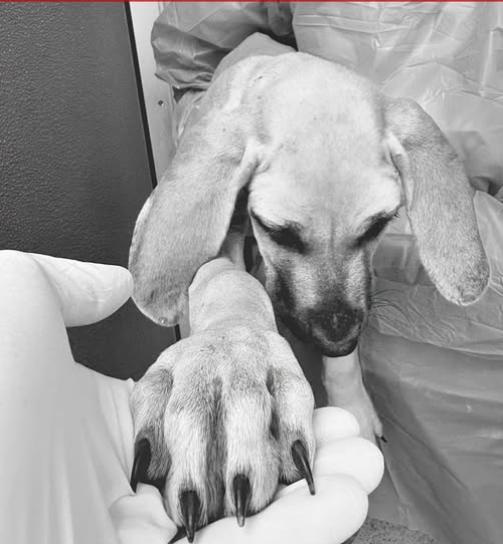
The Susquehanna SPCA in Cooperstown is still closed and fighting to save Great Dane puppies infected with parvovirus from an animal cruelty investigation in Schoharie County on July 24 and 25.
In a Facebook update on July 30, SQSPCA staff said that two more puppies died on July 29, bringing the death toll to eight puppies. But some of the remaining nine puppies were “looking brighter and have good appetites” by July 30, the post noted.
Several puppies remained in critical condition, though, fighting for their lives.
And one of the 12 adult dogs seized in the case and sent to the SQSPCA has tested positive for parvovirus, the shelter announced in a July 28 post; staff, the post noted, were bracing for more of the adult dogs to become infected.
“While it truly is heartbreaking to close our facility to the public, we know this is the best decision to protect not only the animals currently in our care, but also those in our community,” staff wrote in a Facebook post on July 27. “However, it is critical that adoptions continue for the animals that are available who have not been exposed to Parvovirus and are not involved in this case.”
Would-be adopters can call the shelter for appointments.
What is parvovirus?
Parvovirus can cause severe diarrhea in dogs; only between about 20% and 30% of the dogs who develop clinical disease survive, said Colin Parrish, professor emeritus of virology at the Cornell School of Veterinary Medicine in Ithaca.
And survival generally comes with a big bill for intensive care unit treatment, he noted.
Puppies between the ages of six and 20 weeks are by far the most likely to get sick, Parrish said.
Parvo, as the virus is commonly called, is a particular nightmare for shelters or anywhere that dogs, including puppies, congregate because the virus is very stable, he said. That means it doesn’t die quickly in the environment unlike viruses that cause influenza or COVID-19 which only last a few hours outside the respiratory tract, he said.
Dogs shed the virus in their feces where it can survive for days or weeks, Parrish said.
“It can hang around for quite a long time,” he said. “So that’s a concern for people who have an animal shelter.”
And the virus can get tracked from room to room or from shelter to staff and volunteer homes on, for example, the soles of shoes, Parrish warned. He stressed, though, that the adult dogs of staff and volunteers won’t be at risk if this happens.
Surfaces can be disinfected with lots of hot water, bleach and detergent, but the cleaning process isn’t easy and without thorough cleaning, puppies brought into a shelter will remain at risk of infection, Parrish said.
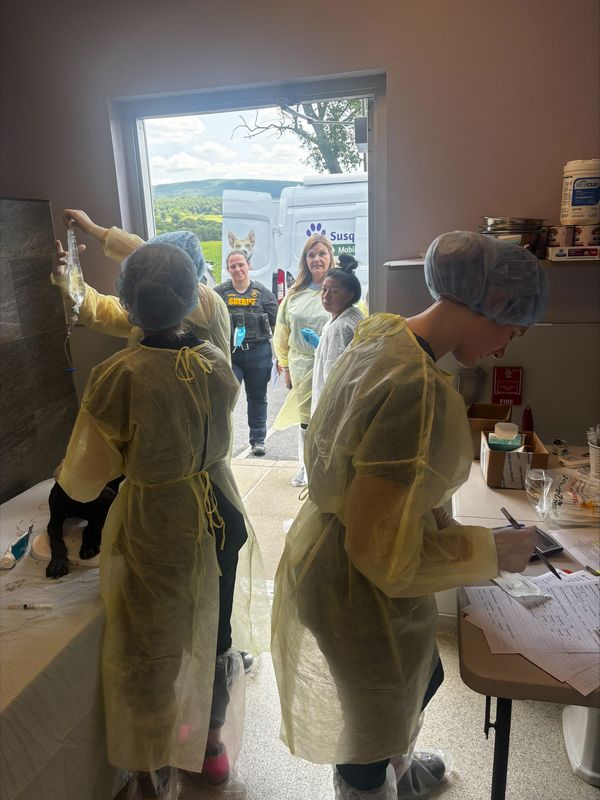
At the SQSPCA, the Great Dane puppies are being kept in isolation. And the newly constructed shelter, which opened in September 2025, has one big advantage in fighting infection: an HVAC filtration system that improves biosecurity.
The shelter also took in 12 dogs, four horses and five chickens seized during the investigation in the Town of Carlisle in Schoharie County. The SQSPCA acquired Campbell Hill Farm in Cooperstown last year for farm animals who have been surrendered or rescued.
Parvo and adult dogs
Parvovirus has been making dogs sick for about 60 years, Parrish said. The canine virus was derived a virus that affected cats, but no longer has any connections to cats, he said.
He can affect other carnivores, particularly canids such as, in this area, coyotes, he said.
But most adult dogs run little risk of illness, Parrish said.
“For parvovirus, there’s a very good vaccine,” he explained. “it’s included in all the puppy shots that anyone’s animals would get. It’s completely protective and basically protects that dog for the rest of their lives as far as we know.”
Unvaccinated adults dogs, though, are at risk and there is a little bit of a movement toward vaccine avoidance for dogs, Parrish pointed out.
Parvo and puppies
Newborn puppies are usually protected against parvovirus by antibodies in their mother’s milk.
But that maternal immunity also prevents the vaccine from being effective in puppies, Parrish said. So as that immunity wears off, there’s a period when puppies are susceptible to parvo because the vaccine still isn’t effective.
So puppies between six weeks and 20 weeks of age may be susceptible to parvo, although the age at which the vaccine takes effect varies from puppy to puppy, he said.
The recommendation from the American Veterinary Medical Association is that puppies receive their first dose of a combination vaccine that protects against canine parvovirus, canine distemper virus and canine adenovirus-2 at six to eight weeks. Puppies should then get a series of shots culminating in a final dose at 16 weeks or older with a booster shot a year later.
Adult dogs should get booster shots every three years.
Parvo treatment
“Once a dog gets infected by the parvovirus, there’s no drug that targets the parvovirus,” Parrish warned. “All you can do is support the dog and hope that it survives.”
A dog with parvo should be quarantined in a separate room and anyone entering that room should change their shoes when leaving, Parrish said.
Parrish broke down the most important parts of what people need to remember about parvo:
About the investigation
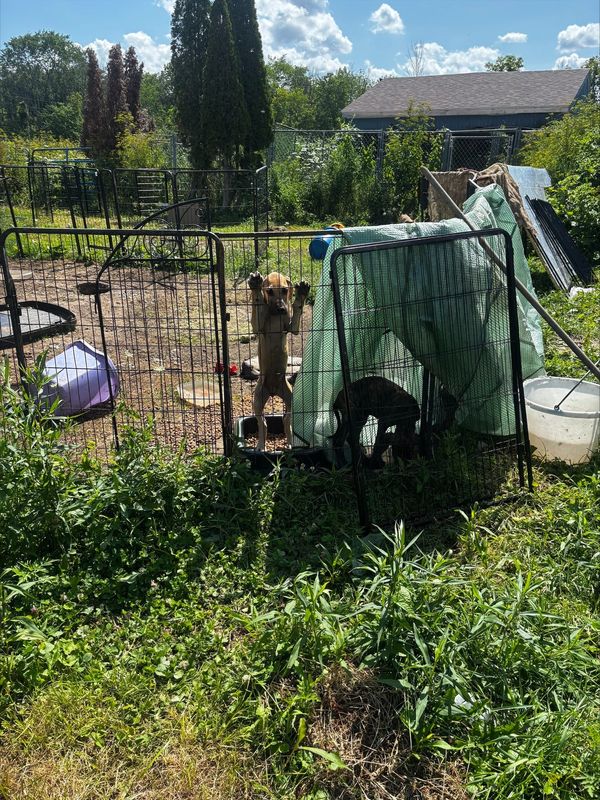
The Schoharie County Sheriff’s Office responded about 8 p.m. on Friday, July 24 to a call expressing concern about the welfare of animals at a residence in the Town of Carlisle, according to a release put out by the sheriff’s office.
Deputies discovered several that were severely ill and sent three critically ill puppies to Upstate Veterinary Specialists in Latham for treatment.
Deputies returned the next day with staff from the Animal Shelter of Schoharie County, the SQSPCA and the Town of Carlisle Dog Control to investigate and perform more medical evaluations. The owner voluntarily surrendered the puppies to the SQSPCA after more were found to be in critical condition, according to the sheriff’s office.
Deputies then obtained a search warrant for the property and found more animals requiring medical attention, according to the sheriff’s office. They ended up seizing all 61 animals remaining on the property, including the dogs, horses and chickens sent to the SQSPCA and 31 birds and nine cats that were sent to the Animal Shelter of Schoharie Valley.
The investigation is ongoing.
This article originally appeared on Observer-Dispatch: Parvovirus closed Cooperstown shelter; is parvo a threat to your dog?
Reporting by Amy Neff Roth, Utica Observer Dispatch / Observer-Dispatch
USA TODAY Network via Reuters Connect
By Amy Neff Roth, Utica Observer Dispatch | USA TODAY Network