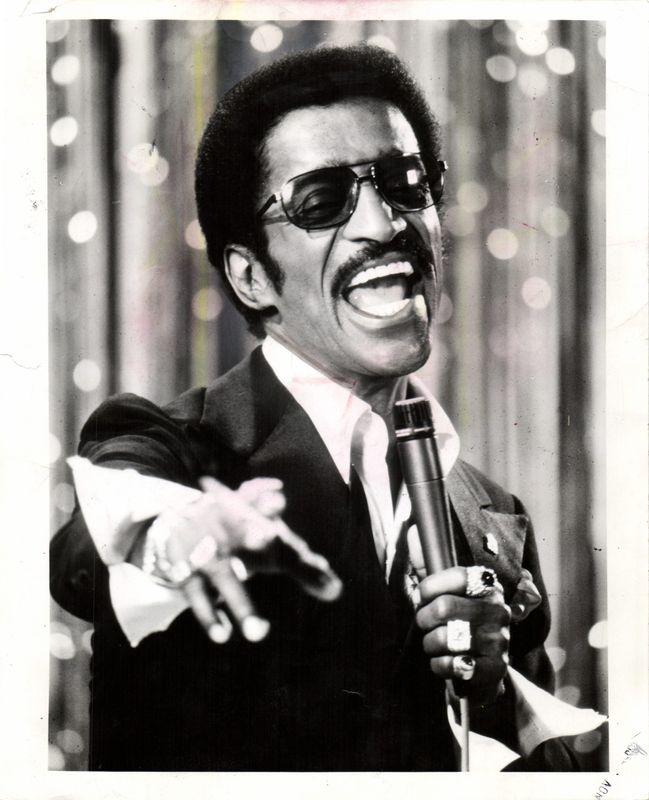
Long before Detroit became a national symbol of comeback and resilience, before “Detroit vs. Everybody” was printed on T-shirts and murals celebrated the city’s reinvention, one song captured something essential about the place and its people. That song was “Hello, Detroit,” recorded by the legendary Sammy Davis, Jr.
For generations of Detroiters, “Hello, Detroit” has been more than a tune. It has been a greeting, a civic anthem, a sentimental postcard and, perhaps most important, a reminder that someone famous once looked at the Motor City and saw greatness.

It was released in 1984 at a time when Detroit was wrestling with profound social and economic challenges. That fall, when the Tigers clenched the World Series, fans rioted in the streets. Photos of overturned, burning cars amid human madness filled TV screens and front pages around the world. That moment was burned into millions of brains: “This is Detroit.”
Still, amid the upheaval, “Hello, Detroit” offered something simple and powerful: affection.
Co-written by Motown Records founder Berry Gordy, Jr. and Willie Hutch, the lyrics celebrate the city in broad, sweeping strokes, portraying it as a place worth loving and returning to. In a Davis song catalog filled with standards, show tunes and Rat Pack swagger, it remains one of the most distinctive entries. It is unabashedly local.
While most entertainers sang about New York, Las Vegas or San Francisco, Davis devoted a song to a city of assembly lines, neighborhood bars and hardworking families. That choice mattered.
For many Detroiters who first heard “Hello, Detroit” on their car or bedside radios, the song felt like validation. Here was one of the biggest entertainers in America singing not about Hollywood glamour but about them.
As Detroit celebrates its 325th birthday on July 24, the Free Press takes a look back at the song the keeps on giving to our city.
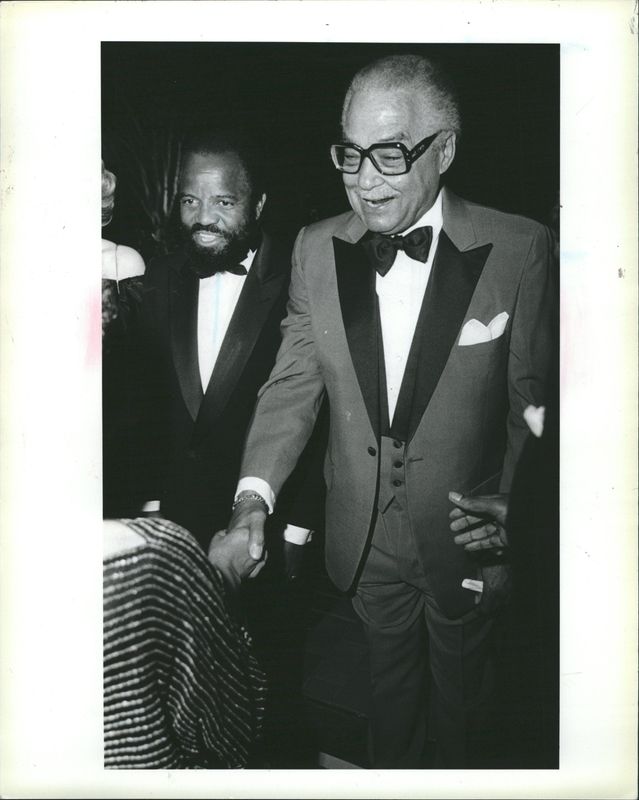
Mayor Coleman Young requested ‘Hello, Detroit’
Gordy, now in his late 90s, no longer grants interviews. But, when the Free Press reached out for the backstory on this old favorite tune, he agreed to answer a few questions via email.
“I was honored and excited when Coleman Young, the mayor at that time, asked me to write a song about Detroit,” Gordy wrote. “It was easy because Detroit is so special. The grit, the glamour, the strong work ethic, and the competitive spirit that is Detroit, prepared me for anything I would face in life.
“Of course, Motown started out right there, and though I was living in Los Angeles at the time, wherever I go, I carry Detroit in my heart.”
Co-writer Hutch also served as co-arranger for the song. He’d previously written many tunes for the label and had a co-writing credit on the Jackson 5 hit “I’ll Be There.” His arranging partner on “Hello, Detroit” was Gene Page, an all-star in the industry who’d turned in gems like Marvin Gaye’s “Hello Broadway” record, the Supremes’ Christmas album and hits for the Four Tops before receiving even more renown for his work with Barry White.
Gordy spoke fondly of his co-collaborators.
“Willie Hutch was a wonderful young writer who had written with me before on one of the Jackson 5 hits. I wanted a song that reflected my feelings about the warmth and spirit of Detroit that nurtured me, and the city that made Motown a champion. While writing the song, I thought about Sammy Davis Jr., who had been with Motown.
“When Sammy heard ‘Hello Detroit,’ he fell in love with it. We went into the studio, and he recorded it in no time. The project was a labor of love.”
Surprisingly, the recording became a top 10 hit in Belgium, of all places. It has never been released on CD or on music streaming platforms.
‘Motown 25’ special inspired ‘Hello, Detroit’
In 1983, the year before “Hello, Detroit,” NBC aired the famed “Motown 25” television special, which won an Emmy, was certified platinum for home video release, charted No. 2 in Billboard’s top music videos and more. Motown fever was officially back.
“In Berry’s book, he speaks about how emotional ‘Motown 25’ was for him,” said Drew Schultz, digital media curator for Detroit’s Motown Museum. “By 1983, when that television show happened, Diana Ross had left the label. Marvin Gaye had left the label. Mary Wells had left the label. Martha Reeves had left the label. The Four Tops had left the label. I think Junior Walker might have been gone by that point. Not Smokey (Robinson), but the Miracles themselves had left for Columbia.
“There’s a moment in ‘Motown 25’ where Diana Ross, onstage, says directly to Berry Gordy, ‘Look at how all these people came back.’ And so there was this huge, national attention because of ‘Motown 25’ and all the connections to Detroit. Berry was on the other end of what I can only imagine as being a pretty emotional experience for him. He speaks about how much that meant to him, and I think that the timing was just perfect for that song to be created, because of all of those colliding factors.”
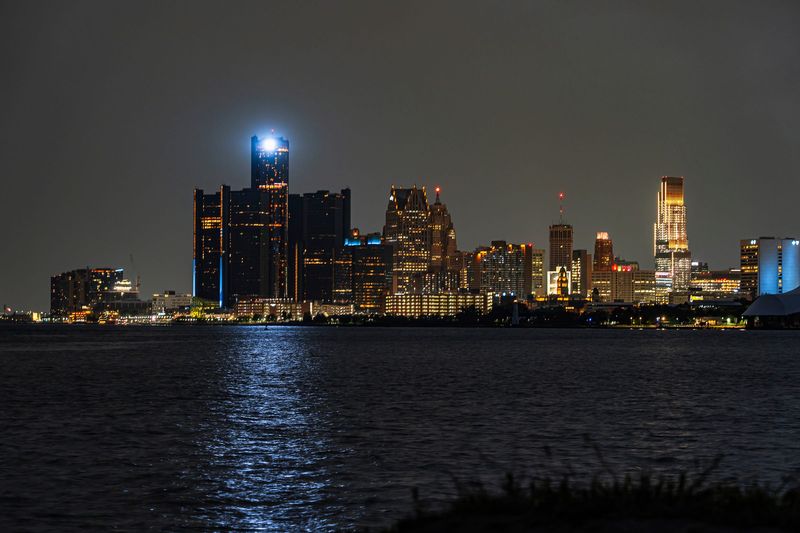
Despite the negative news emanating from the city, there was also much to celebrate during this period. There was that Tigers World Series win, plus the Renaissance Center had opened just a few years before, primarily financed by Ford. General Motors had pumped major funding into the riverfront property that is now the Riverwalk. Greektown was listed on the National Register of Historic Places. Chrysler had just scored a big comeback.
In 1984, the same year as “Hello, Detroit,” the city launched a splashy “Do It in Detroit” campaign, designed to appeal to tourists and hopeful residents. The Four Tops even recorded a song and accompanying music video, “Be a Part of the Heart of Detroit.”
Decades later, ‘Hello, Detroit’ endures
The real magic of “Hello, Detroit” is how it has survived long after its original chart life.
Ask a Detroiter of a certain age and chances are they remember hearing it during Tigers broadcasts, civic celebrations or local radio programming. For many years, it opened WJLB’s popular “Mason in the Morning” show at 6 a.m., leaving baby boomers and their children humming the song on the way to work and school.
Whatever the path, “Hello, Detroit” became part of the city’s cultural hand-me-down collection, alongside stories about Motown, Tigers championships and cruising on Jefferson Avenue.
Today, grandchildren who never saw downtown’s department store era or the giant factories operating at full tilt still recognize the song’s emotional pull. They hear it and imagine the Detroit their grandparents describe — the one with bustling streets, packed diners and endless confidence.
City of Detroit historian Jamon Jordan called the song “iconic.” He was among the many who first heard the song on his way to school in the ’80s.
“(Davis) is talking about the Renaissance Center, and he’s talking about downtown, talking about the river. … It’s the Detroit I grew up with,” said Jordan. “He’s an iconic singer — we all know him, even though he wasn’t singing the kind of songs that we heard on the radio every day. He’s a legend. He’s singing … a love letter to the city of Detroit.
“By the time we get to the ’90s, there’s a talk show, ‘Wake Up, Detroit,’ by JoAnn Watson, who will, of course, become a councilwoman. But at this time, she’s an activist well-known in the grassroots community in the city. I listen to her show on WHPR, which is a low-power station operating out of Highland Park, and she starts and ends her show with ‘Hello, Detroit.’ It is an iconic song during a period of my life when, No. 1, Detroit is presented mostly as a negative place in the mass media.”
A tune that lifts up Detroit
Every city has its soundtrack.
Chicago has “Sweet Home Chicago.” New York has “New York, New York.” Boston has “Dirty Water.”
Detroit, meanwhile, possesses one of the richest musical traditions on Earth. The city has offered up Motown, techno, garage rock, soul, punk and hip-hop, and epically transformed the path of jazz. Yet among those towering musical achievements sits a tune that is surprisingly straightforward.
“Hello, Detroit” endures because its message is uncomplicated.
It says hello.
It welcomes.
It celebrates.
In a city that has often been defined by outsiders through statistics, headlines and stereotypes, the song allows Detroiters to define themselves. It reflects the way residents talk about their hometown — with equal parts pride, affection and stubborn loyalty.
“There are people in Detroit who still have pride in Detroit,” said Jordan. “But if you read The New York Times or Time magazine or CNN, there’s very little positive news about the city. Detroit (was) presented in that time in a number of ways: At one point, it’s the murder capital, then you’ve got the Devil’s Night fires. But this song is totally different from all that.
“This song is talking about Detroit in lofty ways that nobody, no national figure, is. You’ve got this legendary singer who is really telling people about a Detroit that a lot of people hear nothing about, and that had a power to it. It gave you a sense of pride.”
Sammy Davis Jr.: The perfect voice for Detroit
There is also something fitting about Sammy Davis, Jr. being the messenger.
Davis was one of America’s most versatile entertainers — a singer, dancer, actor and comedian whose career crossed genres and audiences. His own life story was one of perseverance and determination. He overcame barriers, challenged expectations and built a remarkable career through talent and grit.
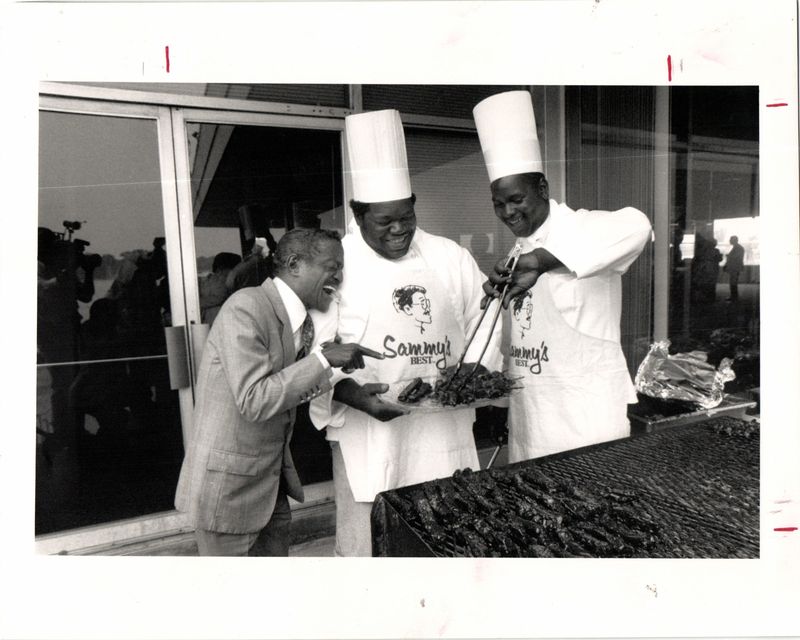
Detroit has always admired grit, and in 1981, Davis was presented with a key to the city.
Detroit understands long odds. It celebrates workers, dreamers, hustlers and people who keep showing up. In many ways, Davis’ voice — warm, charismatic and resilient — felt well-suited to a city with those same qualities. When he sang “Hello, Detroit,” it sounded less like a celebrity endorsement and more like a genuine embrace.
The Free Press spoke with Jamie McGregor, a prominent music researcher, discographer and archivist who runs SammyDavisJr.info. McGregor said Davis’ love for Detroit ran deep.
“His connection to Detroit was from his touring days with his dad and uncle in the Will Maston Trio,” McGregor said. “They spent a lot of time on the road. He refers, in a video, to something that was a famous Black entertainment area of town where there were lots of jazz clubs and (places) the Will Maston Trio would have performed. You can tell that’s his emotional connection to Detroit. There’s where it is, from years ago. The number of places and times that he’d have been there, coming up through vaudeville.”
That area Davis spoke of, of course, was likely the long-gone Paradise Valley and the adjacent Black Bottom, demolished in the late 1950s and early 1960s.
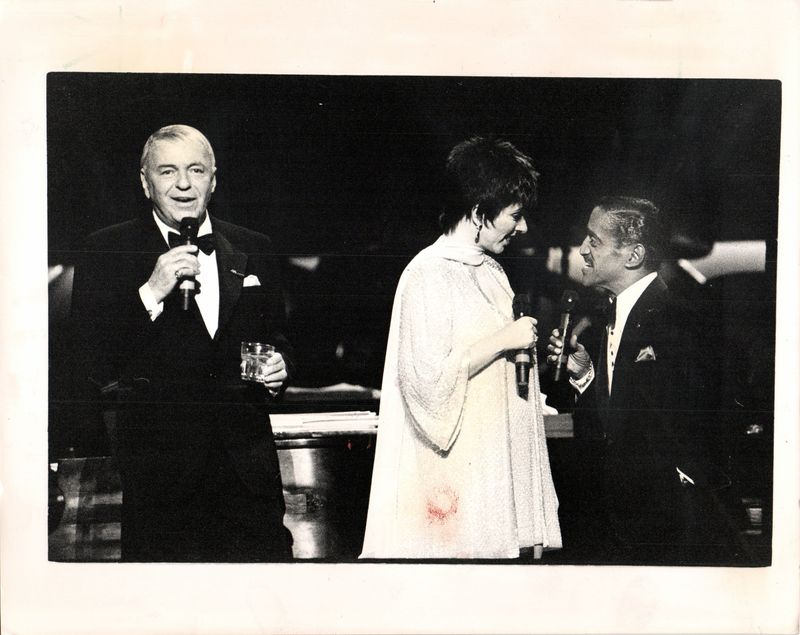
Manny Davis, Davis’ son and head of his estate, told the Free Press by email, “Dean Martin sang about Houston, Tony Bennett celebrated San Francisco, and Frank Sinatra immortalized NYC. Sammy Davis Jr. had the Motor City! Sammy absolutely loved Detroit, and ‘Hello, Detroit’ was his way of paying tribute to its vibrant energy and incredible people.”
Why ‘Hello, Detroit’ still matters to the city
The Detroit of 2026 is vastly different from the Detroit of the early 1980s. Factories have closed. New businesses have opened. Neighborhoods have changed. Entire generations have come and gone.
Yet “Hello, Detroit” continues to resonate because its central idea remains timeless: Detroit is worth celebrating.
In an era when cities constantly rebrand themselves with slogans and marketing campaigns, “Hello, Detroit” feels refreshingly authentic. It doesn’t try to sell anything. It simply expresses affection for a place.
That may be why Detroiters continue to claim it as their own.
In recent years, it has blared from Ford Field at the end of Tigers home games. In 2013, when Gordy received a lifetime achievement award at the Legacy in Motion Gala in Detroit (presented by the Michigan Chronicle, where he worked as a paperboy in his youth), it was used as his entrance music. In 2024, when the Kresge Foundation held its centennial celebration at the Detroit Institute of Arts, “Hello, Detroit” greeted attendees at cocktail hour after foundation director Rip Rapson’s fireside chat with surprise guest Barack Obama.
In 2024, Detroit singer Vanessa Carr, 34, released a new version of “Hello, Detroit,” complete with a fun, freewheeling music video available on YouTube.
“People beyond metro Detroit or the state aren’t aware of how the city is really thriving,” said Carr. “Downtown is certainly in a renaissance. The surrounding areas still need assistance, but it’s really nice for people to celebrate the city and its rebirth, especially with Michigan Central Station coming back.”
Carr said the video was shot in more than 50 locations around the city, including Campus Martius, Belle Isle, Greektown and Ford Field – all over two days.
“We got shots in the Fisher Building that we didn’t think were going to happen, and beautiful shots all over the area. The spirit of the city just pours through the screen as you’re watching it. It’s essentially a commercial for the D.”
The song evokes memories of the city’s golden years, but it also speaks to something deeper than nostalgia. It reflects the belief that Detroit’s identity is not defined solely by its past triumphs or struggles. Instead, it is defined by the people who love it fiercely, generation after generation.
Gail Perry-Mason, founder of Money Matters for Youth, spoke of the bond she shared with her mother over the Detroit theme.
“My mother, who adopted me when I was 4 years old — it was her favorite song,” Perry-Mason said. “She helped run this debutante ball for underprivileged girls in Detroit, and when I was a debutante, she had all of us come out on that song, and that was one of the highlights of her life. For the first four years of my life, I was a ward of the state, and my name used to be Stephanie. I couldn’t walk or talk by age 4, and then this African American doctor came to her house and said: ‘Take the braces off her legs. Hold her, talk to her.’ So when she played that song and I walked out in that debutante ball, I could feel everything that was against me vanish.
“Detroit was where I was left in the hospital. Detroit is where a group of African American women took me in and loved me. The women that raised me would listen to that Sammy Davis record. That really shapes the memories of my heart. Detroit is my world.”
And so, nearly half a century after Sammy Davis, Jr. first sang those words, Detroit still answers back.
The skyline may change. The industries may evolve. The faces may be different.
But whenever “Hello, Detroit” drifts from a speaker, an old radio or a nostalgic playlist, the feeling is the same.
Gordy summed it up best.
“No, I am not surprised that Detroiters still love and remember that song,” he wrote. “San Francisco and New York have their official songs, so I’d like to think this one is ours!”
This article originally appeared on Detroit Free Press: Remembering ‘Hello, Detroit,’ Sammy Davis Jr.’s love letter to the city
Reporting by Duante Beddingfield, Detroit Free Press / Detroit Free Press
USA TODAY Network via Reuters Connect
By Duante Beddingfield, Detroit Free Press | USA TODAY Network