We’re out and about hitting summer fun spots, knocking items off back-to-school lists, and, generally, trying to squeeze in a little sun during what’s left of summer. And the scammers? Well, they’ve got a cool scheme to steal our cash right off our smartphone or smartwatch.
An elaborate scam experienced by a young woman in metro Detroit isn’t one that you’re hearing about every day. But experts warn that it’s simple enough to have a shot at growing in popularity — so watch out.

And the crooks are making big money.
In late June, a 29-year-old woman agreed to donate $50 after she was approached at a Walmart in Troy by two guys who appeared to be high school students.
Giving anyone $50 is a pretty generous gesture in my book. But maybe she felt some connection when the young men told her that they were raising money to travel to tour some colleges.
According to the police report, the men approached her shortly after 6:30 p.m. Saturday, June 27, and asked whether she would be willing to make a donation.
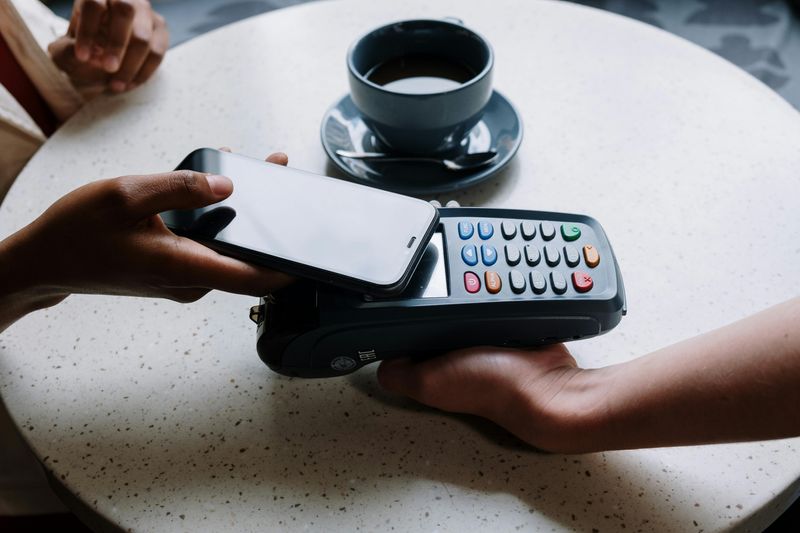
Per their suggestion, the woman used a tap-to-pay contactless payment system on her iPhone. But she later told Troy police that she simply assumed she was giving $50. She did not see check the exact dollar amount on the payment system.
Later that evening, according to the report she filed with Troy police, the woman discovered after reviewing her account that the transaction ended up being for $1,000 — not $50.
Walmart did not respond to questions from the Detroit Free Press about whether the retailer has seen an uptick of similar requests for donations or scams targeting shoppers.
It’s an ongoing scam that all of us need to avoid.
Tap-to-pay scammers bet on you being nice — and being in a rush
You might be living in the moment, even appearing a little distracted. And someone might come up to you with a story — maybe they’re raising money for a sick relative, maybe they need to cover the cost of a funeral, maybe collecting money for a charity, you name it.
Then, they’ll ask for a relatively small donation and they’ll ask you to use tap-to-pay feature on your card or mobile wallet to steal money through your credit or debit card.
Scammers count on us tapping without checking how much is being charged or the business name receiving the payment, experts warn. And they’re going to rush you through the process — or know you’re in a rush to get your shopping done or get your dinner on the table.
Pro tip here: Walk on by, as superstar Dionne Warwick would tell you. Hold tight to your phone or tap-to-pay cards when you start to hear a stranger sharing their sob story on the street.
It’s a real in-person scam that’s costing consumers real money.
One consumer lost $537 on one of these tap-to-pay scams when buying candy in a supposed door-to-door fundraiser for special needs students, according to a Better Business Bureau alert. Another victim lost $1,100.
According to a Better Business Bureau alert, some victims lose money without even handing over their credit cards. Criminals are able to use wireless devices to steal money without touching your card, the BBB warned. It’s called “ghost tapping.”
In some schemes, the crooks attempt to get close to you in public spaces possibly “accidentally” bumping into you as a way to be near enough to your phone or tap-enabled card to start an unauthorized payment. Yet, this type of scam appears very limited in scope.
The Michigan Attorney General, for example, has never received a consumer complaint of alleged “ghost tapping,” according to Danny Wimmer, a spokesperson for Michigan Attorney General Dana Nessel.
The term “ghost tapping” refers to contactless fraud where someone doesn’t have your credit card or debit card in hand but instead tries to engineer a tap-to-pay transaction without your authorization. The scammers use a device to collect data off your card, according to consumer watchdogs.
Get a ‘refusal script’
Amy Nofziger, senior director of victim support for the AARP Fraud Watch Network, explained that scammers are catching people off guard. The con artists know how to distract you and then quickly charge more money than you’ve agreed to pay by exploiting tap-to-pay technology.
Often, Nofziger said, consumers will call the AARP Fraud Watch Network Helpline to complain about a sudden unauthorized charge on their accounts. They’re not sure how it got there. It could be the result of “ghost tapping,” identity theft or a lost or stolen card. It’s hard to tell the kind of scam that took place.
As we’re hearing more reports of fundraising related scams, though, it’s essential to become more guarded when someone approaches you in a seemingly innocent way on the street or going door-to-door in your neighborhood.
“Just like we prepare ourselves with personal safety when we’re out in public, people need to prepare themselves for financial safety when we’re out in public,” Nofziger told the Detroit Free Press.
Be aware that if you’re out in a parking lot, she said, that someone might come up to you and give you a sad story about something and ask for a donation.
“Have a refusal script,” Nofziger advises.
Be prepared to say something like, “I do not give money to unknown organizations or people I don’t know.”
Or maybe, I’d suggest, just keep walking. Seriously. Keep moving, do not engage and do not pull out your mobile wallet, credit card or debit card.
A red flag of a tap-to-pay scam is that the person on the street or going door to door often refuses to take cash, Nofziger said. If you give cash, you might lose $5 or $10 to a crook. But if you offer money via a mobile wallet, the risk is much higher.
Nofziger said we might start to see some more in-person fraud, frankly, because we can’t hang up on the scammers.
Many people are well trained now, she said, not to answer calls from unknown numbers. Or if they do pick up, they’re more likely at some point to hang up on someone calling out of the blue and claiming you owe money for your taxes or utilities.
But we’re more uncertain when someone is standing in front of us.
“It’s harder to say no,” Nofziger said. “That’s why we have to practice our refusal script and our no.”
She urges people to call the AARP Fraud Watch Network helpline at 877-908-3360 if they suspect a scam or that they’ve lost money to a scam. Fraud specialists can help guide you on what steps to take next.
If you think you’ve been scammed, you need to report the charges to your bank or card company as soon as you realize you’ve lost money. You want to stop more fraud from taking place and see if you’re able to possibly get a refund.
Ways to protect your money from tap-to-pay scams
The Michigan Attorney General and other consumer watchdogs offer these tips as well:
Contact personal finance columnist Susan Tompor: stompor@freepress.com. Follow her on X @tompor.
This article originally appeared on Detroit Free Press: Donation for a college tour turned out to be a $1,000 tap-to-pay scam
Reporting by Susan Tompor, Detroit Free Press / Detroit Free Press
USA TODAY Network via Reuters Connect
By Susan Tompor, Detroit Free Press | USA TODAY Network