

We have studied presidential employment contracts at public universities for more than 15 years. We review these agreements because they reveal what boards rarely acknowledge: when under pressure, what do they value?
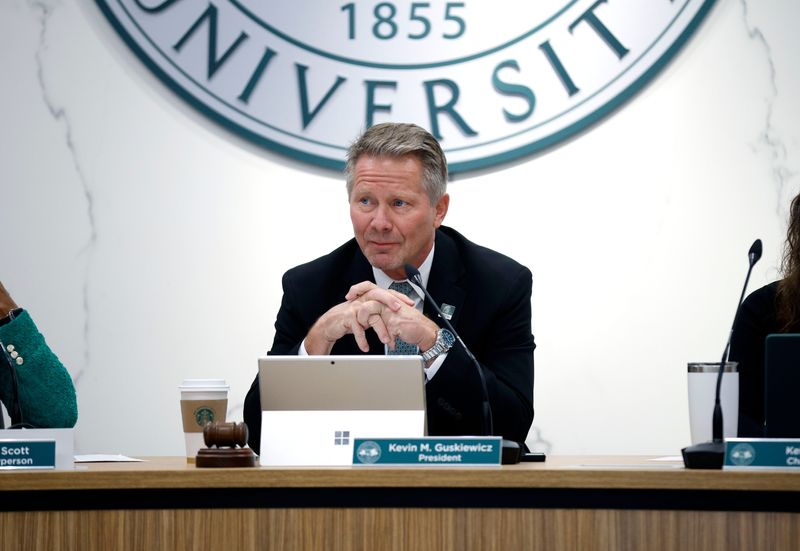
Michigan State’s newly amended contract with President Kevin Guskiewicz is among the more revealing documents we have seen, and not for the reason most headlines suggest.

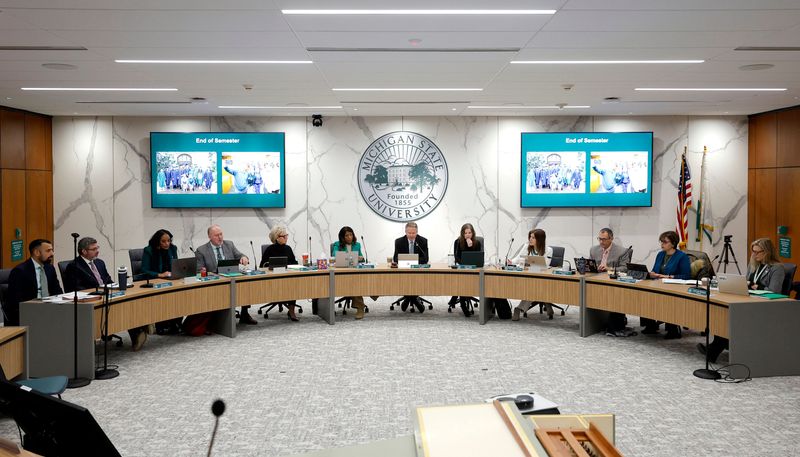
The story is not simply that Guskiewicz received a raise — that’s routine. The more important story is that, within weeks of a governance crisis that nearly cost the university its president, the Board of Trustees renegotiated nearly every major element of the president’s contract: salary, deferred compensation, contract length, post-presidential benefits and executive perquisites. Taken as a whole, the agreement raises a question that extends beyond one president or university: does this board understand what fiduciary responsibility requires?
Guskiewicz himself has sharpened that question. In interviews after deciding to stay, he has attributed both his contemplated departure and his return to governance issues. He originally stated that eroding trust and disagreements over governing principles were the issues; now he asserts that he and the board have a renewed commitment to working together. He has mentioned neither salary nor being underpaid. So, if governance was the only problem, why did the board respond with one of the most financially generous retention agreements in public higher education?
Consider the provision that is drawing immediate attention: ten hours each year of personal, non-business private-aircraft use for Guskiewicz, his family, and/or guests, funded by “philanthropic sources.” University presidents routinely access aircraft for institutional purposes — fundraising, government relations, athletics and emergency travel. Those are legitimate business expenses. This provision is different, authorizing personal recreational travel unrelated to university business. Certain federal officials are required use, even on vacation, government aircraft for security reasons, but no comparable rationale applies here. The contract identifies no operational, institutional, or security purpose—only a new personal benefit.
That distinction matters. Of the 300-plus contracts we’ve reviewed, only one has a somewhat comparable provision — a Gordon Gee agreement authorizing the use of charter aircraft for official duties. We know of no other public university contract that grants donor-funded aircraft use to a president, family and guests.
The Clemson comparison is telling. The term sheet Guskiewicz accepted before reversing course contains no comparable provision — even the institution recruiting him away saw no need. Michigan State’s board included it anyway, while stressing that philanthropic, not general-fund, dollars would fund such use. The board almost certainly had the legal authority to do so. The question is whether a donor-funded luxury benefit with no identified institutional purpose reflects sound fiduciary judgment.
The arithmetic is equally telling. Trustees publicly floated a $2 million salary as a starting point; they settled on $1.5 million, widely read as a compromise. That reading overlooks the most consequential change: the board also extended the contract by two years. Once those two years are counted, the total guaranteed salary under the amended agreement exceeds, by approximately $2 million, what Guskiewicz would have earned under the original contract’s remaining term. The lower headline number masks a more expensive agreement.
The board also increased long-term obligations that are unlikely to become visible for years. Like most termination scenarios — including simply completing the term — Guskiewicz receives a fully paid sabbatical followed by a permanent faculty appointment at 50% of his final presidential salary. Raising that salary from roughly $1.03 million to $1.5 million increases the value of the faculty appointment by about $235,000 annually. Under standard actuarial assumptions, the combined sabbatical-and-faculty package could approach $11.7 million over his career. The precise figure depends on future raises and length of service, but the point stands: the board dramatically expanded the university’s long-term commitments without publicly discussing their cumulative cost.
None of this means the board lacked legal authority to negotiate these terms. Fiduciary responsibility requires weighing necessity, cost, long-term consequences, public accountability and legal authority before committing resources. The question is not whether the trustees could approve these provisions, but whether they exercised the stewardship expected of fiduciaries at a public institution.
Guskiewicz has said the crisis was fundamentally about governance. If that is correct, the board’s response is hard to understand. Governance problems are solved through governance — clearer expectations, healthier board-administration relationships and disciplined adherence to fiduciary principles — not through richer contracts, expanded deferred compensation or donor-funded luxury perks.
Michigan State’s amended agreement ultimately says less about one president than about the board that signed it. Contracts reveal priorities. However, confronted with a governance crisis, the board first sought financial solutions rather than governance reform. That may retain a president. Whether it reflects sound fiduciary stewardship is another question.
Judith A. Wilde is an independent researcher; she was the founding Chief Operating Officer of the Schar School of Policy and Government at George Mason University. James H. Finkelstein is Emeritus Professor of Public Policy at George Mason University.
This article originally appeared on The Detroit News: Guskiewicz deal shows MSU’s board still doesn’t understand its fiduciary duty | Opinion
Reporting by Judith A. Wilde and James H. Finkelstein / The Detroit News
USA TODAY Network via Reuters Connect
By Judith A. Wilde and James H. Finkelstein | USA TODAY Network
