Ask Cincinnati residents what they want from City Hall and you’ll hear a lot of different answers. But one issue comes up everywhere I go: fix our roads.
People experience it every day. They drive over potholes and rough pavement. The result: Premature tire wear and suspensions taking a beating. Crumbling roads are more than an inconvenience − they are a visible sign of whether our government is keeping up with its most basic responsibilities.

The good news is that we know exactly what needs to be done because we’ve done it before.
The high cost of delay
There was a time when Cincinnati paved more than 100 lane miles of roadway each year. In fact, in 2016, the city repaved approximately 120 lane miles and performed preventative maintenance on another 150 lane miles.
Today, we are nowhere near those levels. We’ll repave 70 lane miles next year. I have been pushing to get back to previous levels.
The result of this deferred investment is predictable. Roads that could have been preserved with relatively inexpensive preventative maintenance deteriorate until they require complete reconstruction. Every car owner understands this principle. If you change your oil, then your engine lasts longer. If you ignore it, then you’ll eventually pay for a new engine. Roads work the same way.
Studies consistently show that every dollar invested in preventative pavement maintenance saves between $6 to $14 in future reconstruction costs. Yet too often we wait until roads have already failed before investing in them and we’re simply not investing enough in them to keep up. That is not a sustainable strategy.
Put priorities back on the pavement
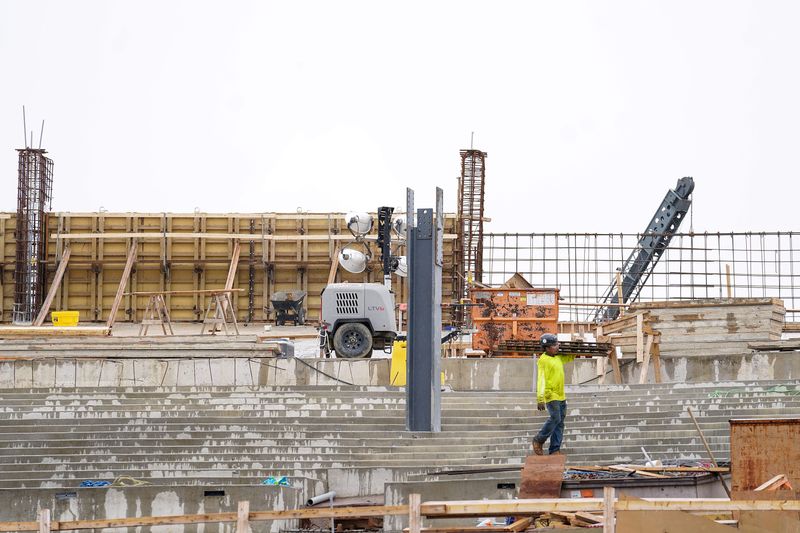
This reality was one reason why I opposed spending $2 million in city funding on the Farmer Music Center. Let me be clear: I support the Cincinnati Symphony Orchestra, MEMI, and the project itself. The venue will be a great addition to our city.
But the city’s own analysis concluded that public funding was not necessary for the project to move forward. If a project can happen without taxpayer dollars, then those dollars should be directed toward needs that cannot. And right now, one of those most pressing needs are our roads.
Every budget is a statement of priorities. When we spend $2 million on a project that does not require public funding, that is $2 million we cannot spend fixing streets, replacing aging infrastructure, or addressing other core responsibilities of government.
The sale of the Cincinnati Southern Railway created a once-in-a-generation opportunity to address these challenges. We have already begun making progress with additional infrastructure investments, but we must be more ambitious.
We need to return Cincinnati to proven levels of road maintenance: repaving 120 lane miles annually while performing preventative maintenance on 150 lane miles. Those are not arbitrary numbers. They are levels we have achieved before. They are consistent with expert recommendations including from the Smale Commission in 1986. And they represent the kind of sustained investment required to protect the infrastructure our residents rely on every day.
The question is not whether we can afford to invest in our roads. The question is whether we can afford not to.
Every year we delay, the costs grow. Every year that we underinvest, the backlog gets larger. And every year Cincinnati residents pay the price − in vehicle repairs, lost time, and declining infrastructure as well as a lost faith in the quality of life in our city.
We need to fund what we “must have” − good roads − before we fund what’s “nice to have.” And that means a sustained and increased investment in our roads.
Cincinnati City Councilman Mark Jeffreys is the chairman of the Housing & Growth Committee and serves as vice president of OKI.
This article originally appeared on Cincinnati Enquirer: Fix Cincinnati’s roads before funding nice-to-haves | Opinion
Reporting by Mark Jeffreys, Opinion contributor / Cincinnati Enquirer
USA TODAY Network via Reuters Connect
By Mark Jeffreys, Opinion contributor | USA TODAY Network