The Dearborn Public Schools district is asking voters to approve a $1.51 billion bond proposal to build six new school buildings and repair other aging buildings over the next 20 years.
The extensive plan would be the most expensive of its kind in recent Dearborn schools history, sparking concern from some residents concerned about high taxes and the tearing down of historic buildings built a century ago.

The Dearborn Public Schools board voted unanimously on Tuesday, June 23, to put the bond proposal to voters, which first must be approved by Wayne County officials before appearing on the November ballot. Board members defended the plan, saying it’s needed to educate future students in the third-largest school district in the state, with more than 20,000 students. After the project is done, there will be 100,000 fewer square feet to maintain, all schools will have air conditioning, and there will be new STEM labs, the district said.
“We have major infrastructure problems at the schools,” Dearborn Schools board member Amer Zahr told the Detroit Free Press. “We need this bond in order to build an entire school district that is ready for the next 100 years. Part of the reason we love Dearborn is that it has this long history, but some of our schools are really, really old, and they really, really need help. And if we want to keep students in Dearborn, we want to make sure that they’re treated the way they need to be treated.”
If approved, Dearborn residents would see a 3.14 mill increase, which means the owner of a home in Dearborn whose taxable value is $100,000 would pay $314 annually. A small part of the district is in Dearborn Heights, where homeowners would see a millage increase of 0.96 mill. There have already been concerns in Dearborn about high property taxes and sewer overflow taxes. School officials, though, say there won’t be a tax increase given the current rates homeowners face.
“The new tax for the bond will be offset partly by a 0.96 mill reduction in the City of Dearborn’s debt millage for a combined sewer project,” the district said in a statement. “Dearborn Schools will also stop collecting its 2.18 operating millage if the bond passes, which would bring the bond to a zero millage change for Dearborn homeowners.”
Supporters note that Dearborn has a high number of youth compared to other cities and argue that the upgrades are necessary. The city has the highest percentage of residents under the age of 18 among all cities in the Midwest and East Coast with 100,000+ residents, Census data shows. But Dearborn’s population has declined in recent years, dropping about 4 percent from 2020, down from 109,976 residents to 105,611 residents in 2025, according to Census data. About 45% students in Dearborn schools are English learners, and 80% come from homes that are low-income, the district said.
A spokeswoman for the district, Katie Hetrick, told the Detroit Free Press they expect the current student population of about 20,000 to “stay fairly stable over the next few years.” Out of the 20,000 students, 19,500 are in kindergarten through high school, with an additional 600 students in the free Great Start Readiness Program (GSRP), which is a state-funded, pre-K program for four-year-old students.
“As the state moves to universal free preschool, the new buildings should allow us to add more GSRP classrooms and give more families the chance to have free preschool in their neighborhood at the school their other children may already be attending,” Hetrick said.
Under the bond proposal, several elementary and middle schools would be merged, creating new Pre-K to 8th-grade schools, Hetrick said.
According to Hetrick and a report, the six new school buildings would be:
“We would also keep McCollough-Unis (Middle School) and add Oakman Elementary to it, but that is slated for renovations, not a new building,” Hetrick said.
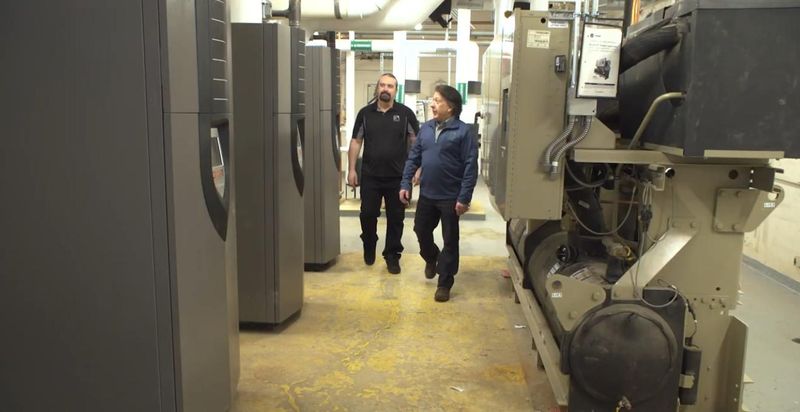
The bond proposal also would fund urgent repairs that need immediate attention, for boilers, roofs, and HVAC (Heating, Ventilation, and Air Conditioning), the district said.
“We have major infrastructure problems at the schools,” Zahr said. “We need to address them right now in many ways. Our (current) general fund is being sort of attacked by repairs and maintenance.”
The last bond proposal approved by voters was in 2013. In 2019, voters narrowly rejected a $240 million bond proposal called BRICS (Buildings, Renovations, Infrastructure, Capacity and Safety). This time, the board and district intend to do a better job at communicating to voters why the district needs improvements. At Tuesday’s meeting, the board also “approved a contract for a local Dearborn-based political consulting firm to be the firm that pushes this messaging to our residents,” Zahr said.
“In 2019 … part of the reason (the school bond proposal) lost was .. the board at that time didn’t get a great job of explaining it to everybody,” Zahr said. “I’m very confident that Dearborn is a community that wants to support the schools, that Dearborn is a community that wants to make sure our kids have the best environments, and I know that if we explain this correctly, market it correctly, that we are going to be successful in passing this bond, because I know the community values their schools.”
In order to pass, the proposal will have to win over voters in the Arab American community, who make up a majority of students in the schools. In May 1999, voters narrowly rejected a $53 million school bond proposal after Arab American groups raised concerns that the plan ignored schools in the eastern part of the city, which is more heavily Arab. The next year, 2000, voters again rejected another bond proposal of $52 million that Arab American groups opposed. Finally, in 2002, voters approved a two-school bond proposal worth a combined $150 million after Arab American groups supported it, saying the district finally listened to their concerns.
Today, the politics of Dearborn is quite different, with a growing number of Arab Americans in elected positions: five of the seven school board members are of Arab descent, and the new superintendent is Arab American for the first time in history.
Some have raised concerns about the proposed demolition of historic schools like Lowrey, a historic Collegiate Gothic-style school built in the 1920s. But others say maintaining old schools like Lowrey is too expensive given the maintenance and preservation costs.
For more information on the bond proposal, visit https://dearbornschools.org/2026-transformational-bond/. A look the size and history of schools in Dearborn can be viewed here. And to read the full report by accounting company Plante Moran on the bond proposal, click here.
Contact Niraj Warikoo: nwarikoo@freepress.com or X @nwarikoo.
This article originally appeared on Detroit Free Press: Dearborn schools district wants $1.5 billion bond for 6 new buildings
Reporting by Niraj Warikoo, Detroit Free Press / Detroit Free Press
USA TODAY Network via Reuters Connect
By Niraj Warikoo, Detroit Free Press | USA TODAY Network