

As families across Michigan start summer break, a major decision about elementary education is advancing in Lansing. On June 10, a Michigan House committee approved bills to improve literacy, including one that mandates specialized “science of reading” training for all K-5 educators. The full House will now weigh in on House Bill 5646.
The science of reading is the body of research about how the human brain learns to read. Passing and funding HB 5646 would be a game-changer, immediately impacting the educational trajectories of thousands of Michigan children.

This mandated training, usually delivered through a program called LETRS, would equip current and aspiring teachers with practical, evidence-based methods to help all students improve literacy, especially struggling readers. Beyond the curriculum, this legislation highlights a critical reality: elementary education is a specialized profession led by experts who deserve our trust.
But a legislative mandate alone is not a magic wand. To transform literacy outcomes, this shift requires robust funding and comprehensive state-level support. Currently, Michigan ranks in the bottom 20% nationally for fourth-grade reading proficiency on the National Assessment of Educational Progress (NAEP) Report Card. We cannot demand rigorous, research-based instructional shifts from educators while funding schools based on outdated practices instead of modern realities.
Michigan’s elementary educators, support teams and school leaders work together with the coordination, communication and specialized skills of an advanced medical team. Classroom teachers, reading interventionists and special education teams constantly coordinate to diagnose learning gaps and prescribe precise instructional interventions. We must move past the childhood nostalgia that treats elementary teaching as a job requiring only patience. When we fund and trust teachers as the experts they are, Michigan children will win.
Teaching young children demands a unique skill set. I experienced this firsthand transitioning to elementary education in 2022, after 22 years as a high school teacher and administrator. The last four years working in an elementary school opened my eyes to the multitasking and sophisticated problem-solving I simply couldn’t have grasped without seeing it up close. A strong academic foundation supported by professionals in these early years sets the trajectory for a child’s entire life.
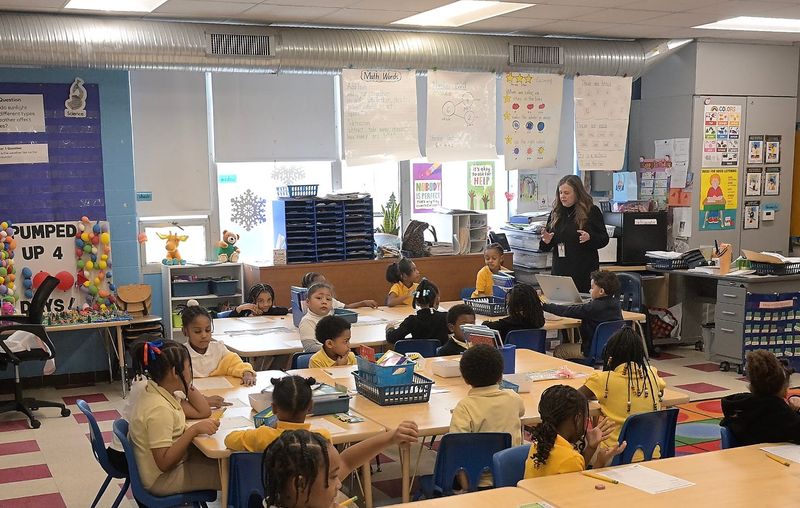
The modern elementary classroom is a fast-paced, high-wire act. Teachers don’t just teach reading and math; they help children navigate unprecedented social, emotional and developmental challenges. Within a single lesson, the best educators juggle small-group activities for different learning levels, redirect wandering attention spans and may even safely de-escalate a child in crisis. In many classrooms, active crisis management happens alongside instruction. Too often, people feel sorry for teachers because they have a tough job, rather than recognizing the extraordinary, specialized skills this demanding profession requires.
This complex learning environment is why trusting our educators and backing them with systemic support is vital. Integrating the latest research on autism, neurodiversity and cognitive science requires teachers to evolve. Following the landmark dyslexia and literacy laws passed in 2024, Michigan schools are in the middle of a multi-year rollout affecting our youngest students. School districts statewide are restructuring how they screen children for dyslexia and overhauling reading instruction to meet new standards.
Reading instruction is the most pressing educational equity issue of our time. Supporting HB 5646 moves us past good intentions and demands accountability to the science of what actually works. When schools rely on outdated methods, children from well-resourced families might get by, but our most vulnerable students are left behind. Hundreds of dedicated Michigan educators have already completed specialized training in the science of reading because mastering how children learn to read is the most effective tool to ensure every student succeeds.
As the state House takes up HB 5646, Michigan citizens can show respect for educators and their expertise through meaningful support. The most powerful way to support educators is to enthusiastically back HB 5646 and demand the funding to implement it.
Teachers are doing the heavy lifting to support Michigan children, and our communities should back them. Attend local school board meetings and demand that your district supports and fully funds science-based literacy training. Demand the best for our students by providing teachers with the tools they deserve and trusting them to lead the way.
When parents, school boards and allies make their voices heard, educators feel genuinely supported. And inevitably, when teachers are supported and trusted as the experts they are, Michigan children win.
With over 25 years of service in Michigan public schools, Nick Gregory is the principal of Knudsen Elementary in the Waterford School District. As a National Writing Project Teacher Consultant, he advocates for children and educators. Gregory is proud to collaborate with Knudsen’s dedicated teachers, whose collective expertise has driven a dramatic rise in student reading achievement over the last four years. The views expressed here are his own.
This article originally appeared on The Detroit News: It’s time for Michigan to lean into the ‘science of reading’ | Opinion
Reporting by Nick Gregory / The Detroit News
USA TODAY Network via Reuters Connect
By Nick Gregory | USA TODAY Network
