

By Heather Schlitz
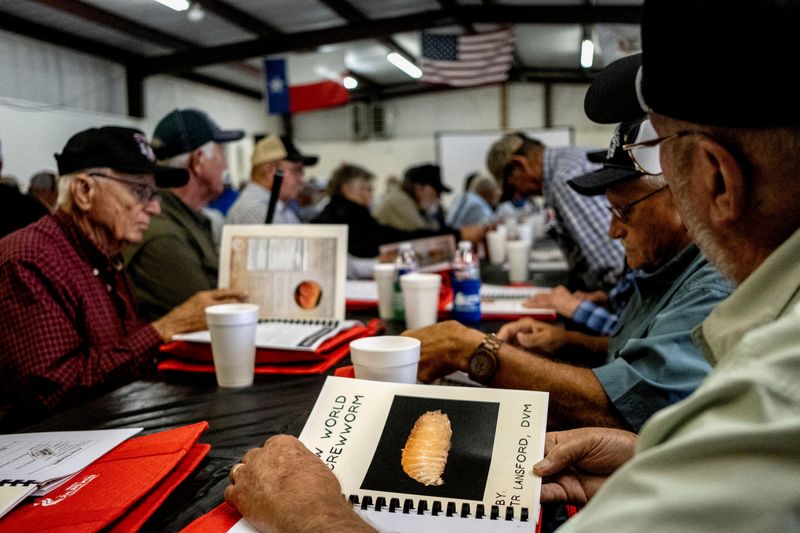
CHICAGO, June 18 (Reuters) – Screwworm, a parasitic fly whose flesh-eating larvae feed on living animals, re-entered the U.S. Southwest in June for the first time since the 1970s, posing a threat to the livestock industry as well as wildlife and household pets.

This is what veterinarians say pet owners, particularly those near the U.S.-Mexico border, need to know:
WHAT ARE SCREWWORMS?
Female screwworm flies lay eggs in wounds on any warm-blooded animal. Once the eggs hatch, hundreds of larvae use their sharp mouths to eat through living flesh, eventually killing their host if untreated. They mostly spread through the movement of infested animals, pose no threat to food safety and rarely affect humans, experts said. Animals treated early with maggot removal, wound cleaning and antibiotics generally survive the infestation.
A dog in New Mexico was infested with screwworm in June, underscoring the risk to pets in the U.S. Southwest after the pest’s northward spread from endemic regions in Central America and into Mexico.
WHAT SYMPTOMS SHOULD PET OWNERS LOOK OUT FOR?
Owners should watch for wounds that swell, ooze pus or fail to heal, as well as signs of pain, such as excessive licking or chewing, lethargy and loss of appetite.
One of the most telling signs of screwworm is the foul smell of rotting flesh. Experts said pet owners should take their animals to the vet if they spot these signs, even if maggots and eggs are not immediately visible.
Stray cats and dogs might be most at risk of contracting screwworm and could help spread the parasite to household pets, vets said. Residents should keep a close eye on strays and contact local animal control if they see signs of a screwworm infestation.
“The consequences of missing one or two cases is so great that if the public sees anything suspicious, take it into your vet,” said Dr. Pancho Hubert, a veterinarian in Corpus Christi, Texas, and the president of the Texas Veterinary Medical Association. “It might not be anything, but these wounds carry so much significance.”
CAN INFESTATION BE PREVENTED?
Once-monthly medications normally used to keep away ticks, fleas and other common pet parasites may also protect pets against screwworm as the medications work similarly against a range of pests. Chewable treatments such as Credelio and Simparica enter an animal’s bloodstream and kill parasites that feed on it.
HOW IS SCREWWORM TREATED?
A veterinarian will investigate the wound, scrape out larvae and eggs and send the samples to animal health authorities for testing. They then disinfect the wound, give the pet an oral insecticide, and would likely prescribe pain medication and antibiotics. The U.S. Department of Agriculture has authorized the use of roughly a dozen drugs to treat screwworm infestations.
Pet owners should never treat screwworm on their own, experts said. An owner may miss larvae that will continue burrowing into the animal or inadvertently drop maggots onto the ground, where they can mature into flies and spread further.
CAN PETS RECOVER?
Animals usually recover fully if screwworms are detected and treated early. However, screwworm infestations are fatal if left untreated.
HOW ARE LOCAL AND FEDERAL AGENCIES FIGHTING SCREWWORM?
The U.S. Department of Agriculture has invested in production and research of sterile flies used to halt screwworm reproduction, increased surveillance efforts and implemented movement restrictions. Though two new sterile fly plants are under construction, current production is far short of what is needed to suppress the outbreak, experts said.
Reuters reported last year that hundreds of veterinarians, support staff and lab workers at the USDA’s animal health arm had left after the Trump administration pushed for resignations, leaving fewer specialists to respond to animal disease outbreaks and adding to concerns about preparedness. Agriculture Secretary Brooke Rollins said screwworm had been projected to cross into the U.S. by last year, and that the Trump administration’s efforts staved it off, giving the USDA time to deploy a rapid response.
(Reporting by Heather Schlitz in Chicago. Editing by Emily Schmall and Rod Nickel)
By Heather Schlitz | Reuters | © Copyright Thomson Reuters 2026.
