Repatriated Native American remains don’t always come from a museum. Sometimes, the road to return starts in unexpected places.
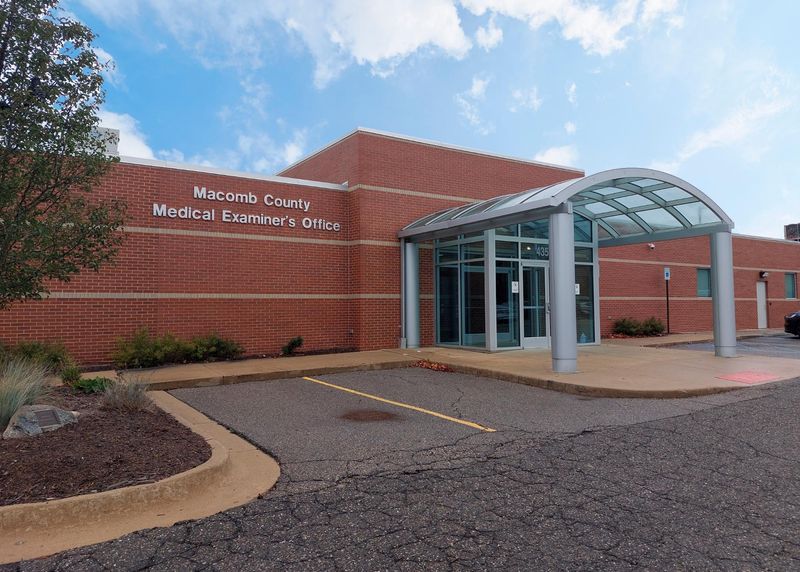
Forensic anthropologist Hanna Friedlander got a call in February with a request: could she come down to the Macomb County Medical Examiner’s office in Mount Clemens? The caller explained that several boxes of human remains had been found locked away in an evidence room.

Office records indicated that the remains might belong to Native Americans who died hundreds of years earlier.
Two days later, Friedlander drove to Mount Clemens and picked up the boxes. In her role with the Michigan State Police, she handles issues involving compliance with federal repatriation laws for the agency, which has jurisdiction over human remains discovered by police departments across the state.
The inventory document Friedlander filed, police reports and interviews shed light on how the remains of Native Americans sat in an evidence locker in Macomb County for almost two decades.
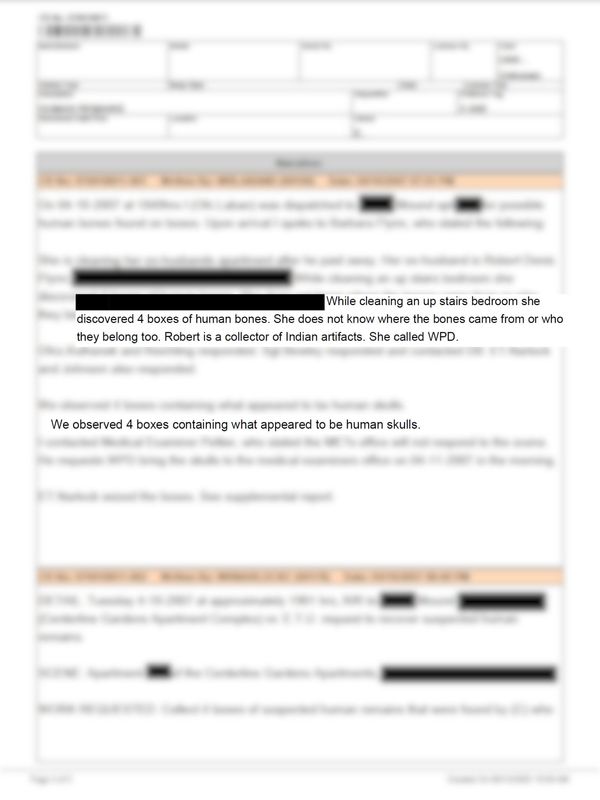
The saga began on April 10, 2007, when a woman pulled into the Centerline Garden Apartments complex in Warren to clean out her ex-husband’s apartment after he died, according to a police report obtained by The News through a public records request.
The woman knew her ex-husband collected Native American artifacts. So, she expected she might find a few items that he had acquired over the years.
What she didn’t expect to find was what she saw that day in the closet of an upstairs bedroom: four boxes labeled “Native American Skulls” (or “Indian Artifacts”; the Michigan State Police and Warren PD accounts differ), containing human remains.
The woman called the police, who noted in their report that “several of the skulls had number and letter designators written on them,” and some “appeared to have been assembled and glued together like a puzzle.”
In addition to the bones, there were nearly 200 artifacts in the boxes that might have been buried along with the remains, including stone, flint and pottery fragments and at least one non-human bone, a later inventory found.
When Daniel Spitz, the forensic pathologist in the Macomb County medical examiner’s office, inspected the remains later that month, he found that they were likely hundreds of years old. There was no indication of foul play, he concluded.
An office staffer told police Spitz would send the bones to a Michigan State University anthropologist “for study and for teaching purposes.”
Carolyn Isaac, the lab’s director since 2019, said her predecessor, Norman J. Sauer, “would have been consulted by Spitz to examine the remains to ascertain whether they were of forensic significance.”
Isaac said the “teaching” comment likely referred to the lab’s status as a teaching laboratory; part of its mandate is “providing case experience to graduate students who are pursuing higher education related to forensic anthropology.”
Sauer concluded that there were actually 10 individuals represented in the discovered remains, more than previously thought, and that one was a juvenile.
Then, he sent the remains back to the medical examiner’s office, where they stayed for the next 18 years.
Under federal law, the medical examiner’s office should have filed the paperwork that starts the process of repatriation or notified the state police.
“Once (remains are) determined to not be forensic, it’s not really their responsibility anymore. So, those individuals can fall through the cracks, especially back in 2007,” said Isaac, the MSU anthropologist.
When The News contacted Spitz, who served as the medical examiner at the time, he said he had no recollection of handling the remains.
“My involvement was simply making sure there was nothing sinister,” he said.
When Friedlander took the remains into her custody after 18 years, she quickly filed an inventory with the federal government. Then, she called William Johnson, interim director and curator at the Ziibiwing Center in Mount Pleasant and a member of the Saginaw Chippewa tribe.
Johnson told Friedlander that unless another tribe claimed the remains, he and the Saginaw Chippewa would re-inter the remains of those 10 individuals on their land.
On Nov. 13, Saginaw Chippewa leaders held a public reburial ceremony at the Nibokaan Ancestral Cemetery on the Isabella Indian Reservation in Mount Pleasant.
After unknown decades in a private collection and nearly two more inside an evidence locker, the remains of the 10 individuals returned to the earth.
bwarren@detroitnews.com
This article originally appeared on The Detroit News: After 18 years in Macomb County evidence locker, remains are returned to tribe
Reporting by Ben Warren, The Detroit News / The Detroit News
USA TODAY Network via Reuters Connect
By Ben Warren, The Detroit News | USA TODAY Network