Thirty-five years after a federal law required museums to return Native American remains and artifacts to their tribes of origin, at least a quarter of the more than 3,000 ancestral remains in the collections of Michigan institutions have yet to be claimed or returned.

Though the state’s museums and cultural institutions have made progress — as much as 75% of human remains and 90% of burial objects have been made available for return according to a national database — the final step of physical handover has been more challenging.
The federal government revised its policy on repatriation in 2024 to give tribes more control over how museums handle sensitive collections and museums a strict 2029 deadline to complete all inventories and consultations.
“The goal of this deadline is to provide a clear path to repatriation where lineal descendants, Indian tribes, and Native Hawaiian Organizations, rather than museums and federal agencies, can define what expeditious repatriation means,” said Elizabeth Peace, a spokesperson for the National Park Service, which oversees national repatriation efforts.
Representatives from Michigan’s Native American tribes and museums told The News the new rules have instead increased the burden on under-resourced tribal repatriation experts and left some institutions scrambling to meet a deadline that one curator called “virtually impossible.”
Those challenges are distinct from earlier barriers to repatriation, said Paula Carrick, tribal historian for the Bay Mills Indian Community in Michigan’s Upper Peninsula.
Carrick began her work three decades ago in the years after the Native American Grave Protection and Repatriation Act (NAGPRA) was passed in 1990. The law required federal agencies and institutions to catalog Native American remains and other cultural items in their collections, then attempt to return them.
“In the beginning, it was hard,” Carrick said. “They (the museums) all fought us because they didn’t think it was our right to have our ancestors back.”
“It sickens me,” she said, her voice steely but filled with emotion. “I’ve cried many times.
“Would you want to see your grandparents sitting on a shelf?”
Today, the process looks a lot different. Most museum directors in Michigan support returning human remains and sacred objects in their collections to Native American groups in the state and around the country. But many tribes have just one person working on repatriation efforts, while federal funding for the work under the Trump administration has been unstable.
Despite these obstacles, Carrick says the work is “extremely important.”
“We were always taught, take care of your ancestors,” she said.
Where Michigan stands after 35 years
Federal law requires museums and state agencies to report how many Native American remains and burial objects are in their collection, and how many they’ve made available to tribes.
A database maintained by the National Park Service shows that Michigan museums have made the remains of 2,544 individuals available to tribes out of 3,409 that were originally in their collections, or just under three-quarters of them.
The data shows that museums have also made 108,518 burial objects available to affiliated tribes, more than 90% of the objects they originally reported.
The database doesn’t contain information about how many of those ancestral remains and funerary objects have been physically handed over to tribal partners.
Michigan State University and the University of Michigan, which reported the two largest collections of Native American remains in the state, provide details about repatriation agreements on their websites.
UM has returned 911 of the 989 remains it has made available to tribes through the NAGPRA process, though the university hasn’t made the remains of more than 700 individuals available for tribes to claim.
The NAGPRA office at the university places the number of remains that haven’t been made available higher, at about 1,000, according to Ben Secunda, managing director of the University of Michigan NAGPRA office.
Secunda said the discrepancy in the internal numbers may be due to some remains at the university being under the legal control of federal, state or local governments or other similar agencies.
“To date, UM has transferred nearly 200 sites, nearly 1,000 ancestors, and more than 3,200 funerary objects to their culturally affiliated kin and communities,” Secunda said.
The university has focused on returning human remains taken from sites here in Michigan, according to Secunda. In 2011, a group of Michigan tribes requested that the university identify and return “all Ancestors from burial sites within the state,” he said.
That year, in-state sites accounted for about three-quarters of all the human remains held by UM. All but two of the remains returned by the university since 2011 were taken from sites in Michigan.
“As repatriation efforts have progressed, our focus has begun to shift. Michigan still has more sites than any other state, but the combined number of sites outside Michigan now exceeds those within it,” Secunda said.
He said UM plans to complete the full scope of inventories and consultations with tribes by the 2029 deadline.
In East Lansing, Michigan State University has returned nearly all of the Native American remains that were once held in its collections, according to Jessica Yann, the university’s NAGPRA coordinator.
The university’s collections at one point contained the remains of just under 1,000 Native Americans, according to Yann. The university was holding about 400 of those remains for other institutions, meaning they weren’t under its legal control.
MSU has physically returned the remains of 537 people, along with 84,891 burial objects to date. Yann said the university has transferred legal custody of another eight sets of remains that are still awaiting physical return.
“The proper thing to do is to reach out to people from that culture and be respectful and embrace that spirit of deference to tribes and respectfully working with cultural materials,” she said.
Less money, more problems
In 2024, the Department of the Interior set the clock ticking on a five-year deadline for all institutions to consult with tribes and update their inventories of human remains and funeral objects, but limited funding and a huge workload for tribes have made that a difficult goal.
Museums that want to exhibit or research human remains or cultural items must consult tribes, while consultations for remains that were previously considered culturally unidentifiable can range across dozens of tribes in a wide geographic area.
“At the moment, we have one person, which is me, who works on repatriation,” said Mae Wright, who serves as the tribal historic preservation officer for the Little Traverse Bay Bands of Odawa Indians, based in the Northwestern part of Michigan’s Lower Peninsula.
“It’s really a big workload,” she said, “not just for people who do repatriation work, but also for the institutions.”
Wright said the end goal of the work motivates her: “trying to bring home the rest of our culture that’s somehow found its way to these museum shelves.”
Most of the museums she has worked with since she took over the role in February are “doing their best to try and comply with those new regulations,” Wright said.
Peace, the National Park Service spokesperson, said Congress has directed more than $65 million to tribes and museums for repatriation work since 1994, about $2 million a year over that period.
Michigan tribes have received $911,000 and museums in the state have received $629,000 to help with consultation and repatriation costs, according to a grants database maintained by the National Park Service. The most recent grant in Michigan, worth $4,400, went to the Bay Mills Indian Community in 2024.
The consultations don’t just strain financial resources.
“I know we say ‘human remains,’ but these are ancestors, these are family,” Wright said.
“Especially the ones that involve kids, I think, are the hardest,” she said. “I’ll get done and I’ll just be overcome with those waves of emotion, of grief and frustration and anger.”
Wright has leaned on other tribal representatives in Michigan who are engaged in repatriation work, she said.
“Having that support system of other people who do that work for their tribes makes all the difference, because that work can emotionally be really heavy to carry,” she said.
Righting past wrongs
For some older museums, investing in repatriation efforts is a way to repair the harm caused by decades of controversial practices by earlier generations of anthropologists.
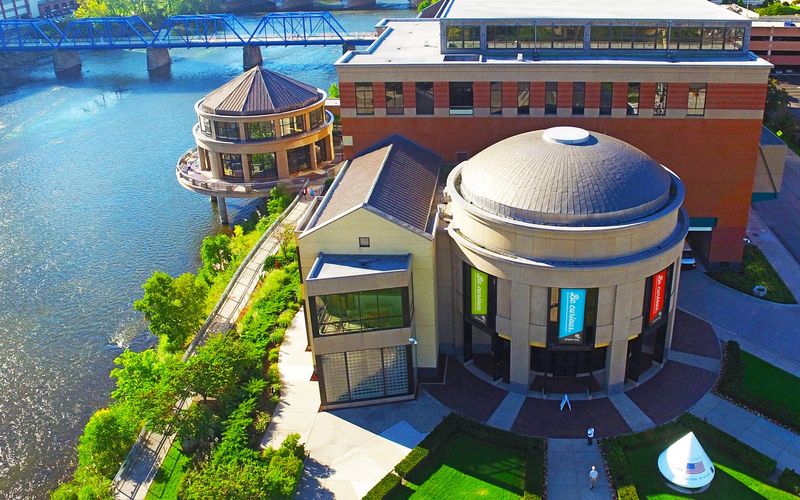
Alex Forist, curator at the Grand Rapids Public Museum, still grapples with his institution’s role in the excavation of a Native American burial ground 60 years ago.
In the early 1960s, according to Forist, the museum’s then-director, Weldon Frankforter, saw early plans for the route of the I-196 highway outside of Grand Rapids.
Forist says, “they were going to go right through the center of this 2,000-year-old burial site and basically would have destroyed it.”
Frankforter, the museum director, wouldn’t stand for it. He rallied support, including from Native American groups, and convinced the Highway Commission to change the route.
“And the tragic part is,” said Forist, “pretty much the very next summer they went out with the University of Michigan and dug them up.”
The museum has returned almost all of the ancestral remains and funerary objects the mid-century anthropologists excavated over two summers to Michigan tribes.
Today, Forist is determined to make sure the Grand Rapids Public Museum goes beyond what is written in the law.
“You know, we’re not the biggest, we don’t have the most resources to do this work, but what we do have is top-to-bottom support from our board, leadership and staff, and everyone’s pulling in the same direction,” Forist said.
The museum created an Anishinaabe curator position for a Native American museum professional to curate exhibits, programming and collections, and assist with repatriation efforts.
Forist’s team also adopted a new human remains policy: the museum no longer exhibits or photographs human remains, or lends them for research.
Those changes have already changed the culture around the museum’s treatment of human remains, according to Katrina Furman, who holds the Anishinaabe curator role.
Early in her time working on the NAGPRA team at the museum, Furman said a staff member commented, “I don’t understand why it takes tribes so long to accept these (remains and burial items).”
She was taken aback.
As a member of the Grand Traverse Band of Ottawa and Chippewa Indians who had worked in tribal administration for almost 20 years, Furman had seen firsthand the time and care that went into handling ancestral remains.
“You’re basically having another funeral,” she said. “You’re reinterring them to the ground, but you’re also having a ceremony to let that ancestor rest. There’s a cost to that; it’s not just travel and picking up the remains.”
Today, the more than 200 of the 275 ancestral remains once held by the Grand Rapids Public Museum have been repatriated, Forist said.
Those that haven’t been physically returned are governed by contracts that lay out how the museum will handle remains and burial objects until they are eventually repatriated.
“I am really, really proud of GRPM for their human remains policy that they put into place because it does go above and beyond what is in the law,” Furman said. “It’s about ethics, about decency.”
Looking beyond 2029
Last year’s update to the federal law governing repatriation efforts requires American institutions to return all ancestral remains and related funerary objects by 2029.
If museums don’t meet that deadline, they could be fined, according to Jan Bernstein, a consultant who has worked on repatriation projects for 30 years. Some museums might be granted an extension if their tribal partners agree.
Forist’s experience with the collections in Grand Rapids has convinced him that complying with the federal timeline may be more complex than some believe.
“Complete inventory is virtually impossible,” he said, “with unknowns becoming knowns, matching up old accession numbers with old records.”
In some cases, he said, items that are legally under his museum’s control reside at other institutions, while some loans are poorly documented. Even museums that dedicate significant resources to repatriation might take years to untangle complex chains of custody and legal questions.
In July, the museum filed an inventory report listing the remains of ten individuals excavated from the mounds near Grand Rapids. Eight of them were accounted for in the museum collection, but two — originally documented in 1894 and 1915 — are no longer there.
Forist says he and his staff included the missing remains in their report at the request of tribal partners.
“It provides more transparency,” he said, “potentially opening up a path if those were ever to surface, to be reunited, repatriated in the future.”
As Michigan’s tribes and museums continue to chip away at the monumental task of returning all of the ancestral remains in the state to their proper burial places, Wright, from Little Traverse Bay, had a simple message for the museum professionals working on repatriation.
“Honestly, the first thing that comes to mind is just Miigwech, thank you,” she said, expressing gratitude in Anishinaabemowin and English.
“And please continue to do this good work, because while it does take a lot of time and energy, it’s happening for a reason,” she said, “so that we can bring these ancestors and their bundles home and give them the burials that they deserve.”
bwarren@detroitnews.com
This article originally appeared on The Detroit News: Michigan tribes, museums negotiate new deadline for returning sacred objects
Reporting by Ben Warren, The Detroit News / The Detroit News
USA TODAY Network via Reuters Connect
By Ben Warren, The Detroit News | USA TODAY Network