

New York Times best-selling author Kristin Hannah is coming to Grand Rapids Tuesday for an event with the Kent District Library that is expected to draw 10,000 people.
It started as 1,200, but with 4,500 people on the waitlist after tickets disappeared in 15 minutes in early May, the event moved from a high school auditorium to the Van Andel Arena. The event is a conversation between two authors, Hannah and her best friend, author Megan Chance, author of “The Vermilion Sea.”

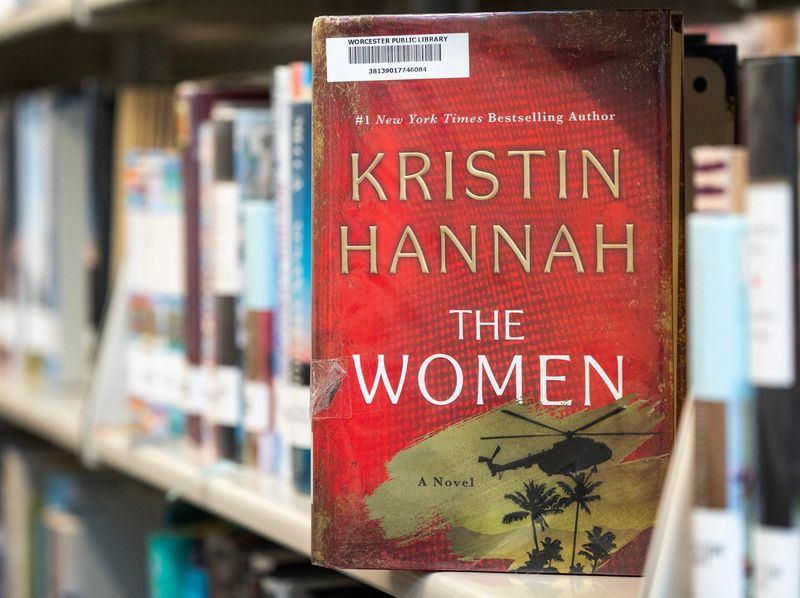
Hannah is the author of 24 books, mostly historical fiction, including “The Nightingale,” “Firefly Lane,” “The Great Alone” and 2024’s smash hit, “The Women.”
She spoke with the Detroit News this week about the “daunting” prospect of speaking in front of such a large crowd, the chance to do it with her best friend, and why her books always span decades.
The conversation has been lightly edited.
Question: You don’t do a lot of events. Why did you say yes to this one?
Answer: It was a couple of things. Honestly, I mean first and foremost, (it) was the very unusual and interesting idea of being able to talk with one of my best friends, a fellow novelist, about our writing and the writing life and friendship and aging and whatever it is we decide to pull out at that moment, as opposed to a more ordinary event of just talking about me and my books. It just seemed really exciting to be able to have this conversation with my best friend. And on top of that I had not been to Michigan in a very long time, I hadn’t done an event there in a very long time. It was an exciting, I guess, idea to come back and talk to and see the readers who support me there.
A big piece of it was getting Megan to talk about her work to a larger audience, and being able to talk about how it is we work, in a setting where we both get to talk equally about our processes and what’s important to us.
Q: What do you want people to know about Megan?
A: She’s really flexible — she writes a lot of different kind of books. Most or all of them are historical fiction. But they’re very different from mine, but we have this great working relationship. I guess as I get older, I just keep remembering and relearning how important friendship is, and what an important piece of my life it is, both as a woman, a wife, a mother, but also as a writer.
Q: Friendship, especially female friendship, is a huge theme in your books. Why is that so important to you?
A: This is I think a big part of what Megan and I will be talking about, the importance and evolution of female friendship. One of the things that’s really interesting about friendships that come and go and the people that come in and out of your life, for me, when I was deep into motherhood, (having a) small child, writing a book in my “spare time,” years, there was actually no time to see friends, go out. We weren’t going out to dinner all the time, we weren’t going on girls’ weekends. We kept it alive seriously by phone calls. By talking through things all the time. And then the next phase comes and your kids leave, and now it’s empty nest and you’re trying to figure out who you are and what you want to be and what your life looks like. And then you find that all these friendships that you kept up with over the years, that you prioritize and made important, they come back and now you do have this opportunity that comes with time. To see each other, to hang out, to just talk about all the different things you have in common.
You have to prioritize it. You absolutely do. But you also have to cut yourself and each other slack. Because jobs, and kids, and spouses, parents, all of this cut into the time of it. So I think that’s why the key is, when you can, you keep it up how you can. Whatever that is, however often you get to see each other, but you maintain the relationship through whatever time and medium you can.
Q: You’ve written books for decades, but have come to a high level of fame more recently. What has that been like, to find this kind of success later in your career?
A: No question. The beginning of the change was “The Nightingale.” That came out 10 years ago. That was really sort of the beginning of a new kind of career for me, and it coincided with me going into historical fiction, highlighting lost women’s stories. And I think it was just, as much as anything, it was a hunger for women to know our own history, and to read books that identified women throughout history who had done remarkable things, and had often been unheralded or marginalized.
10 years ago is when it really started with “The Nightingale,” and it just kept building, book after book.
Q: Did anyone have reservations at the idea of you writing a book about Vietnam?
A: Yes. There was very few people who said, “Oh that’s a great idea, people are waiting for that book.” It was a little bit scary to sort of take on that subject. But I felt so strongly about the era, and the vets, and how they had been treated, and the sort of long overdue respect that they deserved for their service. And I really wanted to highlight that, and frankly, it was 10 years ago as difficult and as frightening to take on World War II. Because nobody knew when I wrote “The Nightingale,” there weren’t a lot of people saying, “Gosh, we’re sure waiting for lost stories from World War II.”
Q: Your books tend to cover very heavy subjects, and your characters endure quite a bit. Why do you want to reflect those deeper, often traumatic experiences?
A: I wouldn’t read them on the beach. They’re not good to read on public transportation either, from what I understand. So much crying involved. I don’t want you to cry, I keep saying this.
I think it’s a byproduct of a couple of things. First of all, I tend to write about mother-daughter relationships, and I lost my mother very young, so I have a lot of personal baggage. I just have a very deep sense of how deeply motherhood matters, and how the loss of one’s mother affects you throughout your entire life. I think I’m just drawn to difficult subject matter and painful subject matter, and I want to write books that celebrate learning to live with your pain and becoming the best person that you can.
It gets better, everything gets better, you go on. But I like to be the voice that reminds people to call your mother, to call your sister, to take advantage of the time you have with the people you love, because you honestly never know how long that time is going to last. And by the way, it extends to your own life as well, right. You don’t know how long you have, so make sure that you are spending this one life the way you want to, that you are experiencing and loving and doing all the things that matter to you while you have the time and the ability to do them.
There is something cathartic about re-experiencing and remembering, especially as time goes on. It becomes the filter through which you see a lot of the world, honestly. And I think it’s painful, but it’s also informative and educational, and I guess empowering in a way, because you learn to have an emotional and spiritual toughness that the world sort of requires, and that love certainly requires.
Q: Your books are also very long, often topping 500 pages — but also feel accessible. How did you strike that balance?
A: That’s something that I think about as a novelist all the time, because obviously you can’t live in the world right now without being bombarded with the idea that attention spans are diminishing, that books are less relevant. I know that long books can be problematic for people, you look at them and think, “Gosh, I don’t have time to invest in that.” The bottom line is that part of the reason my books pack such an emotional punch is that I really take the time to develop sort of deep and complex characters. And I know there is a way to do that in a shorter period of time, I just have not been able to accomplish that.
Really, it’s all about how is this story best told and how does this character evolve from the person at the beginning who is unable to do something or incapable of change, how over the course of their life, as impacted by friends and family and circumstance, how do they grow into a different person? I’m often sort of exploring or unpacking how a woman, over time, finds the power of the voice within.
I think the truth is, that I don’t ever intend to make my books accessible; I don’t think about those sorts of things. What I do think about and what I do feel deeply about are women’s stories, and universal women’s emotions. I have this deep-seated belief that one of the points of fiction in general is to create empathy, is to make you know someone else’s life and make you walk for a time in someone else’s shoes, and hopefully allow this experience to open up your mind a little and make you a little empathetic towards others. And the way that I do that, and I think the way many novelists do that, is to really anchor you in the characters in the book, and make you feel like, maybe I didn’t serve in Vietnam, maybe I wasn’t even born yet during this era, but I can understand why she made these choices and ask yourself how you would have handled the same situations and how you would have survived.
Q: Journalism and freedom of the press is also a theme for you, especially in “Firefly Lane.” Why was that important to you?
A: I am a lawyer with an undergrad in communications. So yeah, that was a big piece of it, and in fact a big part of “Firefly Lane.” Again sort of relates back to Megan, because we graduated in communications from separate Washington state colleges, we did not know each other, and I went into advertising and she went into broadcast journalism as a news producer and photographer. So we were both in the 70s, late 70s, early 80s, in Seattle trying to make our way at a time there wasn’t a lot of support for women in communications, women in news, women in advertising, that sort of thing. Journalism is changing at the speed of light right now, and it’s a difficult time in journalism for somebody who sort of came up the way I did.
Q: How did it feel to hear 10,000 tickets were claimed for your event?
A: It was, I have to admit, absolutely terrifying. This is not exactly — I’m a girl who sits in sweats in a small room and imagines other worlds. This is not the kind of event that I ever even imagined could exist for a writer, any writer. It was pretty surprising. I did not imagine in my wildest dreams that there were this many of them that wanted to come.
jpignolet@detroitnews.com
This article originally appeared on The Detroit News: Q&A: Author Kristin Hannah on drawing a ‘daunting’ crowd in Michigan
Reporting by Jennifer Pignolet, The Detroit News / The Detroit News
USA TODAY Network via Reuters Connect
By Jennifer Pignolet, The Detroit News | USA TODAY Network
