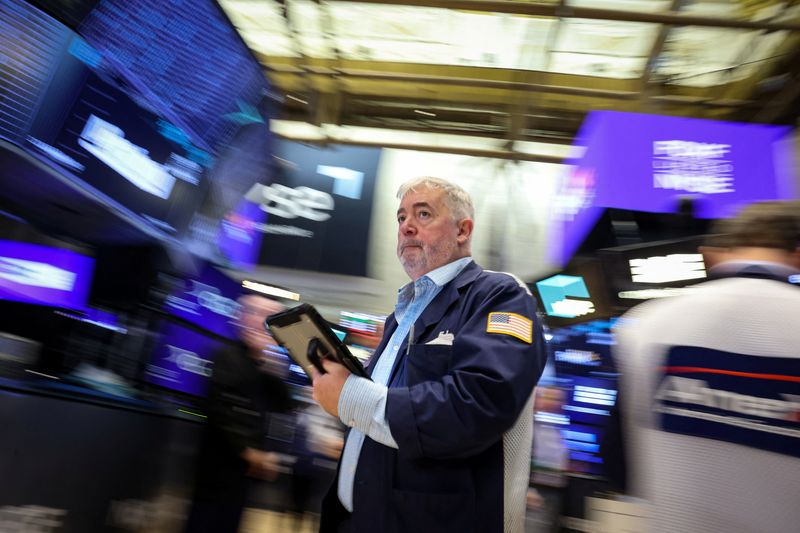
June 2 (Reuters) – The selloff in the shares of U.S. bourse operators continued on Tuesday on worries over the risk implications of perpetual futures for cryptocurrencies and fear among investors that such derivative contracts would be extended to equities.
Cboe Global Markets fell 9%, while CME Group and NYSE-parent Intercontinental Exchange each fell roughly 4%.

The Commodity Futures Trading Commission paved the way for the introduction of perpetual crypto futures on Friday, marking the first time such instruments will be available to U.S. investors through domestic, regulated exchanges.
Perpetual futures, also known as “perps”, are a risky derivatives product that had so far largely remained offshore, and lack a traditional expiration date.
The move has sparked concerns that perpetual futures approval for other asset classes could raise competition for incumbent derivatives exchange platforms.
“The question will be how quickly perps get approved across other asset classes, such as equities and commodities,” TD Cowen analyst Bill Katz said.
Wall Street analysts said the approval was likely to create more competition in the retail arena and keep exchange valuation multiples under pressure as investors work through risks and evolving market structure.
But, analysts do not expect perps to have a meaningful impact on traditional futures products as they are not a viable alternative to instruments designed for institutions.
“We believe competitive risk is manageable given fundamental product differences and structural advantages for both exchanges (Cboe, CME),” RBC analyst Ashish Sabadra said.
While perps have gained significant traction with retail investors due to high leverage and short holding periods, institutional demand remains limited.
“The contracts are not designed for hedging, but rather retail-oriented speculation. As such, it’s hard to envision perpetual futures contracts displacing the existing liquidity and volumes at CME Group and ICE,” Raymond James analyst Patrick O’Shaughnessy said.
(Reporting by Arasu Kannagi Basil in Bengaluru; Editing by Shilpi Majumdar)