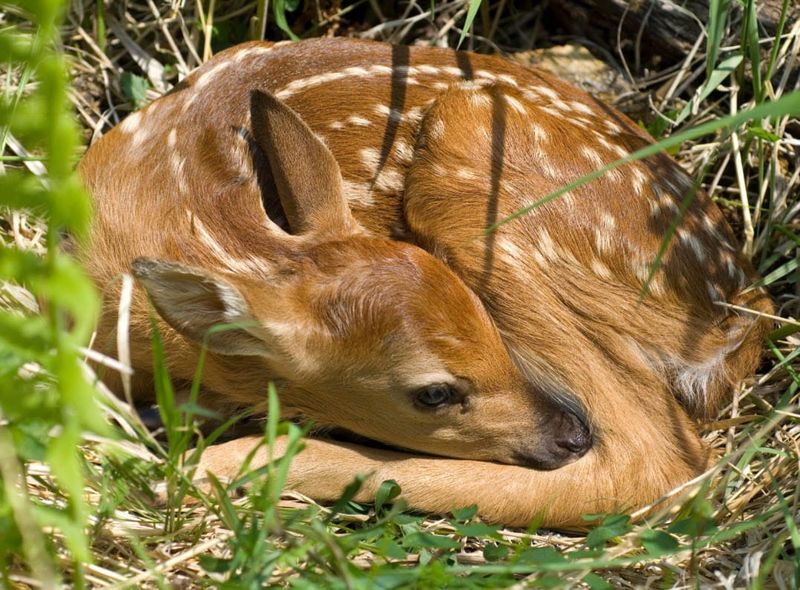
The Michigan Department of Natural Resources is reminding Michigan residents that this is the time of year that they might encounter a fawn or a baby rabbit or chick on its own in the wild − but that doesn’t mean it’s been orphaned or abandoned.
Animals like rabbits and fawns are often left alone for hours while their mothers look for food. This is normal and expected behavior. The babies are born without a scent, so it’s difficult for predators to find them. If the parent doe − or people − hang around too much, their scent can attract predators to the babies.

Unless an animal is clearly injured or in immediate danger, keep your distance so the parent feels safe enough to return. If a wild animal is injured, call a licensed wildlife rehabilitator.
Many wild animals have adapted to live in urban and suburban areas and often nest near homes and businesses. Even though humans might accidentally disturb nests, these locations are carefully chosen for safety, since proximity to humans can prevent other predators from finding the nests.
Birds build their nests in all kinds of places, and once in a while, that causes a problem – if a nest is above the door to your house, for example. You can remove a nest only if there are no eggs in it, but birds and their eggs are protected by state and federal laws and must be left alone. Under the Migratory Bird Treaty Act, it is illegal to destroy, touch, move or possess active nests with eggs or chicks without a permit. However, you can prevent birds from nesting in problem areas by blocking a potential nesting location with physical barriers, fake owls or streamers before egg-laying begins.
The DNR urges people who find an active nest near their home to leave it alone and keep pets and children away.
Baby birds sometimes fall from their nests while learning to fly, but their parents will continue to feed and care for them even when they are on the ground. A baby bird on its own is not abandoned; the parents will be back. Moving a fledgling bird may hinder the parents’ ability to find it.
For more information, visit michigan.gov and search “keep wildlife wild.”
Contact Keith Matheny: kmatheny@freepress.com.
This article originally appeared on Detroit Free Press: See a fawn alone in the wild? Don’t assume it’s abandoned, neglected
Reporting by Keith Matheny, Detroit Free Press / Detroit Free Press
USA TODAY Network via Reuters Connect