MASON — A data center developer is promising an investment of more than $1 billion and a cash infusion that would more than double Mason’s present-day tax stream, City Manager Deborah Stuart told council members June 1.
Bloomfield Hills attorney Alan Greene, of Dykema Gossett PLLC notified city officials in a letter in February that his client, who has not been publicly identified, was “evaluating sites for a potential hyperscale data center development within or near the City of Mason.”

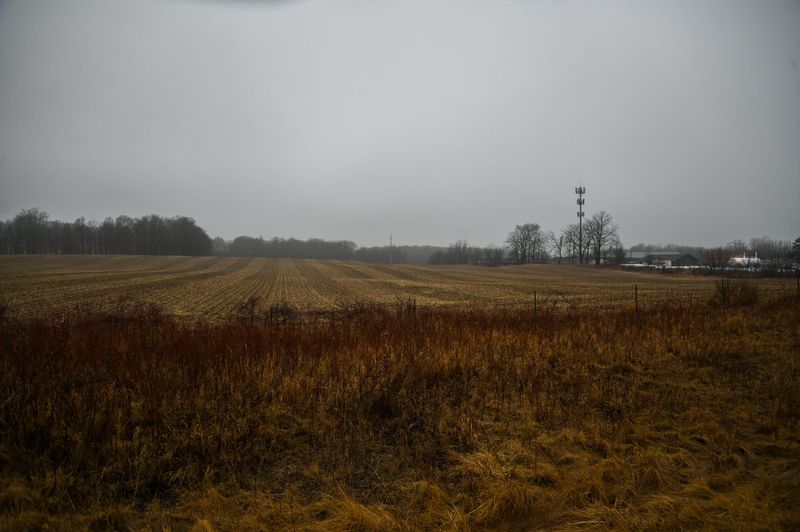
That developer is now asking the city to provide utilities for property on the northeast corner of Columbia and College roads on the western edge of Vevay Township, west of the city.
“Minimum investment that they have agreed to commit to is a minimum private capital investment of $1 billion, with a minimum taxable investment of $500 million,” Stuart said. “That is obviously significant for our community. They did note that that minimum is significantly less than where they think they will end but that is the commitment they know they can make for this project.
“Our current total city tax capture is $4.3 million. This project alone would bring in $7.6 (million). Our total tax capture with this project and our current tax capture would be close to $12 million.”
Stuart said the added tax revenue could help the city as well as Mason’s public school system, and could even mean reduced taxes for residents.
Stuart, who said she will negotiate a Public Act 425 agreement for a conditional land use transfer with economic benefits for both the city and Vevay Township, told those at the June 1 session there still is no official site plan for the project but her understanding is that the data center mainly would be 45-feet tall and in some areas no more than 65-feet tall.
Stuart said she met with a group representing the developer on April 27. The identity of the end user has not been released to officials.
“We were not asked to sign an NDA (non-disclosure agreement), but they will not share that until they’re later in the process,” she said. “We have no confidentiality agreements or anything like that. They have just not shared their name with us.”
The facility isn’t supposed to use more than 40,000 gallons of water a day, which Stuart said is typical for an industrial user.
“This is easily achievable within our existing sytem with no new wells, no new storage, no new treatment,” she said. “Just for your reference, the water consumption would only be to provide office facilities’ water. There’s no regular discharge of water for any other use than an office building. That’s what’s going to be coming into our wastewater treatment plant.”
She said the data center facility would have a closed loop cooling system that reduces its water use. The closed loop system might discharge every seven years before getting refilled. The discharge would get trucked to a separate treatment area.
“While we have water and sewer directly to that site, to loop it would require some additional infrastructure that would be completely at the developer’s cost,” Stuart said. “There would be no cost to the city related to that.”
Backup generators will only be associated with the offices, and noise will be restricted to 55 decibels. Stuart said standards established in the now-repealed new technology innovation (M-3) zoning district in preparation of any data center proposals would be placed in any 425 agreement.
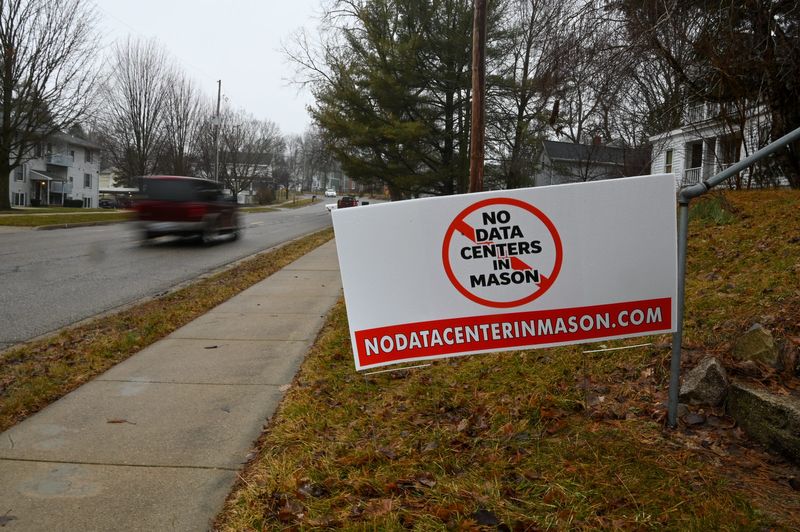
Council members voted 5-2 in February to create the technology innovation zoning district with noise, screening and other standards for data centers in preparation of any proposals. However, a group opposed to the ordinance that calls itself Mason Data Center Facts gathered enough signatures to get the ordinance before voters for a referendum vote.
City councilmembers then voted 4-2 in March to repeal the ordinance – rather than allowing residents to vote on the referendum in August.
Councilmembers voting for the repeal said that option allows the city and community to start working together on alternatives and restrictions for data centers. But the June 1 session started with an hour’s worth of comments from city and township residents concerned about data centers.
“I feel confident that we are addressing issue after issue after issue that has been brought up that is a concern and that those will all be addressed contractually through either a 425 agreement, a development agreement or a utility agreement,” Stuart said. “I, for one, feel that we are moving in a direction where we are going to be able to receive the benefits of a project, while mitigating the biggest concerns the community has. I feel really good that we’re moving forward in a positive direction.”
She added that, “we do not plan to provide any local property tax or tax exemptions for this project and we’ve made that very clear.”
Several months of contentious meetings led to council’s 5-2 vote in February to create the new M-3 technology innovation district that opponents said was a welcome mat for data center developers despite rules for noise, setbacks and other concerns.
Council members argued that under current zoning rules, a data center could locate in any M-2 area zoned for manufacturing purposes, but with less stringent standards than the ones in the M-3 ordinance. The city had not yet designated an M-3 district.
Separately, Mayor Russell Whipple and Councilwoman Elaine Ferris are facing a recall effort. No Data Centers in Mason has approval to try to collect the required 1,000 signatures within a 60-day period for each petition by July 31. If they are able to get enough signatures Whipple and Ferris would be on the ballot for recall in the November election. Their terms are scheduled to expire at the end of 2028.
Four seats are open on the city council this year, and 10 people are running.
Contact editor Susan Vela at svela@lsj.com or 248-873-7044. Follow her on Twitter @susanvela.
This article originally appeared on Lansing State Journal: Data center would more than double Mason’s tax revenue, official says
Reporting by Susan Vela, Lansing State Journal / Lansing State Journal
USA TODAY Network via Reuters Connect