COSHOCTON − Jeremy Rea fondly remembers lying in the backyard looking at the sky. He and his brother, Matt, and father, Paul, would talk about constellations and the mysteries of space.
“I always wanted to see what was out there and help humans see what’s out there,” Jeremy mused.

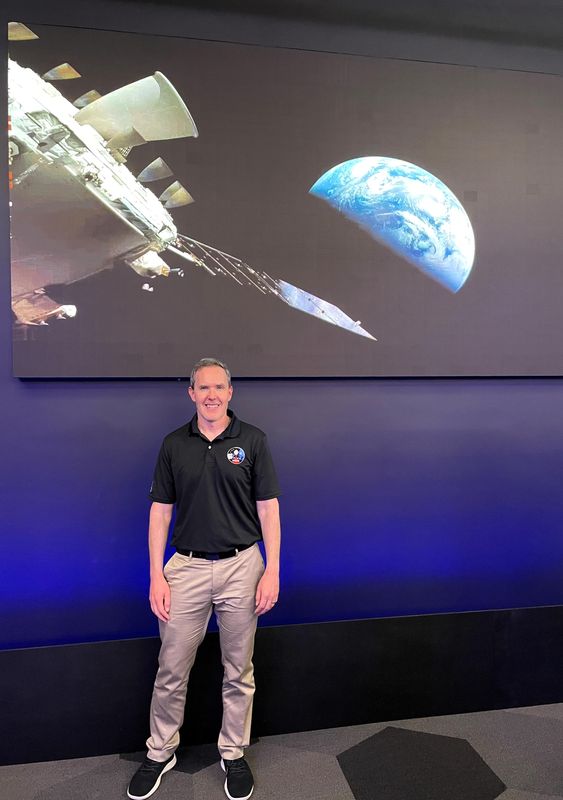
He now works for NASA and was key in helping the astronauts of Artemis II return safely to Earth.
“It was a highlight of my professional career. I’m still riding high,” Jeremy enthused of working on Artemis II. “When we heard the crew call down and knew they were safe, it was an emotional moment.”
The crewed flyby of the moon earlier this year was to prove humans can safely trave to deep space and back. Artemis III, which Jeremy is also working on now, will test docking, landing systems and mission operations necessary for a future lunar landing later this year.
These will lead to the Artemis IV’s mission to return astronauts to the moon’s surface in 2028. It will be the first manned moon landing from NASA since 1972.
From Coshocton to mission control
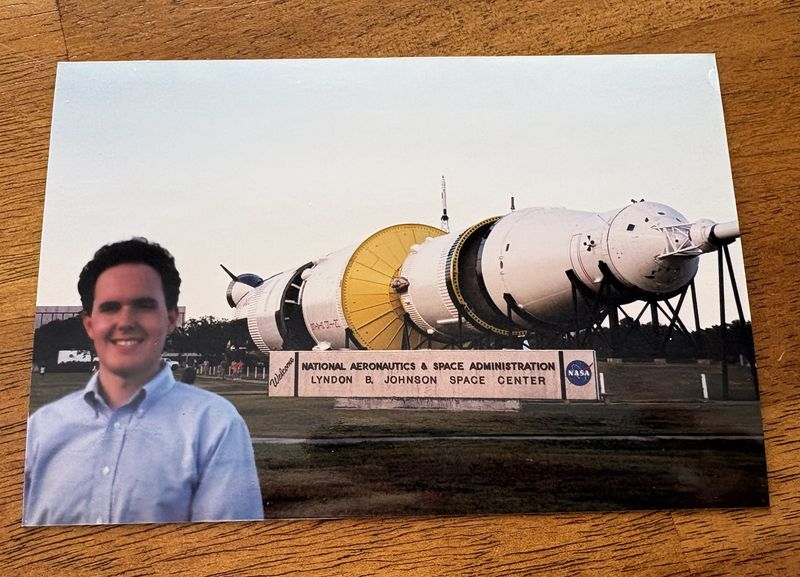
The 1993 graduate of Ridgewood High School majored in aerospace engineering at Ohio State University. He was an intern for NASA at Johnson Space Center in Houston, Texas, in 1996. Jeremy became a full-time engineer with NASA in 2001 after graduate school at MIT. He later received a doctorate from the University of Texas at Austin.
He’s currently the Orion entry guidance and performance subsystem manager and the guidance technical discipline lead for NASA, now focused on Artemis III.
His immediate team working on entry guidance and performance is just three people, but the entire guidance and navigation control team consist of approximately 50 people.
Threading the needle home
Jeremy worked on three test flights with the Orion program and was responsible for designing the return trajectory for Artemis II, ensuring astronauts landed safely while avoiding risk to people, land or shipping lanes. It’s about hitting a very precise angle, he stated.
“It’s not just the landing, but the entry itself. I work very closely with the people who make the heat shield, the thermal protection system. I work closely with those who make the actual structure of the vehicle,” Jeremy explained. “I’m responsible for the flight software, but the flight software has to fly the vehicle in a way we won’t break the vehicle.”
A launchpad at home
His mother, Susan Rea, confirms Jeremy has always wanted to work with NASA and was thrilled to talk with him after the Artemis II landing.
“Jeremy was ecstatic when he called me, ‘I did that, Mom,'” she remembers him saying.
Jeremy recalls his mother keeping him and his brother home from school in the morning if there was a shuttle launch on television.
His father also loved flying. Paul worked on helicopters while in the U.S. Marines and had a private pilot’s license.
“Those kind of things really helped developed who I became,” Jeremy shared.
Leonard Hayhurst is a community content coordinator and general news reporter for the Coshocton Tribune with more than 18 years of local journalism experience and multiple awards from the Ohio Associated Press. He can be reached at 740-295-3417 or llhayhur@coshoctontribune.com. Follow him on X at @llhayhurst.
This article originally appeared on Coshocton Tribune: As NASA engineer, Ridgewood grad routed Artemis II’s return trajectory
Reporting by Leonard L. Hayhurst, Coshocton Tribune / Coshocton Tribune
USA TODAY Network via Reuters Connect