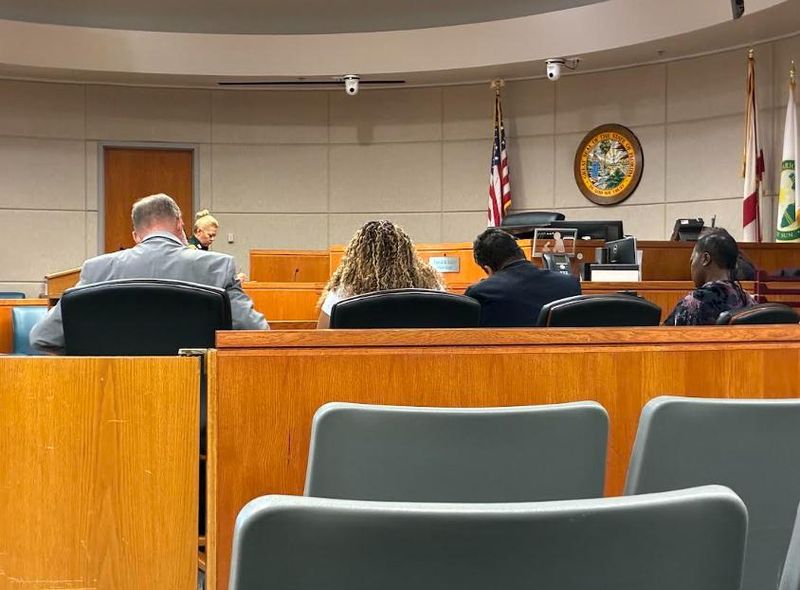
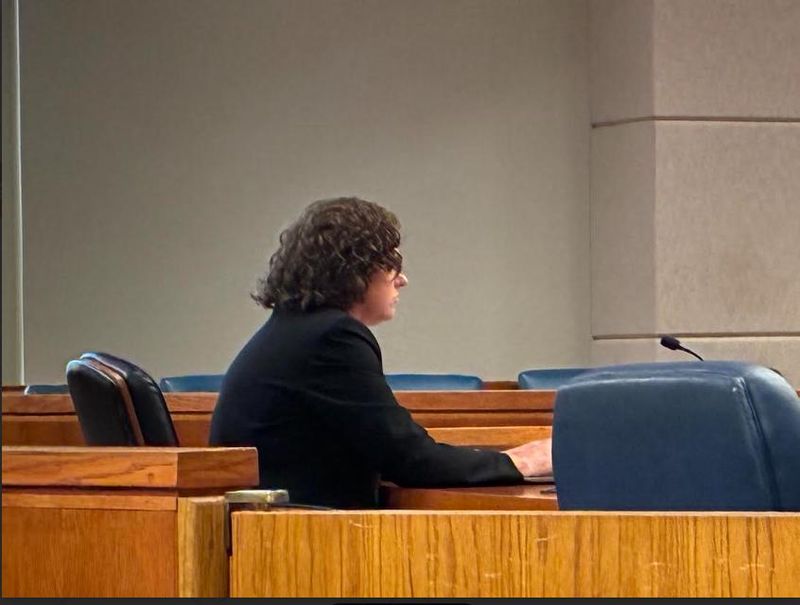
Jurors had three choices when considering the cases of two women accused of not protecting a child who was repeatedly hit and kicked by another child nearly two years ago: guilty of child neglect; guilty of culpable negligence, a lesser offense; or not guilty,
After a little more than an hour and a half of deliberating, the jury found the women guilty of child neglect.

Here’s what we know about the trial:
State v. Stephaine Galarza & Brandy Nicole Richardson
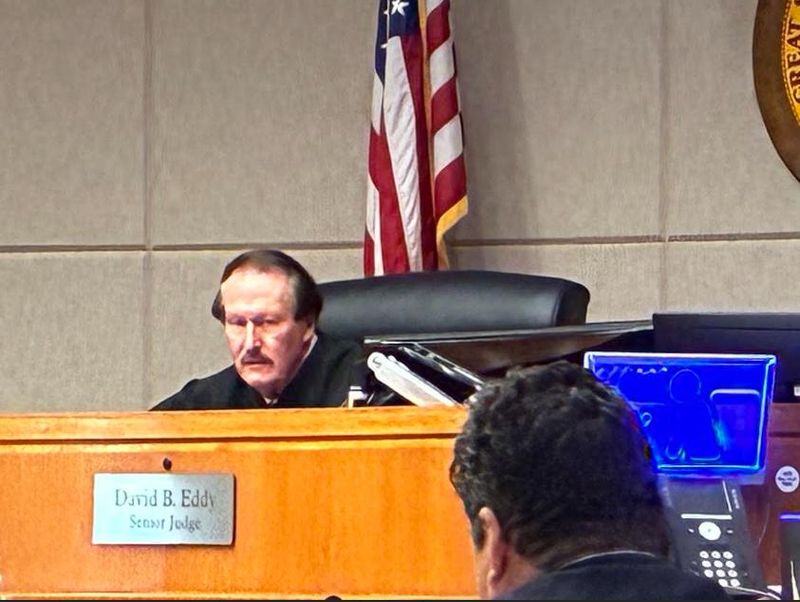
Who was the judge? Senior Judge David B. Eddy.
Attorneys: Prosecuting the case was Assistant State Attorney Debra Munchel. Defending Galarza was Marc Burnham. Richardson’s lawyer was Jorge Luis Colon.
When was jury selection? May 26.
How long was the trial? Two days. It began May 27 and concluded May 28.
Were the women free on bond? Yes.
Was there plea agreements offered? Burnham told the court there was an offer that would reduce his client’s charge to a misdemeanor, but it was rejected it. Colon said no offer was made to his client.
How many people were on the jury? Five women and two men, with one person serving as an alternate.
About the case: Ocala police said the women witnessed a physical altercation between a girl and a boy and did nothing to stop it. This happened at an after-school program that Kids Central provides for foster children. The women worked at the program.
Galarza and Richardson were fired after this. The girl who beat the boy was arrested. The Star-Banner is not identifying the girl or the boy because of their ages.
What was said during opening statements? Prosecutor Munchel said the women were in charge of the children. She said the boy, then 10 years old, was hit multiple times by an older, bigger girl, and the women failed to protect him.
She said the boy had bruises on his head and face, the incident wasn’t immediately reported, and the boy was not seen by medical professionals.
The altercation wasn’t reported until the next day and law enforcement officials were contacted, the prosecutor said.
In their opening statements, the defense mentioned a lack of resources at the facility: no television or games for the children, not enough personnel or supervision.
Although the video that showed the beating was shocking, one lawyer said, nothing was being done about providing equipment or resources to help employees do their jobs and prevent such incidents.
Whenever the children were together, the defense said, chaos prevailed. They said it’s wrong to blame the women for something management should have fixed.
The state’s case: Jurors heard from the detective who investigated the case, and also from Kids Central officials. The prosecution concluded its presentation on May 27.
The defense case: The defense began its case on May 28. Two witnesses – former employees from that center – testified
The women said children in the program frequently were out of control: screaming, arguing and so on. They said employees weren’t properly trained or informed on how to handle the children, whose ages range from 2 to 17.
Employees were not allowed to touch the children. Staff was directed to notify authorities of any problems. Though supervisors were at the building, they rarely, if ever, came out to assist, the women testified.
The children did not have a place to sleep or relax, the women said. Both said the fight in question never would have happened if the program had the necessary entertainment equipment.
During cross-examinations by prosecutor Munchel, it was revealed there were seven to eight adults present at the facility at the time of the fight. Although the children were in one room, there were two other rooms where they could have been placed. No reason was given as to why the children remained in one room that day.
Neither Richard nor Galarza testified.
The state’s closing argument: Munchel said while things could have been done differently, the focus should be on the assault of the child and the defendants’ failure to intervene.
She said the women underwent de-escalation training to prevent these types of incidents. The women could have separated the children; there were three available rooms in the building.
Beyond that, Munchel argued, there were seven to eight adults in the building. Yet no one stepped in to stop what was happening.
The prosecutor said the defendants had the necessary training, resources and help available to do their jobs. Their job was to watch the children and make sure nothing happened to them.
Munchel showed the jury the video of the incident and pointed to various times where neither defendant intervened.
The defense closing argument: Defense attorney Burnham told the jury everybody has a bad day at work, but that doesn’t make Galarza, his client, a criminal.
He said his client was unable to perform her duties because of a lack of will by management to make employees’ jobs a little easier. Instead, he said, Galarza and others like her had to do their jobs on the fly.
He argued there were no system, process or protocol to prevent serious problems, such as the fight, from occurring. Supervisors, he said, do not check on their workers or the children. He said others present during the fight were not arrested; only Galarza and Richardson were singled out for blame.
He said the defendants are not criminals and shouldn’t be treated as such.
Colon echoed some of the arguments made by Burnham. He said there was no leadership at Kids Central, and the women had no job description, expectations, standards or job evaluation.
He called the room where the children were kept a prison, and said the situation was a recipe for disaster.
He added that the employees had no information about the children, so they knew nothing about them.
Jurors
The judge dismissed one juror, a man, leaving five women and a man on the panel. They went to the back to deliberate at 1:24 p.m.
At 2:02 p.m., jurors had two questions: Could they re-watch the video of the beating? And could they do so in a way that the video could be stopped and restarted as they wish, giving them a chance to discuss what was happening at any given moment.
After consulting with the lawyers, the judge granted both requests. The video equipment was in the courtroom, which had to be cleared so the jury could work in private.
At 3:01 p.m., jurors announced they had a verdict.
Entering the courtroom at 3:05 p.m., the foreperson handed the form to the bailiff, who gave it to the judge. He reviewed it and passed it to the clerk to be read aloud.
The judge ordered pre-sentence investigations. The women will remain free on bond until sentencing. The maximum punishment is five years in prison.
Contact Austin L. Miller at austin.miller@starbanner.com
This article originally appeared on Ocala Star-Banner: Social service workers didn’t stop a child beating. What did a jury think?
Reporting by Austin L. Miller, Ocala Star-Banner / Ocala Star-Banner
USA TODAY Network via Reuters Connect