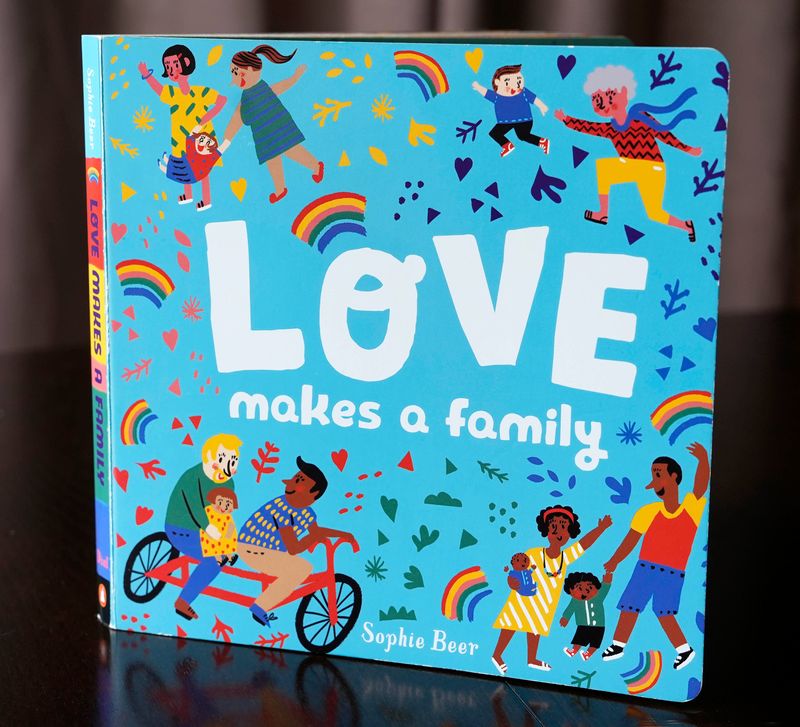
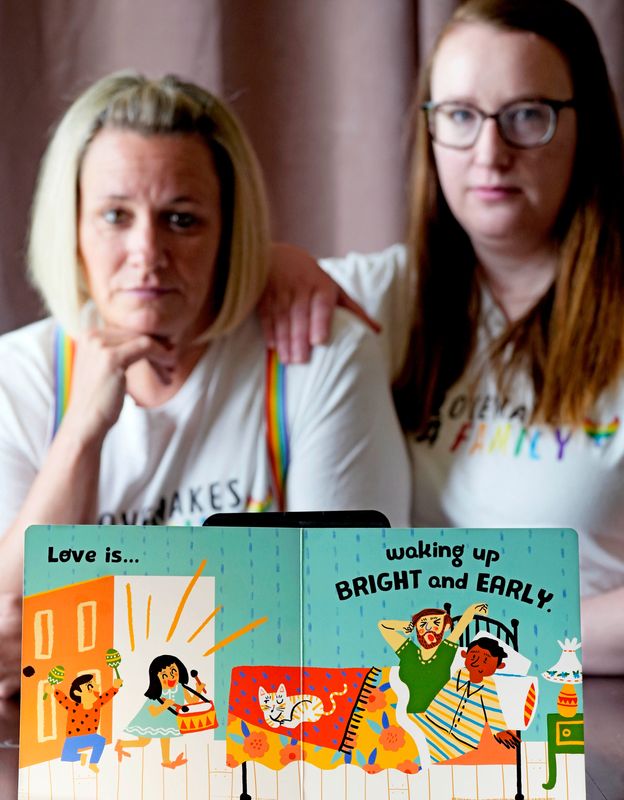
“Love Makes a Family” is a cardboard picture book meant to be read aloud to toddlers and preschoolers. It shows families going about everyday life, including some with same-sex parents.
In 2024, the Menomonee Falls School District removed the book, saying its inclusion of same-sex parents was inappropriate for kindergarten students.

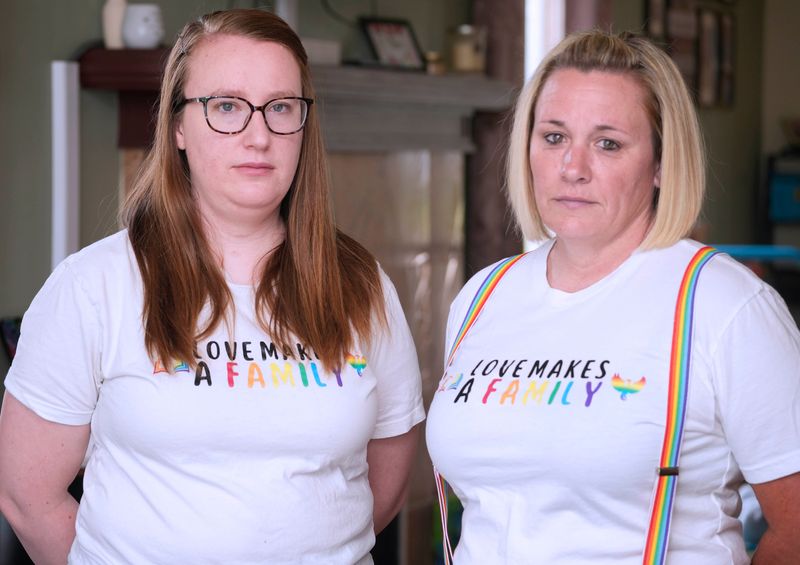
The removal pushed district resident Michelle Cramer and her husband Jesse Cramer to file a discrimination complaint that sat before the Wisconsin Department of Public Instruction for nearly two years.
But even after DPI issued its decision, the question the Cramers set out to answer – whether removing a book because it depicts LGBTQ+ families amounts to discrimination – was never settled.
DPI sets standards for school districts across the state, including one that prohibits districts from discriminating against students based on sexual orientation. But in its ruling on the Menomonee Falls case, the agency said its role is limited to reviewing whether a district followed its own policies – not making independent findings on discrimination.
Legal experts who reviewed the agency’s ruling questioned whether that limit exists.
Jeff Spitzer-Resnick, a Wisconsin civil rights attorney, called DPI’s decision a “total abdication of responsibility that does not conform to the law.”
With the number of book bans on the rise around the country, what Wisconsin families who object can do about it is often unclear, attorneys said.
In the past two years, DPI has received 20 discrimination complaints, according to spokesperson Chris Bucher. Two led to corrective action plans – formal, written requirements to fix a problem within a set deadline – which DPI is still monitoring.
Three were referred back to the districts, and the rest are still under review.
Five of the complaints center on how districts chose classroom materials. None resulted in a corrective action plan, Bucher said. The oldest of those was the Cramers’ case.
School board said book was inappropriate
Menomonee Falls parents Katrina and Paul Moldenhauer asked the district to pull “Love Makes a Family” from the 4K Traveling Library, a collection of books sent home with preschool-age students for optional reading, in July 2024.
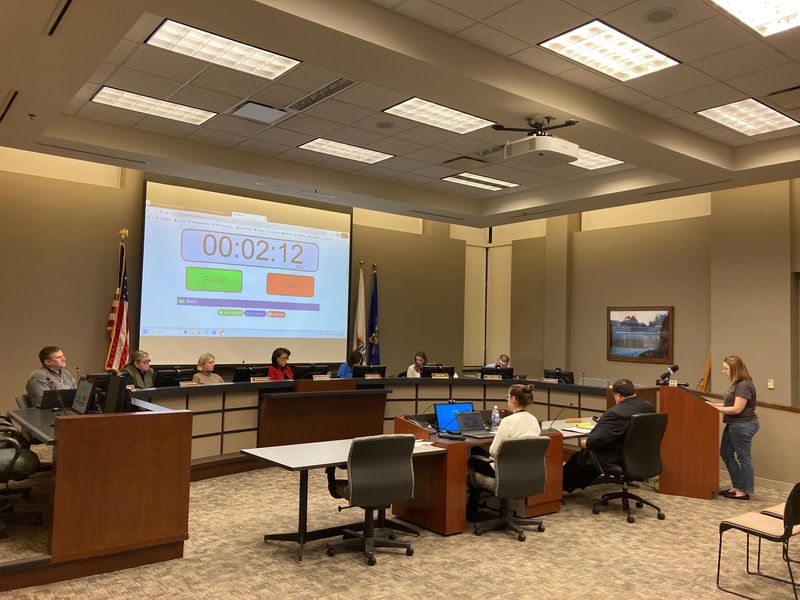
At the school board committee meeting that month, Katrina Moldenhauer argued that showing children images of same-sex parents was sexual in nature.
“Kids don’t need to be learning about who to love and all of that at the age of 4,” she said. “That, to me, is grooming.”
Grooming refers to tactics used by adults to gain a child’s trust for the purpose of sexual abuse. The term has been used by critics of LGBTQ+ inclusive content in schools, including conservative politicians.
During deliberations, Menomonee Falls School Board president Nina Christensen agreed that the book’s content wasn’t appropriate for the grade level. She said the district’s human growth and development curriculum – which covers topics including sexuality and LGBTQ+ issues – doesn’t begin until third grade.
The school board’s curriculum committee voted unanimously to remove the book.
The Cramers, who have two young children in the school district, filed a discrimination complaint with the district shortly afterward, arguing the book’s removal created a hostile environment for LGBTQ+ students and families.
The district’s human resources director, Evangeline Scoptur, and superintendent, David Muñoz, looked into the Cramers’ complaint and dismissed it. In December 2024, the school board declined to hear the couple’s appeal, saying it had a conflict of interest because Christensen had voted to remove the book.
At that December board meeting, Erin Vilar, a Menomonee Falls parent raising three children after the death of their other mom in 2023, spoke about how the book removal had made her children’s grief harder to carry.
“Their grief (is) now further complicated by the hateful undertone created by the very public and intentional act of removing the only book that represented families that look like ours,” she said.
Vilar later said on Facebook that one of her daughters developed anxiety about discussing her family at school, asking her mom: “If we weren’t bad, why was a book with families like ours removed?”
DPI review took nearly two years
After exhausting their options with the school district, the Cramers filed two complaints with the Wisconsin Department of Public Instruction. The agency handles discrimination complaints that aren’t resolved at the district level.
The first, filed in August 2024, challenged the district for violating a state standard called Public Instruction 8, which requires schools to maintain library materials that depict “the cultural diversity and pluralistic nature of American society.”
The second, filed in November 2024, argued the district violated Public Instruction 9, the state standard that prohibits schools from discriminating against students based on certain characteristics, including sexual orientation.
DPI attorney Sarah Kissel was assigned to review both cases. But after both sides submitted their written arguments, the Cramers heard nothing. When Michelle Cramer reached out in the summer of 2025 for an update on the case, she got an auto-reply saying Kissel had left.
In the months after Kissel’s departure, Michelle Cramer said she tried repeatedly to reach someone at DPI. This February, DPI apologized to the Cramers for the delay, blaming staffing changes in its legal office.
“While the process took longer than we would like, this is not unusual for cases of this nature,” Bucher later told Public Investigator.
In the meantime, homophobic posts about the case circulated on local social media, Michelle Cramer said.
One post on a local community page said her husband, who had just been elected to the school board, “should not be allowed anywhere near your child.”
“Even Democrat State Superintendent Jill Underly doesn’t want to touch this pedo grooming book,” the post said.
DPI upholds district’s finding of no discrimination
On May 4 – nearly two years after the Cramers filed their complaint – DPI issued its ruling.
The decision, signed by Deputy State Superintendent Thomas McCarthy, dismissed the Cramers’ first complaint regarding the rule that school libraries must depict the diversity of American life. DPI said that because the 4K Traveling Library was an outreach program, it was not an actual library under Wisconsin law.
The decision on the second complaint was more complicated. DPI concluded that Menomonee Falls School District followed its own policies, but did not independently investigate whether the district’s decision itself was discriminatory.
DPI noted that, according to the district’s investigation, no student was proven to have experienced harassment or discrimination as a result of the book’s removal.
DPI did find one violation, ruling that Menomonee Falls School District did not meet its own policy requiring “reputable and unbiased professional selection aids” when it used the website BookLooks to evaluate whether “Love Makes a Family” was appropriate. BookLooks is a book rating website that has been used to identify and remove books that depict LGBTQ+ people in schools across the country.
The district must submit to DPI a plan for what it will use instead within 60 days.
The mixed rulings struck Michelle Cramer as contradictory.
“To not directly say that this is discrimination against LGBTQ students and families does not feel like enough,” she said.
Legal experts say DPI’s review left the core question unanswered
Legal experts who spoke to Public Investigator thought similarly.
In its decision, DPI was explicit about what it saw as the limits of its role: to determine whether the district ran an adequate investigation, not to independently decide whether discrimination occurred.
In its finding that the district ran a sufficient investigation, DPI pointed to the district’s interviews with the Cramers, three other families and several 4K teachers, none of whom reported witnessing students experiencing harassment as a result of the book’s removal.
When asked to cite the specific provision or state law that limits its authority that way, DPI pointed broadly to state statute and Wisconsin’s local control framework, which gives school districts significant authority over local decisions.
Spitzer-Resnick, the civil rights attorney, said no such provision exists.
“You can read PI 9 up, back, forth, in between any way you want,” he said. “There is nowhere in there that says that. Nowhere.”
He said the BookLooks finding made DPI’s conclusion harder to understand. DPI had already determined that BookLooks was neither reputable nor unbiased.
Finding no discrimination on top of that, he said, “doesn’t make sense.”
Nathan Maxwell, a Chicago-based senior attorney at Lambda Legal, an LGBTQ+ legal defense organization, said DPI appeared to be “passing the buck.”
Although the agency examined whether procedures were followed, nobody seemed to examine whether those procedures were followed in a discriminatory way, Maxwell said. He said removing a book on the sole basis that it contains LGBTQ+ families is, as a general principle, discrimination.
“I would be frustrated if I were the family here who’s making this pretty valid complaint,” he said.
What the courts say about removing books from school libraries
Suzanne Eckes, a professor of education law, policy and practice at UW-Madison, said a 1982 Supreme Court ruling remains the landmark ruling on book removals in schools.
Board of Education v. Pico barred school districts from pulling books simply because officials dislike the content.
However, that precedent has never been applied specifically to a book removed because it depicts LGBTQ+ families, Eckes said. No court in the 7th U.S. Circuit Court of Appeals – which covers Wisconsin, Illinois and Indiana – has ruled on whether that constitutes discrimination.
A more recent Supreme Court ruling adds complexity. In Mahmoud v. Taylor, decided in June 2025, the court ruled that parents with religious objections can opt their children out of LGBTQ-inclusive books used in K-5 classroom curriculum.
But that case dealt with books being actively taught in classrooms, not those sitting on a library shelf. Eckes said that distinction makes it hard to know how the ruling would apply to a situation like Menomonee Falls.
“It’s kind of this gray area right now,” she said.
Maxwell, the Lambda Legal attorney, said the political climate is fueling more book challenges around the country.
“The tenor of communication coming from the top is trickling down through some of these lower levels of government,” Maxwell said. “And it’s emboldening people who are anti-LGBTQ to come and make these sort of public challenges.”
The Cramers do not plan to appeal DPI’s decisions.
Michelle Cramer said her focus now is on local community engagement and working with a school board that has changed since she filed the complaints. Her husband, Jesse Cramer, has since been elected school board president.
Although BookLooks ceased operations in March, Michelle Cramer said DPI’s ruling on it matters because it sets a standard for how future school reading material is chosen.
“This is really beyond the book,” she said, “and about accepting all families in our district to make sure that students feel comfortable and safe learning and sharing about their families.”
This article originally appeared on Milwaukee Journal Sentinel: Why DPI won’t take a stand on whether this book ban counts as discrimination
Reporting by Quinn Clark, Milwaukee Journal Sentinel / Milwaukee Journal Sentinel
USA TODAY Network via Reuters Connect