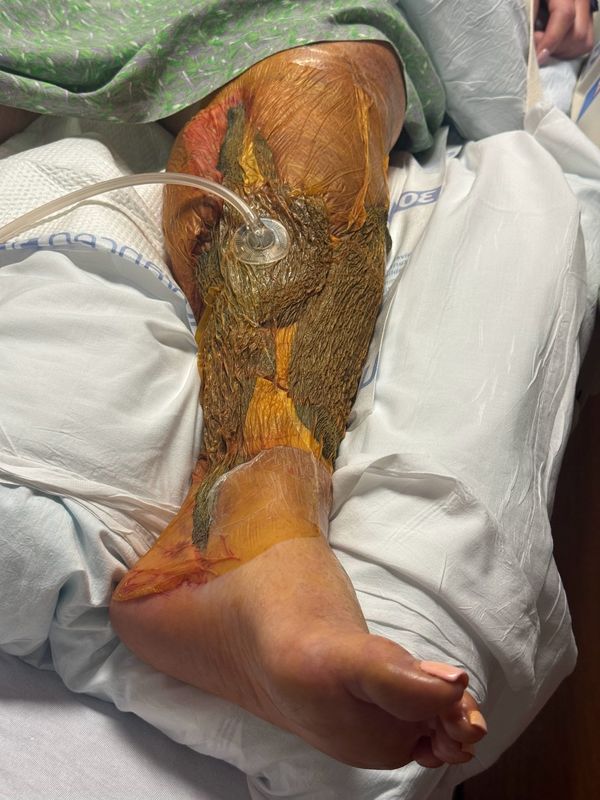
File this under, “Florida is trying to kill you.”
It’s rare, but be warned. Vibrio vulnificus, the horrific infection nicknamed the “flesh-eating” bacteria that disproportionately affects the Sunshine State, is entering its most active season, from June to September, and this year’s cases already are outstripping what was counted by this time last year.

The infectious disease, caused by a naturally occurring bacterium in brackish, warming water, is both waterborne and food-borne. A rare infection leading to the disease was found in Miami-Dade County in the latter half of April—the fifth counted this year—according to the Florida Department of Health. Its cause was not immediately known. But other cases have popped up this year in Hillsborough, Lee, Palm Beach and St. Johns counties, compared to the three cases counted by this time in 2025.
What is Vibrio vulnificus?
Experts expect the so-called fleshing-eating disease caused by this bacterium will become more common as oceanic temperatures continue to warm, according to a peer-reviewed article that appeared in the Sept. 22, 2025 edition of Infectious Diseases.
“Vibrio bacteria, found in marine and coastal waters globally, are pathogens of increasing concern,” the article says. “One key species, Vibrio vulnificus, can cause severe and life-threatening infection through foodborne and waterborne transmission. More than 150 V. vulnificus infections are reported to the U.S. Centers for Disease Control and Prevention every year, and approximately 20% of these are fatal.”
Although it’s commonly referred to as “flesh-eating,” the species name, ‘vulnificus,’ is Latin for ‘wound-causing,’ which is just what the organism does, said Anthony Ouellette, professor of biology and chemistry at Jacksonville University. People with compromised immune systems, diabetes, kidney disease and liver disorders, are more at risk for the complications caused by infection.
“They can break open your red blood cells to get the iron from hemoglobin … they have enzymes that can break down elastin, which makes up our soft tissues, or collagen, which is also in our soft tissues. They degrade our proteins, then they can get our amino acids—so they make a buffet for themselves. And that’s what destroys the tissue–they’re getting their food.”
Plus, he says, they have a protective carbohydrate capsule that helps them “evade our immune system and kind of hide out from us once they get in there.”
Have years with more active hurricanes seen greater infection counts?
Active hurricane years have disproportionately inflated case counts in Florida, pointing to the waterborne cause as more likely in Florida. A record-breaking 82 cases were confirmed in 2024, as the state was hit by two catastrophic hurricanes, Milton and Helene (Hurricane Debby that same year was a Category 1 storm). That 2024 count smashed the record 74 cases counted in 2022, when Hurricane Ian ravaged Southwest Florida. Combining those years, the bacterium left 36 dead in Florida, according to the state Department of Health.
This year’s El Niño could mean less infection because of hurricane-related flooding, but the temperature in the Gulf of America is hitting near-record temperatures, records show.
One case of a man who lacerated his right leg when jumping into Gulf Coast waters and subsequently needed to have his leg amputated below the knee were recounted in the New England Journal of Medicine’s April 22, 2026 edition, written by two University of Florida physicians.
“Two days after the injury to his leg, skin changes appeared on his right arm,” the article says, calling it a “necrotizing, soft-tissue infection.”
“The abundance and geographic range of V. vulnificus is projected to increase owing to factors related to climate change, including rising water temperatures, storm surges, salinity changes, and algal blooms,” the article reads.
Although Florida and Louisiana account for most of the infections, a swimmer in Cape Cod was infected in 2025, reports show.
Can Vibrio bacterium’s infection be prevented?
Most people get infected by Vibrio vulnificus from eating raw or undercooked shellfish, according to the state health department. One Florida man died in 2022 after eating a raw oyster at the famed Rustic Inn as he celebrated his birthday and his daughter’s graduation, according to reports.
Most of the health department’s tips for avoiding the infection involve food handling. They include:
∎ Avoiding raw oysters and other raw shellfish.
∎ Cooking shellfish thoroughly, which would be boiling for more than five minutes or, if steaming, cooking for nine minutes more after the shells open and not eating what’s inside shells that don’t open.
∎ Not allowing juices from raw seafood mixing with other foods.
To avoid the form that comes from water contact, the health department recommends avoiding the exposure of open wounds to warm salt or brackish water or to seafood harvested from those waters. That means wearing gloves when handling uncooked shellfish.
Fort Myers News-Press writer Amy Bennett Williams contributed to this report.
Anne Geggis is statewide reporter for the USA TODAY NETWORK FLORIDA, reporting on health and senior issues. If you have news tips, please send them to ageggis@usatodayco.com. You can get all of Florida’s best content directly in your inbox each weekday by signing up for the free newsletter, Florida TODAY, at https://palmbeachpost.com/newsletters
This article originally appeared on Palm Beach Post: Vibrio season ramping up as 5 Floridians struck by horrific infection
Reporting by Anne Geggis, Palm Beach Post / Palm Beach Post
USA TODAY Network via Reuters Connect