Help appears on the way for New York’s hospitals and nursing homes as more than $1.5 billion has been promised in this year’s state budget to aid struggling health systems in the aftermath of federal funding cuts.
The state funding comes as a total of 11 nursing homes across New York have closed or announced closures over the past two years and nearly 80% of nonprofit nursing homes are operating on negative margins statewide, according to LeadingAge New York.

At the same time, the passage of the Trump administration’s “big, beautiful bill” by Republicans in Congress last year included a set of policy changes projected to cut federal funding for Medicaid and other health programs nationally by $1 trillion over a decade, leading to a new annual $3 billion health care expense for New York.
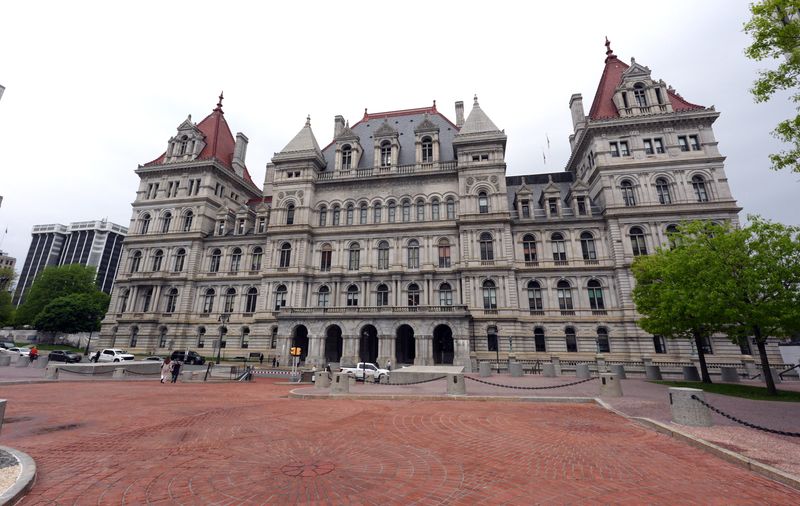
On Wednesday, May 27, the state Assembly passed the health and mental hygiene bill, which includes funding to help avoid service cuts at hospitals and nursing homes across the state.
Here’s what to know about the health budget bill.
Will New York help close Essential Plan coverage gap?
The Essential Plan, which is a federally funded, state-run program New York created in 2015 to cover low-income workers who earn too much to qualify for Medicaid and don’t get health insurance at their jobs, offers comprehensive care with no premiums and some copays.
In an attempt to mitigate the new costs from the “big, beautiful bill,” or HR 1, the state announced last September it would reverse its prior Essential Plan program expansion, resulting in the loss of nearly free coverage for 460,000 New Yorkers.
Some state lawmakers tried to keep all New Yorkers covered under the Essential Plan with bills that would use state funds to provide coverage for those who will be squeezed out of the program on July 1. However, no state assistance was included in the state budget.
Assemblymember Amy Paulin, a Westchester County Democrat and Assembly health chair who championed one of the bills, said she “will continue to try to keep as many New Yorkers insured as possible.”
And Michael Kinnucan, Fiscal Policy Institute’s health policy director, pointed fingers at Gov. Kathy Hochul and the state Legislature.
“Despite record-high revenue and ample spending on other priorities, from provider rates to utility rebates, policymakers failed to spend a dime to maintain coverage for the hundreds of thousands of working-class New Yorkers set to lose healthcare coverage over the next twelve months,” Kinnucan said.
“Governor Hochul and legislative leaders talked a big game about affordability this year, but for 450,000 New Yorkers, healthcare is about to become unaffordable,” he added.
New York’s hospitals and nursing homes get Medicaid reimbursement help
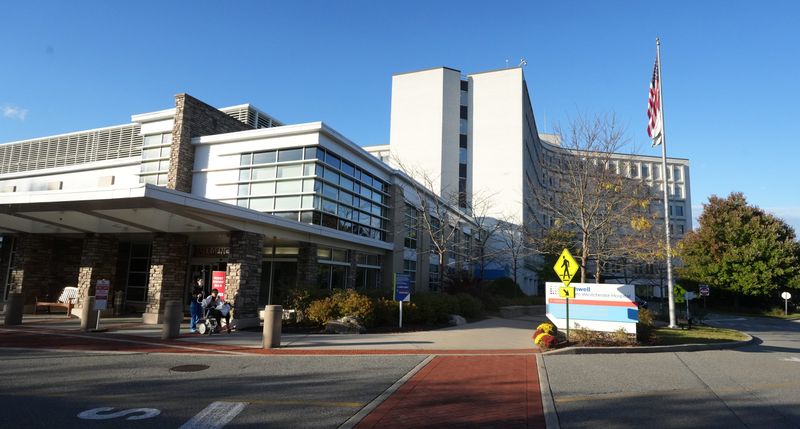
New York’s hospitals and nursing homes received more than $1.5 billion in the state budget this year, including millions for Medicaid reimbursement. Specifically, hospitals will receive $706 million in inpatient and outpatient rate investments and nursing homes will pick up a $480 million investment.
“These provisions were focal points of GNYHA’s state budget advocacy and will provide a strong measure of stability for New York’s hospitals in the wake of HR 1’s massive health care cuts,” a letter from Greater New York Hospital Association president Ken Raske says.
“That stability will help insure that New Yorkers continue to have access to high-quality care,” the letter continued.
The state’s nursing homes were also allotted $57 million to partially restore their capital rate and reconciliation cut, which reduces their 15% cut to 5%, and hospitals received $94 million to downsize their 20% cut to 10%.
Additionally, hospitals are picking up $250 million to restore their quality pool, which the organization says was a key priority of theirs and “is funded through our successful advocacy to extend the current managed care organization tax at the federal level through December 31, 2026.”
“HANYS is immensely grateful to the governor and Legislature for advancing significant multi-year investments in our hospitals and nursing homes,” a statement from Healthcare Association of New York State President Bea Grause reads.
“These providers continue to face chronic expense pressures alongside many new fiscal challenges that are threatening their ability to keep their services available and doors open for their community members,” Grause added, noting the budget’s “healthcare-related investments are deeply needed and will help maintain and enhance all New Yorkers’ access to care.”
However, some nursing home advocates aren’t entirely pleased with the outcome.
LeadingAge New York, the statewide association that represents not-for-profit and public long-term care and aging services providers, pushed for an equal split of funding for hospitals and nursing homes as they say the cost of providing nursing home care in New York rose by 51% between 2007 and 2024 while the reimbursement rate only increased by 12.8%.
This year’s budget increases nursing home Medicaid funding by about 6.4%, the group says.
“While appreciative, we are compelled to express disappointment as these investments must be viewed in the context of a long-term care system that is in crisis due to decades of underfunding,” Sebrina Barrett, President and CEO of LeadingAge New York, said in a statement on Wednesday.
“Home care and hospice providers are also experiencing Medicaid shortfalls but did not receive additional funding in the final budget,” Barrett continued. “That widening gap has left providers across the state grappling with serious financial strain, persistent workforce shortages and mounting difficulty meeting the needs of older adults and their families.”
Barrett also said the future “depends on increased, sustained state investment that matches the true needs.”
Contributing: New York State Team reporter Chris McKenna
Emily Barnes covers state government for the USA TODAY Network-New York with a focus on how policy and laws impact New Yorkers’ taxes, communities and jobs. Follow her on Instagram or X @byemilybarnes. Get in touch at ebarnes@usatodayco.com.
This article originally appeared on Rockland/Westchester Journal News: How NY is paying for federal funding cuts for hospitals, nursing homes
Reporting by Emily Barnes, New York State Team / Rockland/Westchester Journal News
USA TODAY Network via Reuters Connect