A hotly debated series of changes to New York state’s Tier 6 pension system were nearing the finish line as part of a larger state budget bill being passed by lawmakers on Tuesday, May 26.
Many public employees across the state began a heightened push for lower retirement ages and reduced penalties for those under the state’s Tier 6 pension system earlier this year.

Currently, Tier 6 members, or any full-time, permanent, 12-month employees of New York state or a participating employer who joined the state’s retirement system on or after April 1, 2012, must pay more of their salaries into the pension system than other tiers and face heavy penalties if they retire before age 63, according to New York State United Teachers (NYSUT).
Labor advocates have said it’s causing a staffing crisis as those in the Tier 6 system pay 3-6% of their salaries into the pension system the entire length of their career and their contributions go up as their pay increases. However, there’s been heavy criticism of the proposed changes amid reports taxpayers could face a $1.5 billion annual price tag under an initial proposal set forth by labor unions seeking Tier 6 changes.
Here’s what to know.
What changes are coming to New York’s Tier 6 pension system?
Through this year’s state budget bill being finalized by lawmakers on May 26, those in the state’s Tier 6 pension system would now retire without any benefit reduction after turning 58 years old and working at least 30 or more years in the system.
Additionally, members contribution levels are changing. Here’s how:
The total cost of the pension reform changes in the final budget deal struck between state lawmakers and Gov. Kathy Hochul are now expected to be closer to $557 million per year, according to several media outlets.
Currently, those in the Tier 6 system pay 3-6% of their salaries into the pension system the entire length of their career and their contributions go up as their pay increases. Comparatively, the contributions of those in the Tier 4 system are capped at 3% and end after 10 years and they have the option to retire at age 55 without any penalties.
What state education, civil service workers unions are saying
Those pushing for the Tier 6 pension changes are applauding Tuesday’s budget bill passage in the Assembly, but they say their work in reforming the system isn’t done yet.
“Albany heard us and took a major step in correcting the injustice of Tier 6,” says United Federation of Teachers President Michael Mulgrew.
“Lowering the retirement age for educators from 63 to 58 after 30 years of service will make the pensions better and fairer for current and future employees,” Mulgrew’s statement continued. “It shows that progress is possible when we stand together.”
“We look forward to working with Albany and our Legislative Leaders to map out the next phase of pension reform. Together we can end this inequity,” Mulgrew added.
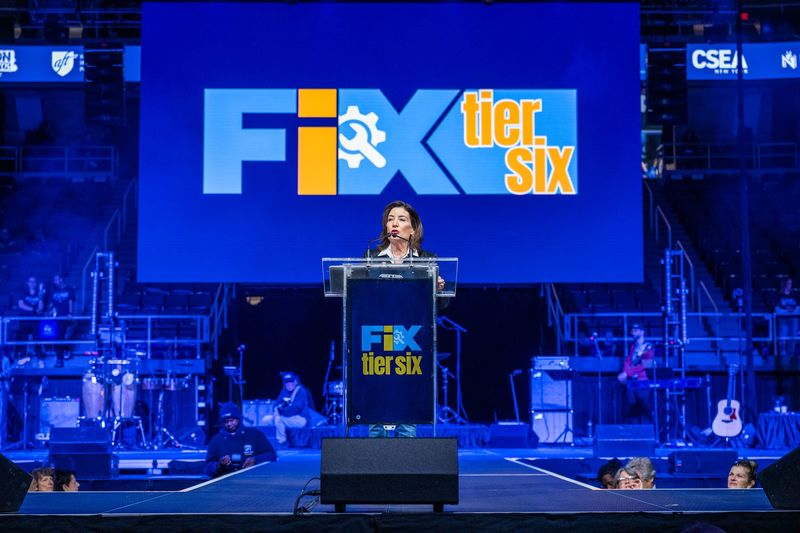
And CSEA President Mary E. Sullivan said these changes will “put money back into CSEA members’ pockets and help working families keep more of what they earn.”
“Fighting to Fix Tier 6 is CSEA’s highest priority, as affordability is one of the greatest challenges our union members face,” Sullivan also said in the statement. “Our union members stood up and fought for these reforms by contacting their legislators, signing postcards and taking part in rallies to fight for pension reforms. These reforms are a major step forward toward pension parity, but we still have more work to do.”
‘Unnecessary and unwise’: Government finance watchdog group condemns Tier 6 changes
However, the Citizens Budget Commission previously said the system isn’t obstructing recruitment and any changes “would cost the state, local governments, and school districts billions of dollars next year and annually in the future, likely driving property tax increases or siphoning money from other programs.”
The group maintained that position in a statement about the budget’s passage on Tuesday.
“Enhancing Tier 6 benefits was unnecessary and unwise,” CBC President Andrew Rein said.
“It will require local governments and school districts to either siphon money from programs or increase taxes,” he added. “The $550 million price tag, added to the cost of enhancements in 2022 and 2024, brings the total bill to $1 billion a year.”
Emily Barnes covers state government for the USA TODAY Network-New York with a focus on how policy and laws impact New Yorkers’ taxes, communities and jobs. Follow her on Instagram or X @byemilybarnes. Get in touch at ebarnes@usatodayco.com.
This article originally appeared on Rockland/Westchester Journal News: NY pension reforms lower retirement age, contributions. See details
Reporting by Emily Barnes, New York State Team / Rockland/Westchester Journal News
USA TODAY Network via Reuters Connect