Washington — An outspoken group of lawmakers, boosted by an AI-powered social media campaign littered with inflammatory language and outlandish scenarios, has recharged opposition to a rule meant to end drunken driving on American roads.
Critics of the rule have warned, in their own words and in artificially generated videos, that a government “kill switch” coming to all new vehicles could endanger drivers and jeopardize data privacy. The term has been adopted by opponents of requiring in-cabin systems that detect potentially dangerous blood-alcohol levels from drivers.

“BIG BROTHER IS WATCHING YOU,” reads an image posted earlier this month by U.S. Rep. Scott Perry, R-Pa. “KILL THE KILL SWITCH.”
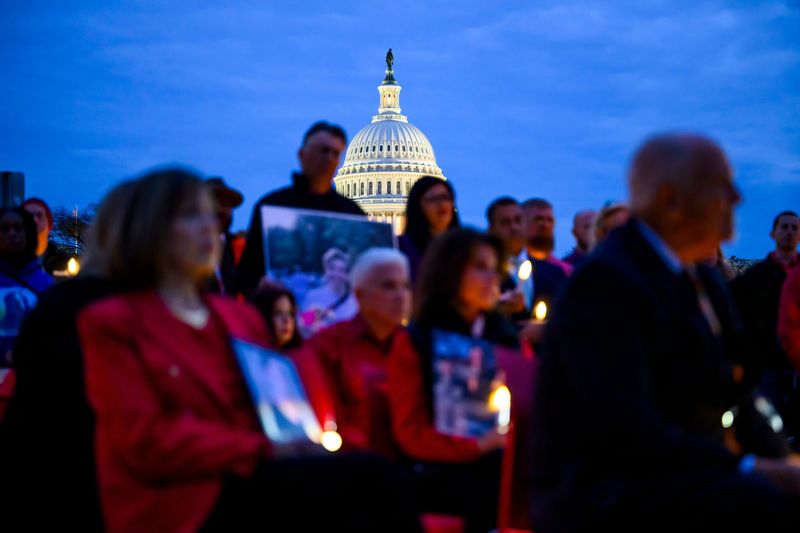
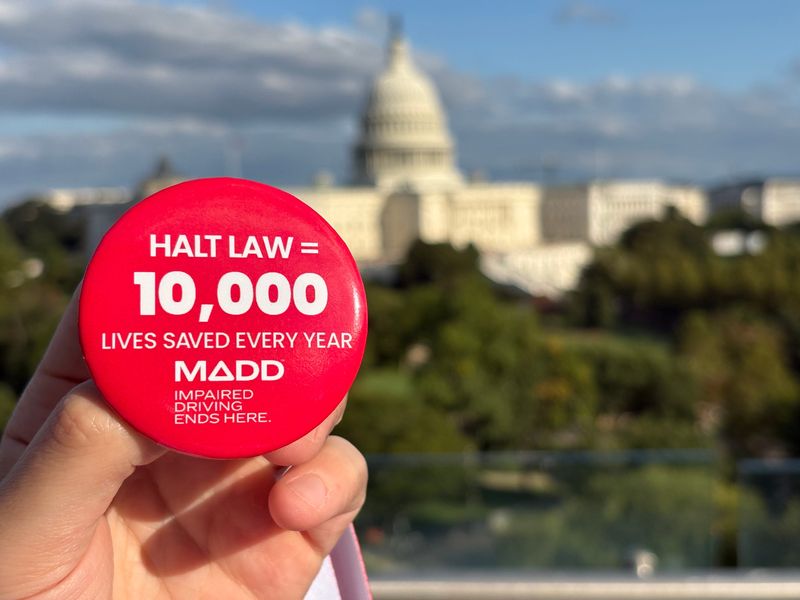
Advocates have said that the long-pending regulation could dramatically reduce the more than 10,000 annual U.S. traffic deaths from drunken driving crashes. Now, however, they are concerned that opposition online and in Congress could delay implementation of the rule, prompt its outright cancellation and — perhaps worst yet — sway public opinion against emerging vehicle safety technology.
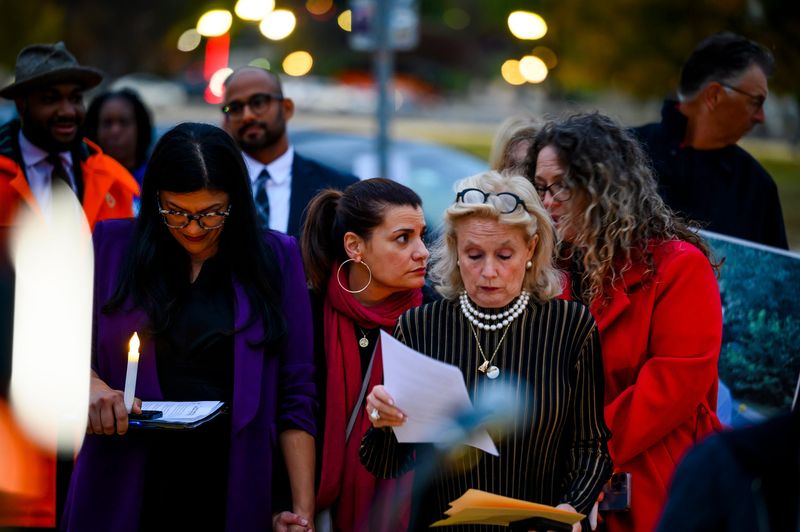
“I don’t even want to get online because I don’t want to see it,” said Rana Abbas Taylor, a Michigan advocate who lost five family members to a drunken driving crash in 2019.
“What’s frustrating for me personally is there’s not an attempt to understand the law, more an attempt to dismantle it based on a false narrative,” she said in a phone interview. “And that’s devastating to victims and survivors who have spent years of their lives — at the worst point in their lives — fighting for others to be safe on our roads.”
Mothers Against Drunk Driving, an advocacy group that has fought against impaired driving since 1980, said it is struggling to fight the uptick on platforms like X and Instagram.
One AI-generated video posted in April shows a man and his grandmother trying to escape a tornado, only for his GMC truck’s computer system — reminiscent of the antagonistic HAL 9000 in the film “2001: A Space Odyssey” — to prevent the vehicle from starting.
“Whose bright idea was this?” the man yelled. The computer responds: “Your government’s.”
As videos like that one have gained traction online, the federal government “kill switch” conversation has spread beyond Washington, notably popping up as a talking point in the Michigan gubernatorial race.
In April, Republican candidate and U.S. Rep. John James of Shelby Township backed a year-old congressional effort to cancel the so-called kill switch rule before it materializes. He did so after his GOP primary rivals criticized him for being one of 59 Republicans to vote with Democrats to preserve the requirement a few months earlier. Four Democrats, including Ohio Rep. Marcy Kaptur, crossed party lines to vote with GOP opponents of the rule.
Taylor said she left a detailed message for James’ congressional office to share her concerns following what appeared to be a reversal in his stance, but she has not heard back. “It’s very disappointing,” she said.
Stephanie Manning, MADD’s head of government affairs, said she hopes that “at some point common sense prevails, and that everybody can sit down and think about how to move forward collectively.”
“It’s tough for us to compete with social media campaigns that distort the truth,” she added.
As the “kill switch” debate has reemerged, The Detroit News spoke and emailed with stakeholders to assess the state of play surrounding one of the auto industry’s most crucial debates on regulation, safety and technology.
Where did the policy come from?
Taylor’s family tragedy spurred U.S. Rep. Debbie Dingell, D-Ann Arbor, and other advocates in Congress to pursue and pass legislation directing regulators at the National Highway Traffic Safety Administration to issue new tech requirements for impairment detection systems in all new cars and trucks.
“Do people who are against it really want more people to die?” Dingell said in a phone interview. “It’s not a kill switch. It’s a life-saving switch.”
The congresswoman’s original proposal on the topic, introduced in 2019, was named to honor the Abbas family. A version of her bill took effect via the Bipartisan Infrastructure Law passed in 2021. Nine Republicans in the U.S. House and 19 in the Senate joined Democrats in supporting the sweeping package.
The law, notably, is backed by the national trade association representing producers and marketers of distilled spirits sold in the United States.
“Things can happen in the social media environment and get momentum, and I think this kill switch idea just kind of picked up a head of steam,” said Chris Swonger, president and CEO of the Distilled Spirits Council of the United States.
Swonger, who also heads the alcohol safety group Responsibility.org, said the opposition campaign is “nothing but misinformation” and vowed to work with “anybody and everybody” to address concerns.
What tech will be required to detect drunken driving? And when?
The drunken driving provision of the infrastructure law directed NHTSA, which operates under the Department of Transportation, to prescribe a motor vehicle safety standard for mandatory, in-vehicle technology capable of passively detecting and stopping drunken or impaired driving.
The measure was designed to be technology-neutral, meaning it would not require one particular type of impairment detection system. The law set a deadline of Nov. 15, 2024, to finalize a rule, but that deadline came and went without any consequences.
Other deadlines written into the law trigger mandatory status updates to Congress but are otherwise toothless.
NHTSA made a preliminary regulatory filing in January 2024 seeking feedback from the public about the eventual standard it will set. The filing received more than 18,000 public comments but has not yet resulted in a draft proposal for what conditions automakers will have to meet.
Asked in May about the status of its congressionally required rule, NHTSA referred to a February 2026 status report it sent to lawmakers. The agency affirmed its commitment to eventually issuing a rule and noted that it is monitoring technological advancements.
“Accuracy is especially critical for this technology, given the estimated 227 billion driving trips that take place annually in the United States,” the agency said in its latest report.
It continued: “While NHTSA has not made a final determination about the necessary level of accuracy, even a 99.9 percent detection accuracy level could result in millions to tens of millions of instances each year where the technology would incorrectly prevent or limit drivers from operating their vehicles, or fail to prevent or limit impaired drivers from doing so.”
“At this time, NHTSA is not aware of any technology that claims to achieve anywhere close to this level of accuracy in minimizing false positives (misclassifying a sober driver as impaired) and false negatives (failing to detect an impaired driver), and no such capabilities have been verified independently to date.
“Nonetheless, NHTSA believes such technology, when mature, will have a dramatic impact on road safety and combatting the scourge of impaired driving. NHTSA continues to monitor the progress of technology and works closely with industry as technology continues to be developed.”
The regulator did not offer an estimate for when the technology would be “mature” or a timeline for when a rule would be developed.
With the rule stalled, the private sector has taken action. The Insurance Institute for Highway Safety, well-regarded for its crash testing and vehicle safety ratings, announced in September that it would add impairment detection to the criteria for its influential TOP SAFETY PICK+ award in the coming years.
How does impairment detection tech work?
There are three primary types of alcohol detection technology that auto equipment manufacturers and research groups have pursued: touch-based, breath-based and camera-based.
A variation of the latter is already present in U.S. vehicles, including some Ford Motor Co. and General Motors Co. models, that have automated or hands-free driving modes that still require drivers to pay attention to the road. Those vehicles alert the driver to refocus on the road if the in-cabin driver monitoring system detects a distraction.
Michael Lenné, chief safety officer for Seeing Machines, a DMS supplier to Ford and GM, explained that his company’s system is fully localized inside the vehicle with no outside parties rendering a decision on driver fitness or gaining access to data.
“We don’t provide a video stream or images to the OEM. We don’t store anything other than some dots that are processed for five to 10 seconds,” he said. “Our philosophy and our approach is we don’t need that information, so we’re very happy not to store it in any way. We have actually said this to NHTSA in some of our many meetings with them.”
The implementation cost of DMS systems in new vehicles, according to a study Lenné and several academics presented at a NHTSA conference earlier this month, is $55 to $75.
He also explained that Seeing Machines does not decide how a vehicle responds mechanically when its DMS product detects impairment; that responsibility falls to automakers.
Car and truck manufacturers can, theoretically, implement impairment detection systems in a manner that would suddenly halt a vehicle in the middle of traffic as soon as intoxication or other forms of impairment are detected. But Lenné dismissed the idea as dangerous and impractical.
He and other safety experts have instead made more careful recommendations to NHTSA as it crafts a standard that auto companies will eventually have to meet.
First, Lenné suggested, the dashboard could provide a health status icon and prompt the driver via audio or text message to consider pulling over. Next, if detected impairment continues or worsens, vehicle safety features like forward collision and lane departure warning could shift into a more sensitive status.
Finally, years in the future, he suggested that vehicles could autonomously take minimum-risk driving maneuvers like slowing down to less dangerous speeds. “That’s still a long way away from whatever a kill switch is,” Lenné said.
He continued: “We need new solutions. And if we don’t move past this kill switch debate, we will collectively continue to kill north of 10,000 Americans every year on the road. Multiply that by four or six or eight for serious injuries as well, and you’re talking about upwards of 100,000 lives per year impacted by drunk driving.”
Dirk Schulte, a research and development director at auto supplier Valeo S.E., was more blunt in dismissing critics who describe the pending NHTSA requirement as a kill switch.
“It is nonsense,” he said.
Valeo has deployed camera-based DMS systems with automakers in several countries and is “looking into” offering a touch-based system that detects blood-alcohol levels through the skin. He described that technology as “relatively ancient” and noted that some school districts already deploy such devices that immobilize buses when drivers try to start them while intoxicated.
The federal National Transportation Safety Board, following an investigation into a West Virginia school bus crash, even recommended last month that all new school buses come equipped with alcohol detection tech.
The Driver Alcohol Detection System for Safety project, a public-private collaboration between NHTSA and the nonprofit Automotive Coalition for Traffic Safety, has been working on touch and breath-based systems for 17 years. Research and development efforts have gone into making the tech more accurate, reliable, compact and affordable.
“We’ve converted a wild, audacious idea that everybody thought would fail — people laughed us out of the room — into a viable technology suite,” said Rob Strassburger, president and CEO of ACTS, in an interview last year.
DADSS has sent out reference designs and engineering kits to manufacturers, including drawings, bills of materials and other documentation for auto companies to integrate third-party systems into their vehicles, or manufacture the technology themselves.
“I might just break down and start crying,” Strassburger added. “This has been a very challenging effort, and a very interesting effort, technologically and scientifically. But we have never lost sight of why we’re doing this.”
Who opposes the federal rule?
Opponents of the still-pending regulation have warned of a government “kill switch” for years, though the term has made a comeback on social media and on Capitol Hill in recent months.
Some of the members of Congress most active on the issue have been libertarian-minded Republican U.S. Reps. Perry of Pennsylvania; Thomas Massie of Kentucky; Chip Roy of Texas, and Keith Self of Texas.
“The looming Orwellian automobile kill switch deadline threatens civil liberties,” Massie said in a January Instagram post. “When your car shuts down because it doesn’t approve of your driving, how will you appeal your roadside conviction?”
Roy said in a post to X earlier this month: “The kill switch puts the government and the corporate cronies in your car to track all of your activities and to surveil you. The Fourth Amendment and I oppose it. We are going to keep fighting for the civil liberties of Americans.”
The Fourth Amendment of the U.S. Constitution requires law enforcement to obtain a warrant based on probable cause before search and seizure.
The lawmakers backed an ultimately unsuccessful measure in January to defund further work at NHTSA on its stalled impaired driving rule, but they have remained outspoken on the topic since.
“(T)here should be opportunities to offer my bill as an amendment elsewhere, and I have every intention on doing that,” Perry said in an emailed statement on Wednesday. The Pennsylvania congressman was referencing his No Kill Switches in Cars Act, which has gotten 19 new co-sponsors in the past two months after its initial introduction in February of last year. Michigan’s John James is one of them.
Those cosponsors have come as conservative groups like the Heritage Foundation continue an opposition campaign against the rule. “Heritage has been warning about this since 2024,” said foundation president Kevin Roberts in an April social media post.
“Our grassroots activists submitted more than 12,000 comments to the NHTSA opposing the kill switch,” he added. “We also supported an amendment to a bill in Congress to stop it. However, 57 House Republicans joined Democrats to strike it down. Perhaps now that more Americans are aware of the scheme, those 57 will reconsider?”
Asked if he’d ever observed any impaired detection technology in action, Perry said no.
“As for seeing the technology personally, no I haven’t — and neither has anyone else, which is extremely concerning in its own right; but I know the technology and — worse yet — I also know the past abuses of our government,” he said.
Perry continued: “No one seems to be able to answer simple questions like … imagine you’re fleeing a dangerous situation; your adrenaline’s pumping, your heart’s racing, your hands are shaking, and the kill switch in your vehicle decides that you’re impaired and shuts down your vehicle.
“Or how about a husband speeding his pregnant wife to the hospital, but his car decides he’s intoxicated and shuts off the vehicle. The federal government has no right to mandate technology that shuts down or controls your personal vehicle — period.”
Rana Abbas Taylor, the Michigan advocate, called that comment “laughable” given the existing public deployments of impairment detection tech on U.S. roads, in consumer vehicles and commercial fleets, plus frequent demos at safety conferences.
“How can you admit that you have not seen the technology, and yet double down on your argument? That’s what’s so frustrating,” she said.
Schulte, of Valeo, called the situation Perry described “a corner case” that should be considered but not halt the rollout of impairment detection tech altogether.
“I’ve been working in this field for a long time now, and there are typical scenarios people mention. Like you come out of a bar drunk and get in your car, and then somebody tries to rob you or stands in front of the car with a gun in his hand, and you cannot start because of (an alcohol sensor),” he said.
“You can always come up with some strange scenarios, but OEMs are certainly putting thought into that,” the engineer added.
“We want to make sure that the technology is well-understood … because these are very safe systems. They provide increased safety to the driver and hopefully make driving for everybody safer.”
gschwab@detroitnews.com
@GrantSchwab
This article originally appeared on The Detroit News: Fact check: Is a government ‘kill switch’ coming to your car?
Reporting by Grant Schwab, The Detroit News / The Detroit News
USA TODAY Network via Reuters Connect