Southwest Floridians celebrated when Golisano Children’s Hospital opened in 2017. It meant local children could receive world-class, specialized health care close to home rather than traveling to children’s hospitals in Tampa and Miami. Today, the hospital is regularly honored by The Leapfrog Group, U.S. News & World Report and other ratings organizations as one of Florida’s top children’s hospitals, and its thriving hematology and oncology program is among just nine such state-recognized programs in Florida.
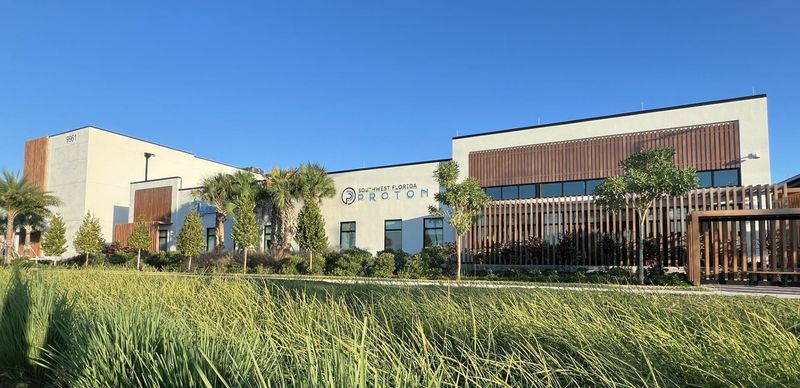
Today, parents of children with certain types of cancer are experiencing a similar sense of relief with the recent opening of Southwest Florida Proton, a state-of-the-art cancer treatment center in Estero.

Treating any type of cancer is difficult − treating pediatric cancer is especially challenging. The bodies of infants, children and teens are still developing, so it’s critical to target tumors with exceptional precision to help minimize damage to surrounding healthy tissue. That is why proton therapy has emerged as the preferred standard of care for many pediatric cancer patients. It reduces long-term side effects like growth issues, cognitive delays and development of secondary cancers associated with traditional photon therapy.
“Proton therapy is especially valuable for treating cancers located near critical areas, such as the brain, spine and eyes, where minimizing exposure to surrounding healthy tissue is crucial,” according to the National Association of Proton Therapy.
Although Golisano Children’s Hospital has amassed many accolades over the past eight years, it does not offer proton therapy, nor do many top-rated hospitals around the country. Proton therapy systems require significant financial investments and can only be operated by a limited group of highly skilled oncologists and engineers with advanced training. Each year, health care providers in Southwest Florida send dozens of children and families out of the area for proton treatments.
Unlike surgery, proton therapy is not a one-time procedure. Treatments can be daily or every other day for a period of two weeks to two months or more. Referring a child to a provider in another part of Florida places a burden on the entire family. One or both parents must take time off work. Siblings may have to stay with friends or family members for weeks at a time. As if out-of-pocket medical costs weren’t high enough, parents must also cover the cost of hotel rooms and food; insurance typically does not reimburse for ancillary expenses.
Southwest Florida Proton offers the IBA ProteusONE, widely considered the most powerful, advanced proton system in the world. The center treats patients of all ages with breast, prostate, brain and other types of cancers, but visitors will quickly recognize the focus on pediatric cancer patients. The building is equipped for sedation of infants, children and teens, along with a separate playroom and pediatric waiting area with a whimsical mural adorning one wall.
The 42,000-square-foot building also features a pair of cancer treatment partners. Advocate Radiation Oncology offers traditional photon radiation therapy, while Lee Health operates a diagnostic imaging center with PET, CT and MRI services.
Parents and children are often in shock when doctors deliver a cancer diagnosis, but it’s especially disheartening when families learn they must travel back and forth to another part of Florida for proton treatments. The opening of Southwest Florida Proton means families can focus on their child’s health and well-being without the added burden of travel during what is likely the most challenging, stressful period in their lives. Visit SWFLproton.com for more information about the types of cancers being treated.
This article originally appeared on Fort Myers News-Press: Local option eases burden of pediatric cancer treatment | Opinion
Reporting by Special to The News-Press/Naples Daily News / Fort Myers News-Press
USA TODAY Network via Reuters Connect