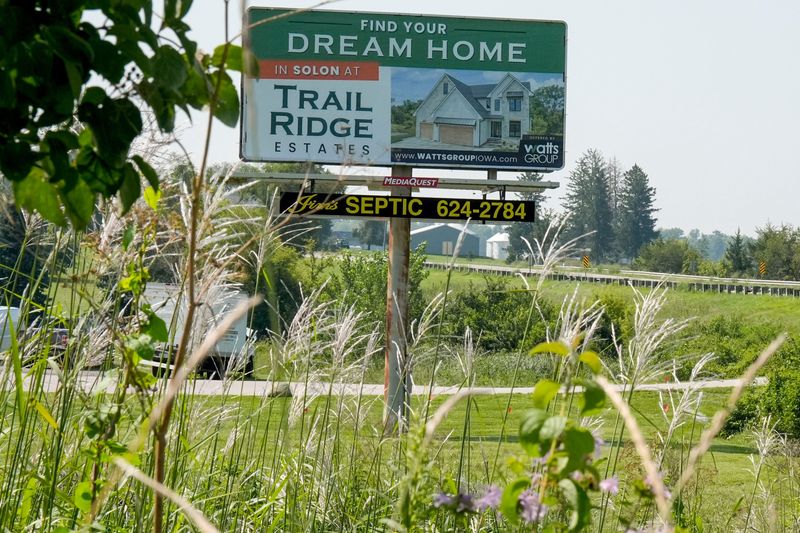
Johnson County is investing in rural living by generating new housing options.
The local board of supervisors is updating its comprehensive plan to prioritize affordable housing and economic investment in rural towns amid rising housing costs and continued population growth

While the board did not take immediate action at their work session on Monday, May 18, they are exploring new policies, including town partnerships to expand housing through infrastructure investments and financial assistance.
An update to a November 2025 CommunityScale housing study found that smaller Johnson County towns are facing housing gaps and limited affordability. The preliminary housing assessment found that smaller Johnson County towns are facing housing gaps and limited affordability.
Johnson County staff have put a few of the study’s recommendations into action, by improving conditions in manufactured home parks, exploring changes to septic regulations that allow more rural housing developments, and connecting residents with homeownership resources in the rural towns of Hills, Oxford, Lone Tree, Solon, Shueyville, and Swisher.
JoCo officials consider bonds to fund housing programs
County officials may issue general obligation bonds to fund programs to help rural towns pay for the infrastructure needed to support new housing. Johnson County would loan the towns money for projects such as roads, sewers, and water improvements, with the expectation that the costs would be repaid over time through property tax revenue generated by the developments.
The CommunityScale study found that fewer families with children live in the county than a decade ago. The study says housing construction has slowed considerably from its peak in the 1990s, and that current rural single-family housing does not address the needs of lower-income residents.
Despite the dip in rural family living, Johnson County’s recent housing assessment said the non-metro area, i.e., rural towns, will need at least 950 new homes over the next 10 years.
The study also estimates that the area’s “middle class” is shrinking and will continue to do so. The report acknowledges that the non-metro population is aging “rapidly.”
The county’s ultimate goal is to support and sustain housing growth in rural towns.
The housing study recommended addressing rural needs in three ways: expanding housing, including options geared toward middle-income households, rural development, and main street apartments; improving affordability through tools like homebuyer assistance, manufactured housing improvements, and other investments; and strengthening small towns through infrastructure funding, economic development initiatives, and quality-of-life improvements.
Jessica Rish is an entertainment, dining and education reporter for the Iowa City Press-Citizen. She can be reached at JRish@press-citizen.com or on X, formerly known as Twitter, at @rishjessica_
This article originally appeared on Iowa City Press-Citizen: Johnson County considers bonds to fund small-town housing growth
Reporting by Jessica Rish, Iowa City Press-Citizen / Iowa City Press-Citizen
USA TODAY Network via Reuters Connect