By Leah Douglas
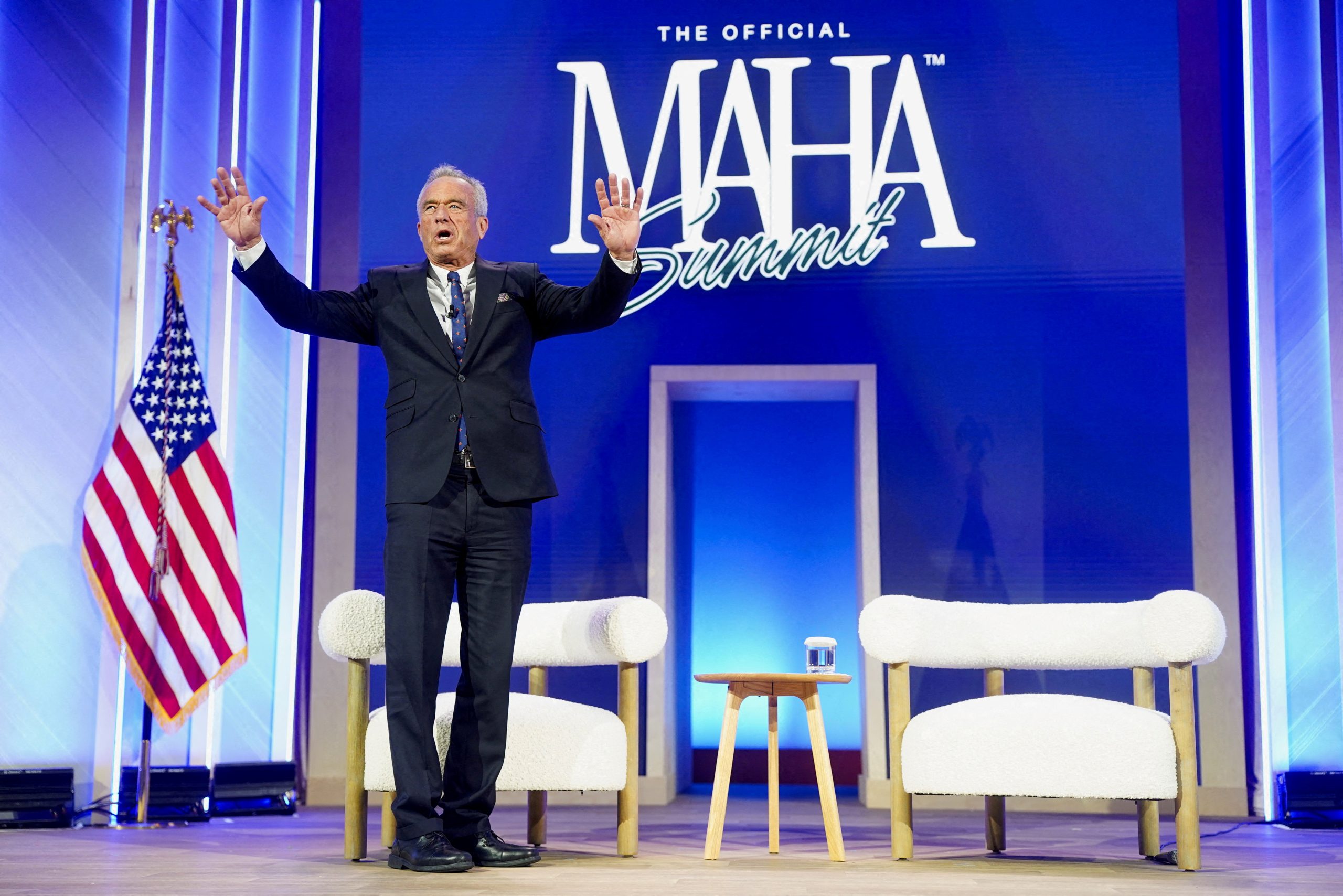
WASHINGTON, May 18 (Reuters) – Dozens of state anti-vaccine bills backed by “Make America Healthy Again” supporters have failed after public health groups won over Republican state lawmakers, marking a series of defeats for the backers of Health Secretary Robert F. Kennedy Jr.

The failures show a limit to the political power of the MAHA coalition groups that had set out this year to pass laws against mandatory vaccinations in at least 10 states, hoping to capitalize on a rise in anti-vaccine sentiment and their role in helping elect President Donald Trump.
Pro-vaccine groups and medical associations including American Families for Vaccines, the American Academy of Pediatrics and others lobbied in statehouses against bills seeking to end policies like school vaccine mandates, according to Reuters interviews with seven organizations.
Vaccine advocates used polling data and personal appeals to convince lawmakers in Republican-controlled states such as West Virginia, Louisiana and Florida that their constituents support vaccination and that the MAHA-backed bills posed a threat to public health.
“Even though this is an increasingly partisan space, Republicans across the board are not anti-vaccine and there are lawmakers that really just want sensible, transparent vaccine policy,” said Dr. Erin Abramsohn, executive director of the Infectious Disease Prevention Network, which fought anti-vaccine bills in 10 states this year.
A February Reuters/Ipsos poll found that a bipartisan majority of Americans support school vaccination requirements and think vaccines are safe for children.
Kennedy, a long-time anti-vaccine activist, has used his post to advance several actions against mandatory inoculations including removing some shots from the childhood immunization schedule.
The childhood vaccine schedule changes were put on hold as part of a lawsuit addressing the overhaul of vaccine policies under Kennedy, who has a history of making claims about vaccines contrary to scientific evidence.
The White House has directed Kennedy not to take further steps against vaccines ahead of the November midterm elections, when Republicans will defend a slim majority in Congress.
A Department of Health and Human Services official said the agency does not comment on legislation.
ANTI-VACCINE BILLS ON THE RISE
While anti-vaccine bills have been proposed before, more emerged this year due to the coordinated efforts of MAHA groups, the groups told Reuters.
“In the past where you might have seen a couple of bills, now there’s hundreds of anti-vaccine bills in the state legislatures,” said Lecia Imbery, government affairs director of Vaccinate Your Family. VYF names some vaccine makers as donors in its annual report, including Pfizer and Moderna.
Those states include Idaho, which saw six bills introduced; West Virginia, which saw nine; Tennessee, which saw eight; and South Dakota, which saw five – none of which passed, said Abramsohn.
Idaho last year passed a first-in-the-nation ban on vaccine mandates, but failed to advance further anti-vaccine legislation this session. Florida, too, discussed doing away with vaccine mandates but did not pass bills to do so during its legislative session.
To convince Republican lawmakers to oppose the bills, the pro-vaccine groups pointed to polling that showed constituents value vaccine mandates as a public health tool and said the elected officials could face political consequences if they supported anti-vaccine legislation.
“There’s a lot of people running for office, so this could potentially hurt them… in future elections if they were to vote against public health,” said Elizabeth Faber, director of programs at the Iowa Public Health Association.
Iowa public lobbying records give a snapshot of the advocacy push. Faber said advocates there were monitoring 18 anti-vaccine bills, one of which would have removed vaccine requirements for primary and secondary school students.
Nearly three dozen organizations lobbied against the bill, including the Iowa Nurses Association, Iowa Academy of Family Physicians, and the Iowa Association of School Boards, the records show. Just two groups, Iowans for Freedom and Inspired Life, lobbied for the bill. The records did not show how much money was spent on the lobbying effort.
BILLS ‘NOT GOING AWAY’
Both public health and anti-vaccine advocates say they expect to see more debate over vaccine policy in statehouses.
Leah Wilson, founder of Stand for Health Freedom, which promoted what it calls “medical freedom” legislation such as anti-vaccine mandate bills in a dozen states this year, said she is encouraged by the momentum those bills have seen, including hearings in five states.
“It’s definitely an issue that’s rising,” Wilson said. “It’s quite encouraging to see the civic engagement that we’re seeing right now.”
In Iowa, more legislators have joined caucuses to pursue anti-vaccine legislation, signaling more bills will be introduced down the road, said Iowa’s Faber.
“We definitely know that this is not going away,” she said.
(Reporting by Leah Douglas in Washington; Editing by Caroline Humer and Bill Berkrot)