ALBIA — Dr. Alison Lynch, a psychiatrist at the University of Iowa, prefers spending most of her days directly with patients, but paperwork and administrative tasks often get in the way.
For every 20 minutes she spends with patients, another 5 to 10 minutes are dedicated to paperwork, including the taxing pre-approval process insurance companies demand before they’ll approve care, she said.

Couple that with Iowa’s physician shortage, and the protracted prior authorization processes can further postpone critical care and treatments, she said.
“When I’m working on a computer, I’m actually not seeing another patient, so then patients are either waiting or just not getting an appointment,” Lynch said. “Even if the treatment that I’m recommending is the guideline care, and very often that’s the case, they (patients) still have to wait for care.”
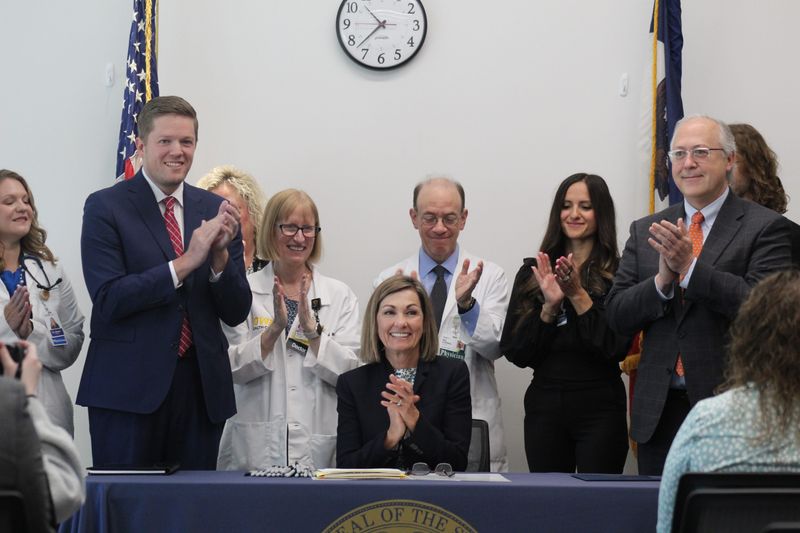
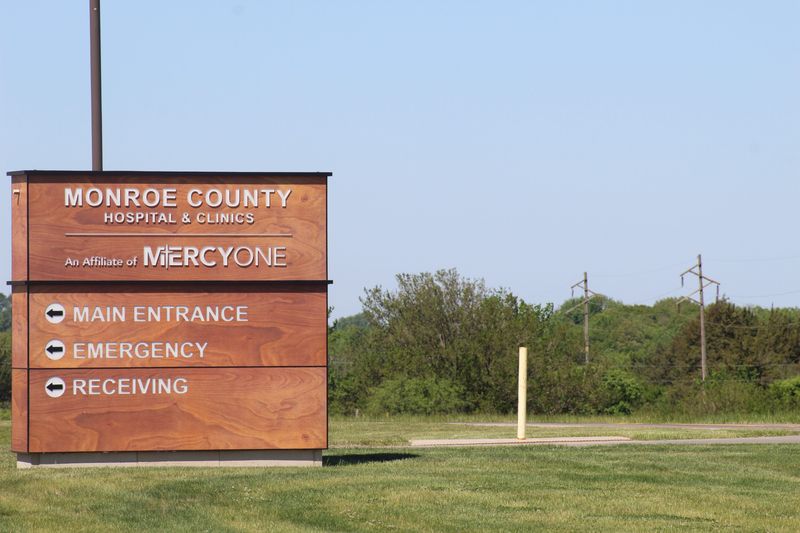
But at the Monroe County Hospital in Albia on Wednesday, May 13, Lynch watched as Iowa Gov. Kim Reynolds signed a bill aimed at reducing administrative burdens for prior authorization requests and streamlining access to care.
House File 2635, which the Iowa House and Senate passed with broad bipartisan support, will establish a seven-day notification requirement for prior authorization denials and require insurance company representatives to be experts in the same area of medicine as doctors appealing denial of treatment or medication.
“This is going to free up time for physicians to have more time with patients, which is why we go into medicine,” Lynch said.
The legislation, which goes into effect Jan. 1, 2027, will also prohibit prior authorization requirements for cancer screenings and for emergency care delivered in an inpatient setting.
“Altogether, these reforms reduce administrative burden, increase transparency, support clinical decision-making and expand access to essential services,” Reynolds said in remarks before signing the bill. “Most importantly, they strengthen the partnership between providers and patients, helping ensure that healthcare in Iowa remains responsive, patient-centered and focused on delivering the highest standard of care.”
Lynch said explaining the rationale behind treatments for patients’ medical conditions to insurance representatives is time-consuming and the legislation’s new requirements will significantly reduce approval time.
She offered an example of an obstetrician working for an insurance company approving a brain tumor removal recommended by a neurosurgeon.
“It’s kind of like … the neurosurgeon having to explain to the obstetrician the rationale for why they want to do this procedure and the obstetrician being empowered to say yes or no for whether this patient needs this particular form of brain surgery,” Lynch said.
While the bill moved through the legislative process at the Iowa Capitol, representatives for insurance companies opposed it, arguing prior authorization helps insurance companies and health care providers prepare for the costs of procedures.
Bill will prohibit AI from issuing treatment denials
The legislation also prohibits insurance companies from solely using artificial intelligence to authorize or deny medical treatments.
It will require treatment approval or denial decisions to be made by a qualified reviewer or clinical peer. The healthcare insurers must provide a statement including the specific reasons for a denial or downgrade of treatment.
“This legislation makes it clear that no patient’s care can be denied or downgraded by AI alone,” Reynolds said. “A qualified clinician must be involved in protecting patients from inappropriate and automated denials and giving providers confidence that their medical decisions will be clearly reviewed.”
Removing certificate of need requirements for cancer treatment, cardiac care
Another provision of the legislation removes certificate of need requirements for healthcare facilities expanding to offer behavioral healthcare, advanced cardiac care and cancer treatment.
Iowa state Rep. Austin Harris, R-Moulton, who floor-managed the bill, referred to it as the “biggest deregulation of certificate of need program in state history.” He contended the legislation will serve as a recruitment tool to bring more physicians to Iowa.
Iowa is ranked 44th in the nation for patient-to-physician ratio as of 2024, according to the Iowa Medical Society.
“When we talk about being able to recruit people into the medical profession here in Iowa, I can’t think of a better tool than to tell them that we’ll get the insurance companies out of their way if they practice here,” Harris said. “It cuts bureaucratic red tape to ensure that doctors can spend more time with their patients instead of pushing paperwork.”
Rapid Response Politics Reporter Maya Marchel Hoff can be reached at mmarchelHoff@usatodayco.com. You can find her on X (formerly Twitter) at @mmarchelhoff.
This article originally appeared on Des Moines Register: New Iowa law forbids AI medical care denials, streamlines preapprovals
Reporting by Maya Marchel Hoff, Des Moines Register / Des Moines Register
USA TODAY Network via Reuters Connect