This wildfire season is as dangerous as any this century, and forestry officials are on high alert.
Conditions are so dry that the drought may not subside until August, said Jesse Lavender, a mitigation specialist with the Florida Forestry’s Caloosahatchee Service Center.

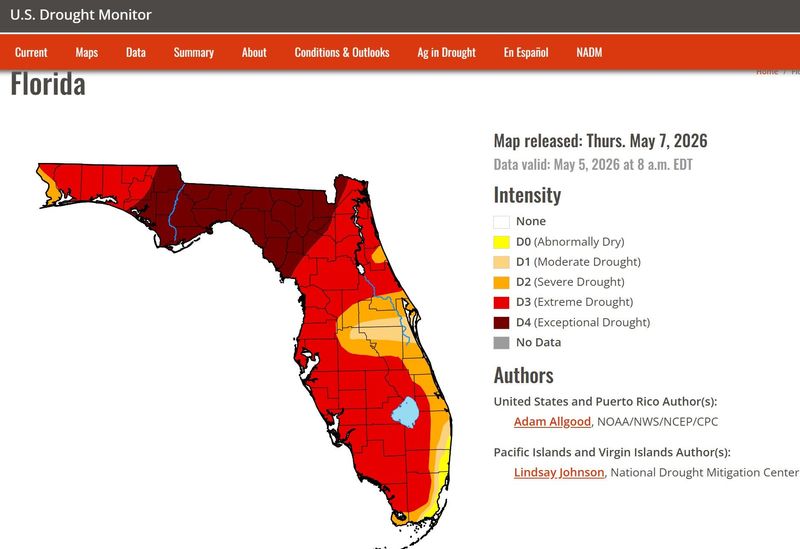
Drought conditions are raging all across the Sunshine State, and the Fort Myers-Cape Coral area is still experiencing extreme conditions.
‘Still on high alert’
The latest National Oceanic and Atmospheric Administration, or NOAA, report shows that Southwest Florida is in extreme drought.
Some rains have fallen here this week, but meteorologists say it’s going to take multiple downpours to extinguish the drought.
“We’re still on high alert,” Lavender said. “I know we’ve had a little bit of rain, but this is the worst drought statewide that we’ve experienced in at least 20, 25 years.”
Lavender said homeowners can help prepare for localized wildfires by cutting vegetation that’s within 30 feet of any structure.
He said the way landowners near the Picayune Strand State Forest had done a good job of preparing their properties before the wildfire season.
“With the Newman Road fire, the horse community, they’ve been through these fire time and time again, and I think having that experience really saved their structures and properties during that fire,” Lavender said, referring to the Newman Drive fire that scorched more than 1,500 acres of the Picayune Strand State Forest.
“Having 30 feet of space between the vegetation and the houses allowed us to save those buildings and barns.”
Lavender said clean, well-maintained properties are better for firefighters as it gives them a chance to save structures in a safer environment.
“Have situational awareness of your house and property and clean up any debris in your gutters,” Lavender said. “Just don’t light any fires right now. And properly dispose of cigarette butts.”
The wildfire season typically gets more dangerous as summer approaches.
Lightning strikes have caused fires here for thousands of years, since the historic Everglades rose from the seas.
“We’re going to start getting more lightning and that’s going to start fires naturally, and even though there’s rain in those systems, we’re in the negative,” Lavender said. “And to be in the positive we need to get a lot more rainfall.”
The Florida Department of Agriculture and Consumer Affairs reports that the Bonita Springs-North Naples area is among the dryest places in the state.
Rainy summer months are on the way
The rainy season, on average, starts on May 15, according to historical weather records.
But there is no rain in the forecast for May 15 or later in the week, so the rainy season is starting a little later this year.
Weather in extreme south Florida swings between the wet and dry seasons.
Sure, spring and fall are listed on calendars here, but this area really sees two weather patterns throughout the year.
Basically, it’s dry from November through May, and it rains June through October.
The swing between the two can be dramatic. Some areas of the state will sometimes experience flooding and drought conditions in the same year.
Drought conditions were in place here until July of 2025, about six weeks after the start of that summer’s rainy season.
Chad Gillis is an environment reporter and can be reached by email at cgillis@news-press.com.
Please support local community journalism and stay informed about Southwest Florida news by subscribing to The News-Press and Naples Daily News; download the free News-Press or Naples Daily News app, and sign up for daily briefing email newsletter, food & dining and growth & development newsletters here and here.
This article originally appeared on Fort Myers News-Press: Drought conditions could last until August. How that impacts your home
Reporting by Chad Gillis, Fort Myers News-Press & Naples Daily News / Fort Myers News-Press
USA TODAY Network via Reuters Connect