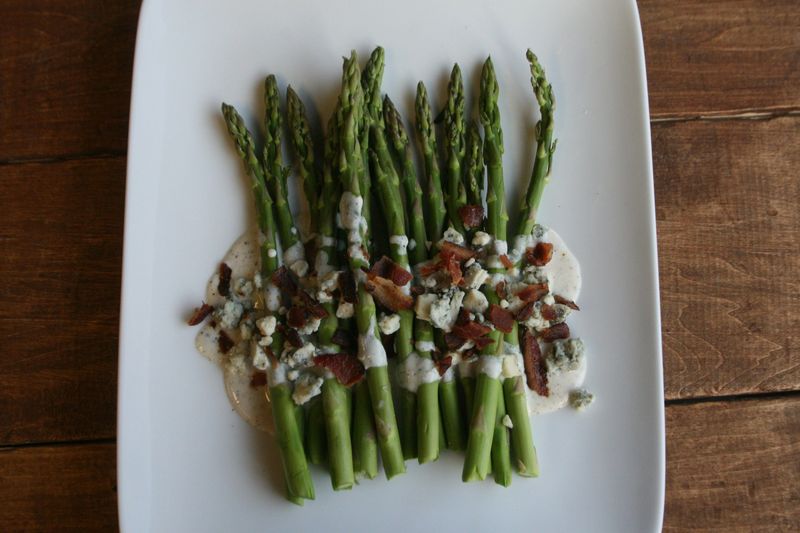
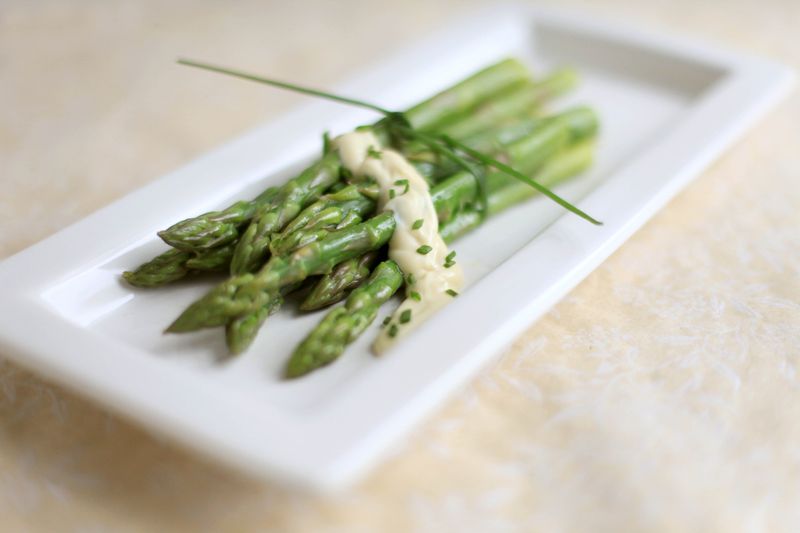
Hooray for Michigan asparagus season. Vibrant green stalks of Michigan-grown asparagus are showing up at grocery stores and farmers’ markets. It’s a sure sign that the locally grown fruits and vegetables season is kicking off.
In recent decades, about 60% of Michigan’s annual asparagus crop is sold fresh in markets and grocery stores, with the rest going to processing. A typical asparagus season gets underway in early May and can last through the end of June.

At stores, look for large asparagus spears that are firm and have closed, compact tips. The bunch should be similar in diameter.
When asparagus season hits, I use those spears in breakfast, lunch and dinner. You can slice it for omelets and quiche, serve it raw in salads and as a side vegetable to any meal.
My favorite way to cook asparagus is to oven-roast or broil whole spears. Because asparagus spears need only be cooked until crisp-tender, I lean toward broiling, as it does the job quickly. Depending on the size of the asparagus, about 4-5 minutes under the broiler cooks the spears just right.
While you can season asparagus in all sorts of ways, I find that when broiling, it only needs a drizzle of olive oil, a generous sprinkling of kosher salt and a few grinds of black pepper. Simple is best.
Michigan-grown asparagus is prized and special because it’s hand-harvested and needs little trimming. (If the bottom of the spear seems woody or fibrous, you can trim it using a vegetable peeler.) The Michigan Asparagus Advisory Board considers it a specialty crop, with an annual average production of 23.4 million pounds. Asparagus is grown on 9,500 acres of Michigan family farmland, mainly on the west side of the state.
In case you didn’t know, crop-wise, Michigan is second only to California in agricultural crop diversity. Other specialty crops that Michigan leads in are apples, blueberries, tart cherries and dried black beans.
Here are asparagus’ good-for-you attributes gleaned from the Michigan Asparagus Advisory Board:
Good to know:
An overarching question related to eating asparagus is: Why does it make your urine smell funny? While it doesn’t happen to everyone, that odd smell can happen soon after eating asparagus or hours later. According to the FAQ’s at michiganasparagus.org, it’s from a sulfur-containing derivative found in asparagus.
Broiled Asparagus
1 pound (or desired amount) asparagusOlive oil1 teaspoon kosher salt and ½ freshly ground black pepperServings suggestions (see recipe)
Make a sauce combining 1/4 cup white wine or white vinegar, 1 heaping tablespoon Dijon mustard, 2 tablespoons whole-grain mustard. Slowly whisk in 3/4 cup olive oil until the mixture emulsifies. Season with ½ teaspoon salt and ¼ teaspoon freshly ground black pepper or to taste.
Preheat the broiler or set the oven to 425 degrees. Place asparagus on a sided baking sheet. Drizzle with olive oil and sprinkle with salt and pepper. Broil about 6 inches from the broiler heat for 4 to 6 minutes, depending on the size of the spears. If oven roasting, check after about 6-8 minutes. Asparagus should be crisp-tender; be careful not to overcook.
Remove to a serving platter and serve.
Service suggestions:
This article originally appeared on Detroit Free Press: Love asparagus? This cooking method never lets me down
Reporting by Susan Selasky, Detroit Free Press / Detroit Free Press
USA TODAY Network via Reuters Connect